Health & Fitness
Responding to Text and Building Comprehension With the Use of Writing and Artistic Media
We look at some fun yet substantial ways to build comprehension by responding to text using writing and artistic media.

Responding to Text and Building Comprehension with the use of Writing and Artistic Media
Opening the doors to literacy begins at home, and continues here within this secure, risk-free learning environment throughout a child's developmental years. In past blogs, we've looked at how to support and extend reading comprehension skills at home during storybook read-alouds.
We have also examined the essential role of reader self-confidence in each child, and the powerful impact this confidence can have in his or her success as a reader. Today, we'll look at some fun ways to respond to books at home, using writing and artistic media.
Find out what's happening in Bronxville-Eastchesterfor free with the latest updates from Patch.
A to Z lists: An abundance of learning opportunities
"A to Z" lists can be used to brainstorm vocabulary from each book read at home. This learning tool can help children build language skills in a wide range of fun and creative ways. An A to Z list can build knowledge of characters, organize story elements, increase creativity and imagination, improve understanding of plot development (an essential comprehension tool), and build knowledge of non-fiction topics. It can also be used to expand language skills by using synonyms for character traits and other vocabulary found within the text.
Find out what's happening in Bronxville-Eastchesterfor free with the latest updates from Patch.
These lists can span a wide range of subjects, from just one book, to an author study that would include several books, to a topic in Science or Social Studies (great tool for test prep!). The possibilities are endless. The brainstorming process can result in the child making textual connections within the topic or subject.
The use of textual evidence is an essential comprehension skill, one your child will need for the duration of his or her academic life. Using A to Z lists in early and middle childhood is a fantastic way to challenge your child to provide this textual evidence, when you say "Hmm, (feigning uncertainty), where was that in the story?" when he or she submits a new term or event to be included in the list. Once again, another fun and meaningful way to build and extend comprehension at home.
We've used these lists in my private practice work as a assessment tool on several occasions. I also use this teaching tool on the graduate level, and in my work mentoring teachers in the classroom setting. These lists are an effective learning tool at any age. The child (or adolescent, or adult!) is gaining new vocabulary, learning correct usage, building knowledge of character, or developing an understanding of content area topics in ways that include both oral and written language skills.
These A to Z lists, while "fun" for kids (they love them!) and a great instructional tool, are also an accurate (and innovative) method of assessment for parents and teachers. They give adult caregivers the opportunity to determine the child's understanding of the text, while building and sustaining a certain level of rigor, even within the home learning environment.
In addition, the fun "game" of creating A to Z vocabulary lists can, in turn, invigorate a child's interest in reading as a part of daily life, one of our central goals in early childhood and beyond. (ake one of these on a long car ride and see how time just flies!)
An A to Z list can be developed in several ways, and once created, can then be either put into "book" form, as a mini-book to treasure for years to come, as a poster, or as a card game for future use.
Some other fun ways to use writing skills to extend knowledge of story and character when books are read together at home:
- Write a letter to a character, asking 3 to 5 questions from the story, based on plot (this gives some structure to the letter, and lends some substance and accountability to the task, rather than run the risk of being vague or off-topic)
- Write a journal entry from the point of view of a single character in the text - Limit this to one event in plot development, to give your child some structure and to format the task (i.e. "Let's write about how Lilly was feeling when she went in the "Thinking Chair" in Lilly's Purple Plastic Purse by Kevin Henkes")
- Write a text-to-self connection from the text, i.e. choose one event in the story and invite your child to write (or draw a picture accompanied by one or two sentences, for younger children) about a time he or she experienced something similar in life (good for building empathy for characters)
- Create a "character traits web" and have your child come up with 4 good, accurate character traits for one character in the story, AND have he/ she provide the textual evidence to support each trait.
- Synonym word webs are fun ways to build vocabulary. See my first blog entry for ideas on how to build and support new vocab when reading at home
- For older children, the "journal" idea can be made into a book, with several entries, and then designed or collaged with materials used in the story
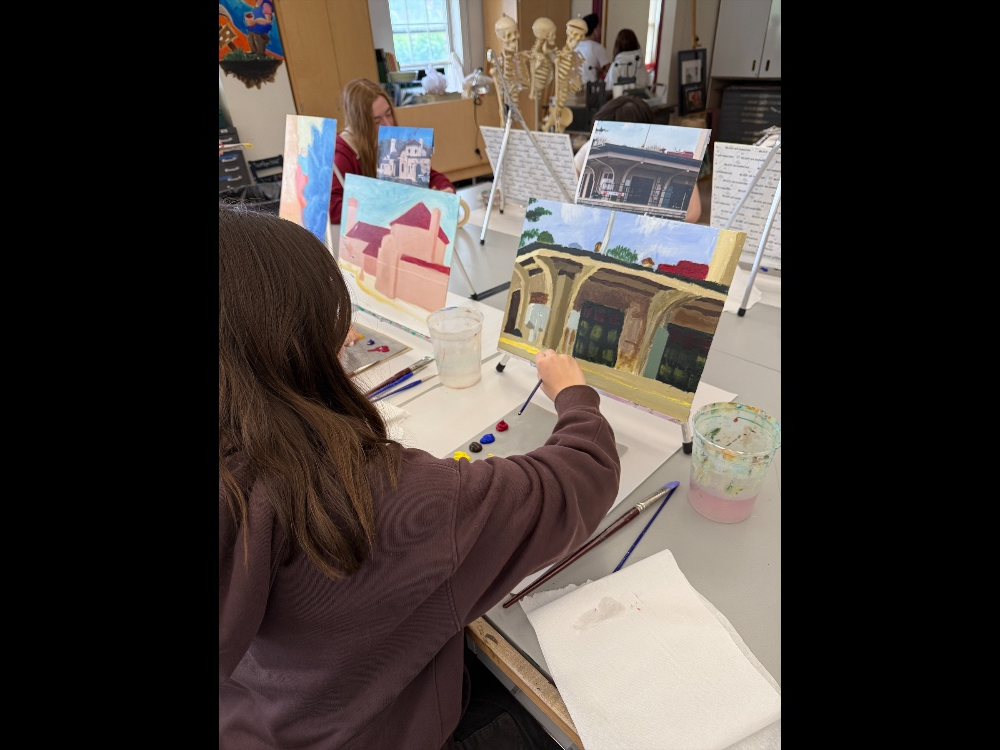
- Create a fun bookmark or new cover for the book: paints, collage, mixed media. Integrate 5 vocab words on each to increase comprehension skills
- Develop a collage of new vocabulary words for non-fiction topics, in poster form. Invite your child to use fun materials, fonts, and images to convey his/ her understanding of the subject
- Create 5 new titles for the book, and provide reasons for each. Make into a fun poster or brochure. Include one sentence for each title, explaining your choice
- One of my favorties: Create a "Character Caddy" - Invite your child to find 5 items that the main character (or another character) would have in his or her own backpack. Invite your child to write one sentence explaining each choice.
- Invite a character to dinner, and first write a character description for your family to introduce this character. Use events from the story to build interest and spark motivation
All of these ideas will provide support in helping your child reach our shared goal of increased motivation to read and to learn.
I have decided to begin the practice of ending each blog entry with a quote about reading and literacy in young children.
In the words of Jacqueline Kennedy, "There are many ways to enlarge your child's world. Love of books is the best of all."
Happy Reading!
Carolyn Polchinski, M.S.Ed.