Politics & Government
Bronxville Mayor Urges State to Increase Funding to Cities and Villages
Infrastructure and flood mitigation is at stake if funding is not forthcoming.


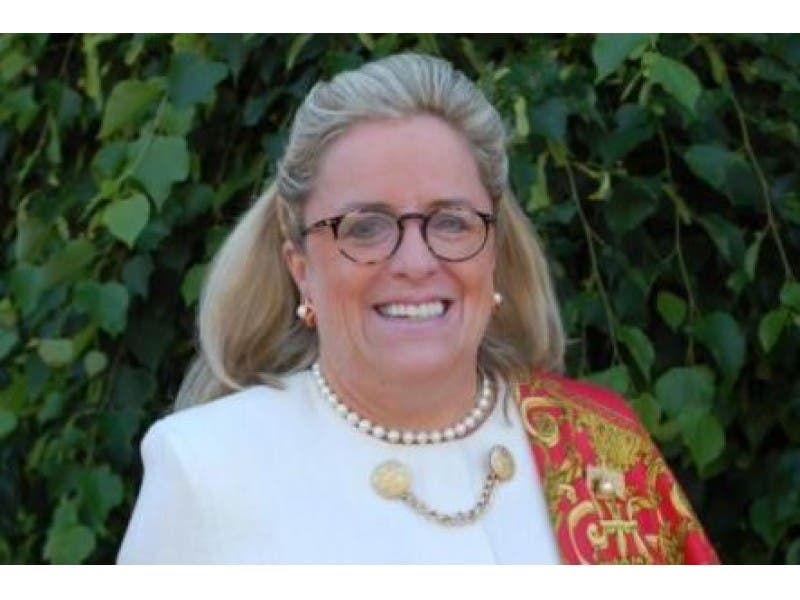
Written by Mayor Mary Marvin.
The 2016 State Legislative Session has begun and as a corollary, state and local elected officials put together legislative priorities. Our common objective is to encourage the Governor and our legislators to provide local governments with the resources and flexibility needed to deliver essential municipal services in the most cost effective manner for the tax payers we serve.
Since a state-local fiscal partnership is essential to economic vitality, unrestricted State aid is needed now more than ever given the 2% cap which is actually a 0.12% cap in all upcoming local budgets.
Find out what's happening in Bronxville-Eastchesterfor free with the latest updates from Patch.
However, inexplicably, cities and villages have not received an increase in unrestricted aid (AIM funding) since 2008. School districts, on the other hand, have experienced significant year to year increases far exceeding the funding of the entire AIM program. The Governor’s proposed budget adds $1 billion to school aid vs no increase to municipalities despite the same tax relief rationale.
Since cities and villages are the primary caretakers of essential public infrastructure such as water and sewer systems, state funds must be earmarked to fund these needs as communities continually defer infrastructure projects in order to fund the most basic daily municipal services under the pressure of the tax cap.
Find out what's happening in Bronxville-Eastchesterfor free with the latest updates from Patch.
The tax cap is a powerful disincentive to undertake long term municipal repairs as their financing is not exempt from the cap. As example, if the Village stayed under the 2% (or 0.12% tax cap) this year, we could only spend an extra $11,000 – and obviously would have to forego the $5 million FEMA flood mitigation grant as it requires a local contribution. The State Comptroller’s Office recent report estimates that infrastructure repairs statewide now have a funding deficit of $657 billion annually.
Thus, the Governor’s proposed budget of $250 million for infrastructure repairs for the next fiscal year doesn’t even scratch the surface.
In addition to deteriorating subterranean infrastructure, local roads and bridges are in similar disrepair. According to the State Comptroller’s report referenced above, 48% of state roads are in “fair to poor” condition and one third of all bridges are structurally deficient. (as was the case on Parkway Road) Yet highway improvement money to assist local governments has remained flat. As example, our Village received approximately $111,000 last year from the state – enough to pave about six short Village blocks.
Net-net the unintended consequence of the tax cap is that state infrastructure is arguable in its worst condition in a generation.
Despite all the pleas from local officials, there is still nothing that prohibits the State Legislature from enacting unfunded mandates – now upwards of 200 on the books. In the local officials’ list of priorities is legislation to prohibit the enactment of statutory or regulatory mandates which impose a direct or indirect fiscal burden on local government without provisions to cover the financial burden.
Other local legislative goals that would help local governments generate needed revenue to balance budgets and provide services without always looking to the property tax payers include:
- Legislation that would permit municipalities, at local option, to impose charges on tax exempt properties to defray even a portion of the cost of the services local governments supply, the most costly of which are fire and police protection.
- The restructuring of the gross receipts tax (GRT) levied on the gross operating income of utility companies operating within a municipal border. Currently, communities have the option to impose a tax at the rate of 1% though Buffalo, Yonkers and Rochester have the flexibility to impose up to a 3% tax. Westchester communities seek legislation to allow all communities to be treated fairly at the higher rate.
- In recognition of the new cellular technology, the State of New York and the City of New York have added wireless technology to their gross receipts tax calculation. Local governments ask for permission to replicate these laws and add cellular telephone services to the GRT equation.
- The enactment of legislation to allow local communities to generate legal notices on websites or electronic newspapers vs the current print publication requirement.
Not only is it significantly more expensive, but the circulation of local print papers has decreased to the point where the intent of the law to provide timely and widespread notification has also been usurped.
- The repeal of the anachronistic “Scaffolding Law” which would translate into thousands of dollars of insurance cost savings for every municipality. Enacted in 1885, and the only one left on the books in the nation, our state law holds contractors, employers and property owners absolutely liable for gravity related injuries even if the worker was “grossly negligent”. (Included in this definition is the use of drugs or alcohol while working and failure to use any safety devices.) As a result of just this one law, New York State insurance premiums are 300% to 1200% higher than the rest of the Nation.
Yearly, the new law was stopped at the desk of Speaker Sheldon Silver who had a relationship with Weitz and Luxemborg, a law firm specializing in plaintiff cases relating to scaffold injuries.
The above are just a sampling, a tip of the iceberg of the legislative needs that necessitate enactment if New York tax payers are ever to lose their dubious distinction as the most highly taxed citizens in the Nation.
Get more local news delivered straight to your inbox. Sign up for free Patch newsletters and alerts.