Politics & Government
Bronxville's Landscape Defined In Research Book: Mayor
The Village's original forest had a canopy layer composed mostly of hardwoods that reduced runoff.


Written by Mayor Mary Marvin:
The Bronxville Historical Conservancy, in collaboration with Peter Gisolfi Associates, recently published an impressive and informative book entitled “Defining the Landscape of Bronxville.” It resulted from a two-year-plus research effort spearheaded by former Mayor Nancy Hand.
What began as an idea and then a document with a few maps has turned into a beautiful 83-page book which examines the landscape and visual character of the Village, yielding valuable information for preserving and enhancing our environment.
Find out what's happening in Bronxville-Eastchesterfor free with the latest updates from Patch.
The Conservancy expanded its initial concentration on projects centering around art and architecture to include “whole place preservation” as a way of safeguarding our Village. The close relationship between the natural landscape and the man-made environment has given Bronxville its unique identity and the resulting need to exercise stewardship in preserving the whole for future generations.
[Get Patch’s Daily Newsletter and Real Time News Alerts here.]
Find out what's happening in Bronxville-Eastchesterfor free with the latest updates from Patch.
The overarching question became: Can we learn how to protect the best of Bronxville by understanding how the natural features influenced the shaping of the man-made landscape?
The book is divided into four sections starting with an investigation of the natural features of Bronxville including geology, soil, sloped, vegetation, topography and physiography. Section two provides an analysis of the Village’s cultural landscape and the man-made elements introduced over the years including patterns of development, neighborhood and building chronology land use and zoning. This is followed by a focus on the four specific landscapes in the Village: The Valley, Hillside, Hilltop and the Plateau. Finally, the concluding section suggests some concrete steps that can preserve the Village for future generations.
The appendix has an extensive description with photos of the specific trees, shrubs, flowers and grasses that are native to Bronxville along with an equally important list of invasive vegetation, most of which is now banned in New York State.
The book has already proved beneficial in the Village’s planning process and would be equally beneficial to landscape architects, gardeners and residents.
As illustration, did you know that taking down one large canopy tree removes the daily oxygen supply of four people? Are you aware that the Norway Maple is now banned in New York State?
Would you like to learn about the four different natural landscapes in Bronxville and the unique characteristics of each one? Would you be interested in knowing what native species of trees, plants and shrubs would be best to plant on your property and also which ones are invasive or now prohibited in New York State? Would you like to see maps showing the type of soil in various neighborhoods of the Village or one that shows chronology of the development of those neighborhoods? If the answer to most of these questions is yes, then the Natural Resources Study is a book you will want to own.
As example, the Village’s original forest had a canopy layer composed mostly of hardwoods, an understory layer of familiar smaller trees, such as birches, dogwoods and cherries, a shrub layer and beneath that a ground cover or herbaceous layer, which maintained a pervious surface that absorbed rainwater into the soil and reduced runoff. It is possible to approximate again that original configuration in the residential portions of the Village.
The two biggest challenges to that occurring are the overuse of ornamental plantings such as Colorado Blue Spruce and the desire for green lawns surrounding our houses. Inspired by early British colonists, the lawn is not native to our environment and requires extraordinary maintenance to survive. If we were to reduce the areas of open lawn and replace portions of such with native groundcover and trees, the soil would be significantly more pervious.
If we were to plant a native canopy tree when one is lost or taken down, we would help preserve the original character and beauty of the Village as well as aid the environment. Trees absorb carbon dioxide and potentially harmful gasses, such as sulfur dioxide and carbon monoxide and release oxygen into the air.
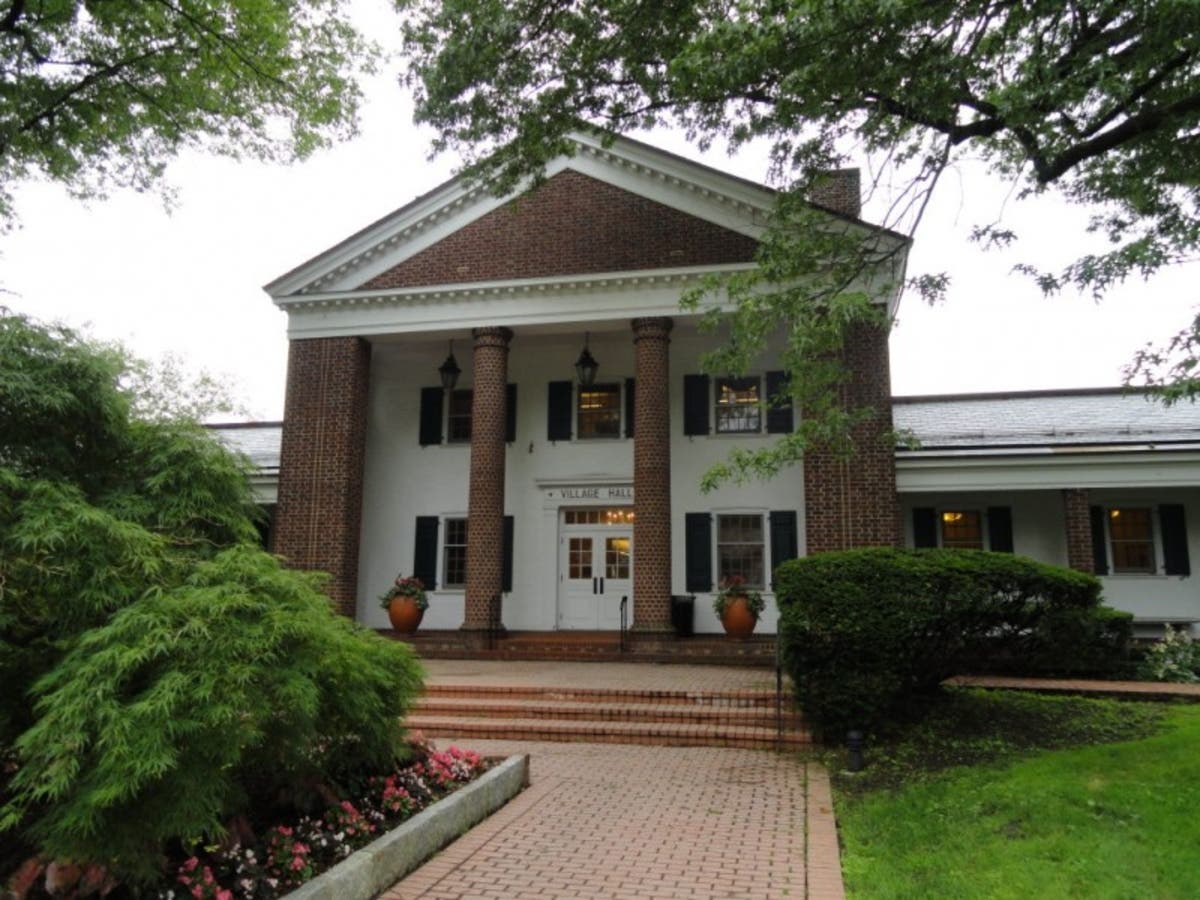
In essence, this book offers a well-researched guide to planting and preservation in our Village. It is available for sale at Village Hall and Womrath’s Bookstore at the publishing cost of $30. This is less than the cost of one mis-planted bush!
Photo credit: Google Maps.
Get more local news delivered straight to your inbox. Sign up for free Patch newsletters and alerts.