Politics & Government
Mayor Marvin's Column: News From Albany
This is the weekly column written by Bronxville Mayor Mary C. Marvin for the week of Jul. 9, 2012.

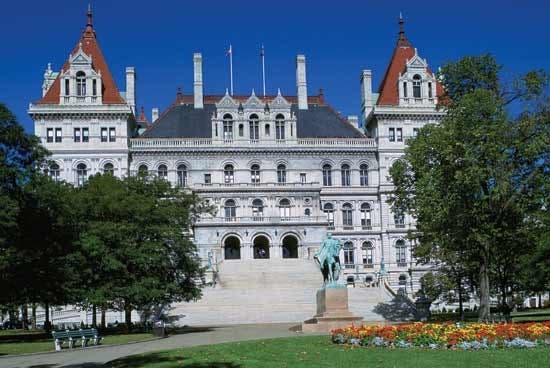
The 2012 Legislative Session ended last week with no significant mandate relief initiatives passed, though Governor Cuomo did describe his tenure at the helm for the past year as “one of the most successful in modern political history.” In fact, the fewest number of bills were passed in this session since 1914, which is not necessarily a bad thing.
One bill that did pass was very anti-mandate relief. Its language now makes it much easier to sue New York State’s local governments. Presented and passed on the last day of the Legislative session, it extends the time period for filing certain lawsuits against public entities and centralizes the filing of suits with the Secretary of State’s office, almost sure to cause delays of actual notice to the defendant municipalities.
Find out what's happening in Bronxville-Eastchesterfor free with the latest updates from Patch.
And of course, when local governments get sued, whether legitimate suits or not, the taxpayer foots the bill. This legislation was strongly opposed by local government groups and strongly endorsed by the Trial Lawyers Association.
Bills that could benefit our Village and are awaiting the Governor’s signature include the measure to allow villages to continue to use the lever style voting machines. The scanner ballot machines have proven to be costly and confusing.
Find out what's happening in Bronxville-Eastchesterfor free with the latest updates from Patch.
Another positive bill, would authorize public agencies to utilize cooperative purchasing by permitting municipalities to purchase off of federally solicited out-of-state contracts, passed both houses. Currently, New York is the only state that does not allow this cost saving method of purchase through cooperative contracts.
A bill awaiting signature would add villages to those municipalities currently eligible to receive advisory appraisals from the New York State Department of Taxation and Finance for complex properties and utilities.
Though this session was quiet, the rumors are rife that the State Legislature will reconvene post the November election with the number one priority to grant themselves a raise. This is the traditional method employed when increasing salaries, with the logic being that the Legislators were not hurt at election time for voting themselves a raise and the electorate will forget about it two years hence when they are up for re-election.
The conventional wisdom is that the Governor is prepared to extract some mandate relief measures in exchange for a pay raise.
Our State Legislators last received a pay raise in 1999, though at the time it was a 36% increase to $79,500. The current proposal is to raise the base to approximately $100,000. Even without a pay increase, our State Legislators are the third highest paid in the nation, trailing only California and Pennsylvania.
As example, Legislators in Illinois receive $68,000 per annum, Florida $29,687 and Texas $7,200. The New York State Legislature is in session approximately 63 days per year and then, of course, the electeds must do constituent service in their districts.
In addition to the $79,500 base, Legislators’ salaries are supplemented by a per diem rate of $171 per day for every day the Legislature is in session. The net result of this payout method is that if the Senate and Assembly cannot craft an on-time budget, they actually make more money.
Per diem for a “part-time” legislature adds approximately another $10,000 to the base salary. In addition, stipends, ranging from $9,000 to $41,500, are given for leadership posts as decided by the party hierarchy.
These require extra work and responsibility but are often used to reward loyalty and/or punish those who deviate from the party line. For example, the Chairman of the State Senate Finance Committee receives an additional $34,000 for assuming the leadership role. With the above add-ons to the base pay, the average Legislator takes home over $90,000 per session.
To bring it to our local level, Assemblywoman Paulin earned approximately $92,500 with an additional $410,000 allotted for staff. Senator Klein took home $113,500 with an additional staff budget of $1.4 million.
According to the 2010 Census, the median household income in New York State was $55,603. Just this past year, given the current economic downturn, the State Legislatures in Michigan and Vermont voted to decrease their own pay.
In addition to the above salary numbers, State elected officials are the beneficiaries of very generous pension and health insurance packages which will be the subject of a future column.
Assembly Speaker Sheldon Silver believes that the Legislators are very deserving of the raise because, “more and more members are full-time members of the Legislature” and that is their only career.
I would postulate that this is exactly what our Founding Fathers wished not to happen or be encouraged. Rather they envisioned people leaving their permanent occupations as lawyers, farmers and giving a few years of service to their government and then returning home, thus creating a “Citizen Legislature.”
As George Mason wrote, “Elected representatives should be subject to periodic rotation for nothing so strongly impels a man to regard the interest of his constituents as the certainty of returning to the general masses of the people from which he was taken and where he must participate in the burdens.”
Get more local news delivered straight to your inbox. Sign up for free Patch newsletters and alerts.