Business & Tech
The Perspective from Bronxville's Business District
In her regular column, Bronxville Mayor Mary Marvin discusses how residents can help local merchants as the holiday season approaches.


Written by Bronxville Mayor Mary Marvin
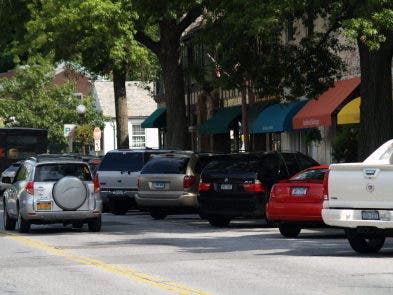
As the holiday season fast approaches, our business district still has a distressing number of empty store fronts.
To truly understand the current situation I sought to gain the landlord/owner perspective.
Find out what's happening in Bronxville-Eastchesterfor free with the latest updates from Patch.
As an overview, the vacancy factor in Westchester County is currently between 5 percent and 6.2 percent. Some Bronxville landlords have 100 percent occupancy and others are far below the average rate.
Continued internet sales growth has put enormous pressure on the bricks and mortar stores. Retailers and their landlords who sell hard and soft goods have been much harder hit than those uses that, in essence, cannot be sent in the mail, such as food, services, medical and recreation uses. As a direct consequence of this trend our West Side business district is far more occupied than its counterpart on the East Side because of the West Side’s historic propensity toward food and service establishments vs soft good merchants. Avoidance of the sales tax requirement also provides a great advantage to the internet purveyors, and this is affecting the viability of small downtowns.
Find out what's happening in Bronxville-Eastchesterfor free with the latest updates from Patch.
Empty stores do offer a tax “break” to the owner as a loss against income, but as is the case with other investments, like stocks, landlords agree they’d do much better with a profit generating investment.
Long term commercial vacancy can adversely affect the assessed value of property, causing some owners to file for tax reductions. A few years of property vacancy is considered more of an economic blip and not a trend worthy of a property value reduction.
The question then becomes, why not ask for less rent instead of leaving a property vacant? One reason is because tenants, particularly food establishments, want long term leases to amortize the cost of upgrades and unique retrofitting of a space, and landlords are reluctant to lock in low numbers for a decade. That being said, some of our owners are absentee conglomerates that are far less attuned to the Village character than our locally based owners.
In essence, rents are a function of occupancy cost and share of taxes. As illustration, given the solid corporate infrastructure, rents on Greenwich Avenue are between three and four dollars per square foot which is a direct function of our high local and county taxes. When potential tenants consider Bronxville or any like community, they ask the following questions which are a pivotal factor in determining which community they ultimately choose to open a business:
- Most importantly, what are the “uncertainties” in a lease? (The cost per square foot has been already established)
- What if a variance is needed?
- What is the time line for building permits and/or if necessary, the regulatory boards?
- What are the chances that the deemed “change in use” will be approved/not be approved after an investment of time/legal fees and architectural assistance?
- Do the local residents have a track record of being loyal to merchants?
- Is there an additional critical mass of shoppers from which to draw?
- How close/accessible is parking? Is enforcement uniform and fair?
- Will I be cannibalizing someone else’s business by selling the same goods or is there a synergistic effect?
- Is the community pro small business in general?
In response to some of the above variables, Village Government is reviewing its Zoning Code and parking policies.
Our Zoning Code, like most in Westchester, favors soft goods retail because it is perceived as having the least impact on parking. However, it is clear that increased consumer spending on services and food uses have changed the ideal retail mix necessary to maintain a vibrant shopping area and we have to adjust accordingly. We have hired the same consultant Scarsdale used to great success in expanding their Zoning Code to adapt to the changing retail environment.
Our parking enforcement officers have received updated training with emphasis on following specified routes so that enforcement is uniform and predictable. We are well aware that our enforcement is both actually and reputationally perceived as aggressive, and sometimes lost in the equation is the concept that good will has a great dollar value as well.
It is important to note that quite a number of our shuttered stores were not the result of poor sales in the Village, but rather the result of a major corporate restructuring decision or overall chain indebtedness issues. Stores such as the Gap, Spruce, and Plaza Two fit this matrix.
Many of you here suggested the concept of pop-ups to fill the vacant stores, especially in light of the upcoming holiday season.
Landlords are very hesitant to embrace this concept even though it is income producing because it sends a negative message to their other merchants who take the chance on the Village year round and suffer through the quiet summer months.
Get more local news delivered straight to your inbox. Sign up for free Patch newsletters and alerts.