Business & Tech
Remember to Shop in Bronxville This Holiday Season
In her latest column, Mayor Marvin urges residents to remember the benefits to the community of shopping locally.


By Bronxville Mayor Mary Marvin
This past week local customers and friends received a letter from the Try and Buy Toy store in Pleasantville announcing its closing after 40 years. It was their flagship store of the four stores that they once were, including one in Bronxville.
The owners sent out a lengthy letter as they sought to educate the public about some of the factors that contributed to their lack of ability to survive.
Find out what's happening in Bronxville-Eastchesterfor free with the latest updates from Patch.
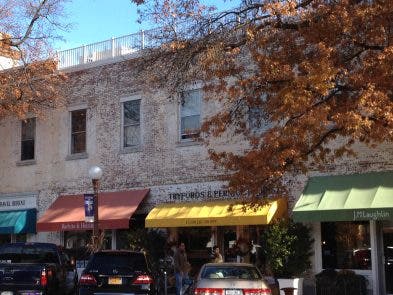
Sadly, it touched way too close to home for our Village. It serves as a cautionary tale and perhaps will galvanize us as a community to think local and shop local to preserve the ever disappearing small town commercial way of life.
Chief among their reasons for closure was the pervasive pull of the internet in search of “the bargain.” To quote the owner, “Daily, we have people who come to the store, utilize the help of the staff, get to touch and feel the toys and then order them while standing in the store on Amazon.”
Find out what's happening in Bronxville-Eastchesterfor free with the latest updates from Patch.
Next was the advent of the credit card “chip.” In order to upgrade their computer and point of sale purchase software, 40 to 50 thousand dollars needed to be expended to accept the new chip technology.
As an aside, in the owner’s experienced opinion toys are losing their importance in society. In his view children and their parents are much more enthralled with technology and the screens and pads. The owner saw the age group that plays with toys continually getting younger. If truely widespread, one wonders whether such a trend will have long term effects on types of motor coordination.
Net net, due to the above factors, the store’s sales dropped down to 2005 levels while expenses will be at 2016 levels – clearly not a model for sustainability.
The article was profoundly sad and gave me pause especially as we are in the midst of the critical buying season for all of our merchants. I don’t want this scenario to playout for any of our dedicated shopkeepers.
As I have written in the past columns but it bears repeating, long term/big picture shopping locally is the real bargain.
For every $100 spent in a locally owned independent store, $68 returns to the home community. The same amount spent at a mall or chain store returns $48 “home” and if spent on the internet, nothing comes back to the town and villages.
The sales tax revenue component is key to the success of every local budget nationwide. Fully one third of all state revenues, totaling over $150 billion annually, come from the collection of a sales tax.
Because of the increase in non-taxed internet purchasing, the state of Massachusetts estimates they “lose” $335 million in sales tax revenue and California pegs its “losses” at over $1 billion annually.
The end result is the elimination of jobs in public works and police further eroding vital services to taxpayers.
Bringing it down to a local level, the Village’s share of sales tax revenue dipped enough, especially in the calendar year 2010-2011, to necessitate trimming staff hours and some special services. Without the sales tax revenue component in last year’s Village budget, property taxes would have risen a whopping 12 percent.
Bottom line, if your shopping choice is Amazon or big box stores vs. Pondfield Rd and Palmer Ave, the savings you reap will very quickly come home to roost in the form of higher local property taxes and/or a decrease in municipal services. In contrast, a purchase made in the Village sends money directly back to our school and Village Government and also sends a message that you are investing in the future of our small village and all that is adds to your quality of life,
Just in today’s paper, the County government is grappling with a budget that has a lower than expected sales tax component. The solution: cut jobs and trim programs in the areas of the arts and recreation.
Keeping purchases local keeps money local; saves on fuel and ancillary transportation costs; encourages a walking environment; lends for personal services that foster a human connection between merchant and customer and supports those who support our charities and organizations.
Simply put, a vibrant downtown increases homes values and decreases property taxes. Hands down, it’s your best bargain.
Get more local news delivered straight to your inbox. Sign up for free Patch newsletters and alerts.