Politics & Government
What Makes A Good Leader?: Bronxville Mayor
Honestly is the keystone, and respect goes to a man or woman of his word.



Written by Mayor Mary Marvin:
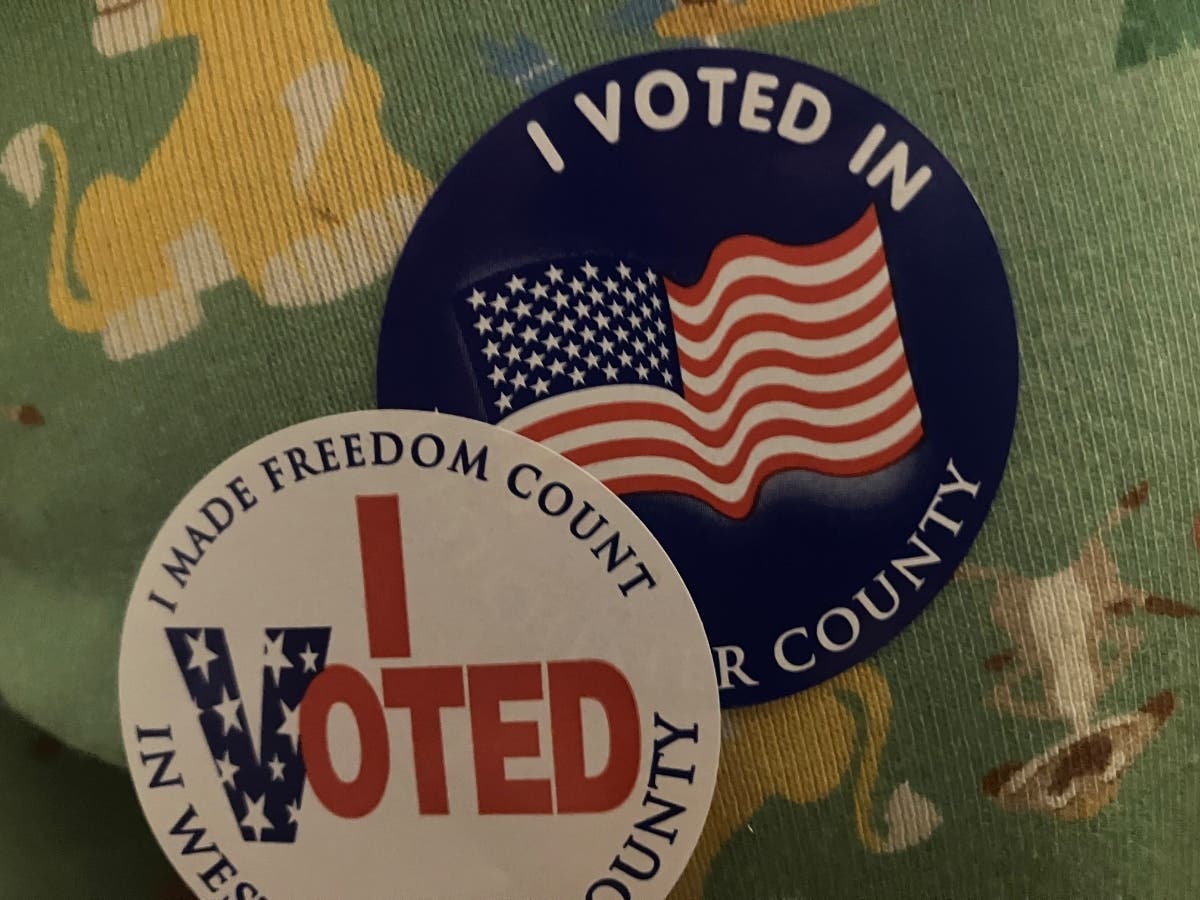
BRONXVILLE, NY — When this column appears in print, it will be Election Day 2017. The whole run-up to today caused me to reflect on what does make a good leader, be it in the political arena, corporate setting, sports team or even fifth-grade student council.
So much has been written, and I confess, I am fascinated by the subject. The following is just a distillation of some salient points that resonated for me and I thought had wide and intergenerational application. Not surprisingly, honestly is the keystone. Respect goes to a man or woman of his word. Eisenhower said, “The supreme quality for leadership is unquestionably honesty, integrity. Without it, no real success is possible no matter whether it is on a football field, in an army or in an office.”
Find out what's happening in Bronxville-Eastchesterfor free with the latest updates from Patch.
Honesty also requires telling the hard truths even if uncomfortable for many to hear. Winston Churchill was a master at being a pragmatist who dealt with grim realities but still had the optimism and courage to act. After the devastating defeat at Gallipoli which resulted in over 100,000 casualties during World War I, Churchill took complete responsibility. He had the ability to endure setbacks, face reality, and yet inspire his countrymen to a better vision.
Focusing on the political arena, a politician must extend his or her honesty and integrity to remove ideological blinkers and seek common ground as leadership is truly not about the next election, rather the next generation.
Find out what's happening in Bronxville-Eastchesterfor free with the latest updates from Patch.
All studies agree that a good politician stands above any specific personal views and expands to include everyone’s beliefs. In that vein, judgments should be made with reliable and unfiltered information with the intention of good for all. The need for power, publicity, attention or personal agendas must be left at the door.
Right after honesty and integrity is the need for excellent communication skills. Most experts agree that a skilled communicator emulates Aristotle’s classic elements of rhetoric — reaching people through logic (logos) and what is rational, appealing through emotion (pathos) and their sense of value or ethics (ethos).
The real gift seems to be the ability to distill a message, however complex, into something that is accessible — a talent for simplicity and brevity, and the ability to convey complicated concepts in just a few phrases. President Ronald Reagan and former GE CEO Jack Welch are considered the gold standard.
Another critical component to effective leadership is humility. Knowing one’s area of weakness does not make one weak. It actually allows a leader to delegate to others who have the abilities and complement rather than supplement her skill set, lay the groundwork for other’s success and then stand back and let them shine. As Henry Ford said, “Never find fault, find the remedy.” In essence, a good leader does not take others down in order to go up. President John Kennedy was a master at this.
A leader is humble enough to own their mistakes, give credit to others, relate downwards as well as upwards, respect his colleagues and empathize with them as people.
My favorite leadership advice was from Joseph Plumeri, the vice chairman of First Data, in a recent New York Times article — “Play in Traffic.” Simply put, it means push yourself out there, participate, get involved and be curious, question everything, accept challenges outside your and your staff’s comfort zone, have boundless energy and don’t be shy about having a passion. But in the end, also be decisive enough to make decisions, even amid some ambiguity.
Said so often but always true, lead by example. In my small sphere, I would add have a sense of humor and the ability to laugh at yourself. In my case, it is needed on a daily basis.
Perhaps the most profound leadership advice was articulated by Ruth Simmons, former president of Brown University. “You have to be open and alert at every turn to the possibility that you’re about to learn the most important lesson of your life.”
Photo credit: Google Maps.
Get more local news delivered straight to your inbox. Sign up for free Patch newsletters and alerts.