Politics & Government
Zoning Boards 101: How Do They Work?
Mayor Mary Marvin gives a lesson in the function and the reason for the zoning board of appeals.


Written by Mayor Mary Marvin
In thinking of the role of local government, it occurred to me that a resident’s first interaction with Village staff is often via the Building Department and then, if needed, the Zoning Board of Appeals.
To the uninitiated, the procedures can be daunting, confusing and perhaps frustrating. To that end, I thought an explanation of the Village processes, beginning with functions of the Zoning Board, was warranted.
Find out what's happening in Bronxville-Eastchesterfor free with the latest updates from Patch.
Zoning Laws are not designed to be road blocks to improvement; rather they serve as a community guide or template for any future development.
First enacted by New York City in 1916, Zoning Codes offer a level of certainty and reliability as a potential property buyer knows what he can build and, as important, what can’t be built next to him. These codified standards keep property values up and neighborhoods consistent in use and design. One only has to go to brand new communities that spring up before Zoning Codes were enacted to see beautiful homes next to 7-Elevens.
Find out what's happening in Bronxville-Eastchesterfor free with the latest updates from Patch.
A Zoning Board is appointed by a local governing body, but after the power of appointment is exercised, a Mayor and the Local Trustees must have no involvement or influence.
Members are chosen for five-year terms and cannot be removed without cause and a public hearing. This is a further safeguard so elected officials cannot remove members because they may simply disagree with their votes.
A Board must consist of three or five members on staggered terms and any number of alternates can be appointed to account for possible conflicts of interest and/or busy travel schedules by permanent members. (In Bronxville, we have five permanent members and two alternates.)
A Zoning Board is appellate in nature. A property owner must apply for a building permit and have it denied by the Building Department as inconsistent with the applicable Zoning Code before appearing in front of the Board.
Quasi-judicial, a Zoning Board can look to prior decisions and local precedents as factors in decision making.
The Board has the power to grant “variances” — permission to use property in a way not currently allowed by the local code. Any variance “runs with the land,” not with the property owner.
The most common variance requested is an “area” variance — seeking authority to use one’s property in a manner not allowed by the dimensional or physical requirements of the applicable section of the local code.
Decisions are based on a set of criteria which, in essence, balance the proposed benefit to the homeowner vs possible detriment to the neighborhood.
To be fully transparent in accomplishing this balancing act, the petitioner must mail neighbors notice of the requested variance 10 days prior to the hearing. The Village has no leeway or discretion on the notice requirement. The proposed application is also noticed in the local newspapers and on the Village website. Those in favor or opposed to a particular variance can attend the meeting and address the Board or send a letter to be transmitted to Zoning Board members only.
The Board must evaluate any application using the following questions as their guideposts:
- Can the proposed benefit be achieved another way? i.e. Could the proposed additional bedroom be added to a different location in the house, thereby not infringing on property setback rules?
- Is the change substantial? i.e. too great a deviation from what is allowed in the code? Courts have held that an addition of 15% or more of currently allowable floor area can be deemed “substantial” on its face.
- Are there environmental or physical impacts on the adjacent neighborhood? i.e. Drainage issues, the loss of permeable surface, traffic, congestion. (The board is authorized to require studies in these areas to alleviate their concerns.)
- Was the hardship self-created? i.e. Did the homeowner buy a small house with the thought of a big encroaching addition in the future?
If approved, by law, the Board must grant only the minimum variance that is absolutely necessary to afford the relief requested.
As a component of any approval, the Zoning Board can impose reasonable conditions and restrictions that are directly related to the proposed use of the property to mitigate the impact of the change. Examples include a landscape plan, fencing or a drainage system.
Much much more sparingly requested is relief in the form of a “use” variance.
A “use” variance would permit a use of property which is current prohibited by Zoning regulations, i.e., using a home as a funeral home in a residentially zoned district.
Standards for granting such variances are extremely high and the power is used infrequently as the proposed change could alter the essential character of an entire locality.
Procedurally, a Zoning Board is very circumscribed in order not only to project a board against legal challenges, but more importantly, ensure even-handedness and equal due process for every applicant that seeks their judgement.
The Villagers who give their time to the Board make a major volunteer commitment for the betterment of Bronxville. I thank them for lending their time, considerable skills and enormous good judgement.
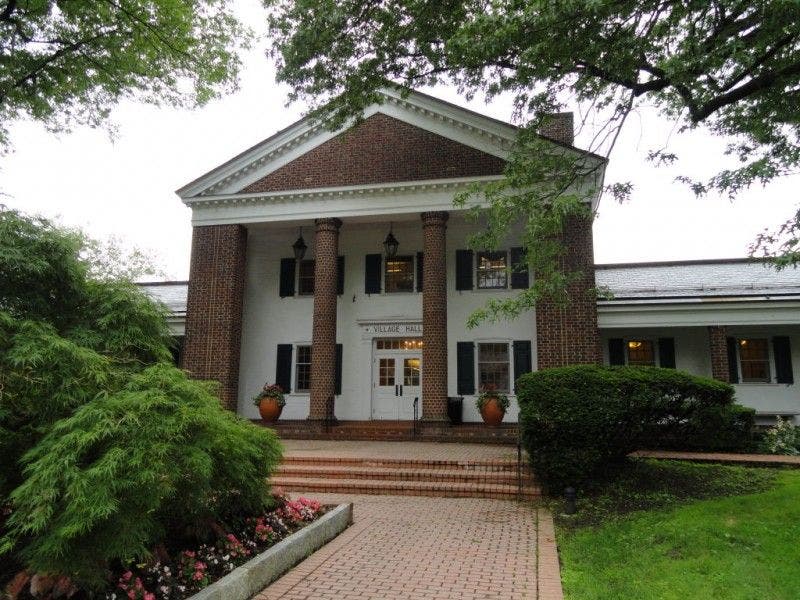
Photo credit: Google Maps.
Get more local news delivered straight to your inbox. Sign up for free Patch newsletters and alerts.