Community Corner
Carroll Park's Butterfly Garden: An Urban Oasis
"Milo's Garden" Is a local sanctuary and a growing community resource.
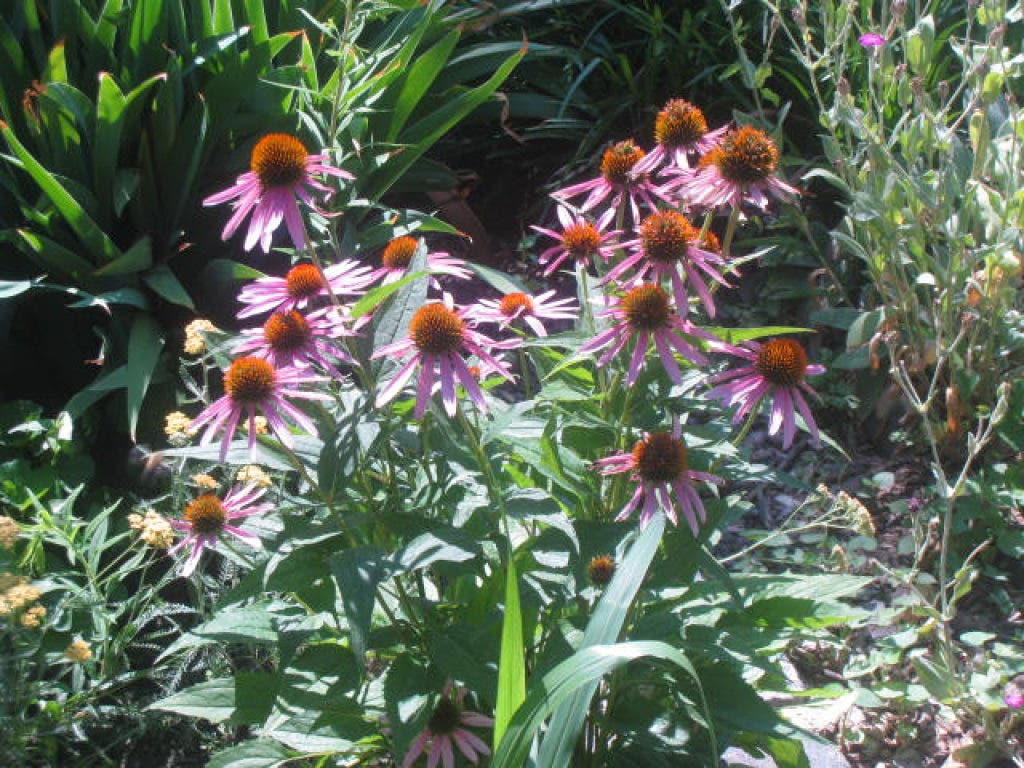


For neighborhood green thumbs, it’s not everyday you’re given an opportunity to breathe new life into a public green space. Yet that is precisely what happened to Laura Shippey, 36, of Carroll Gardens. The result is one of the best-kept “secret gardens” around.
At the southeast corner of , behind a shoulder-high wrought iron fence, is “Milo’s Garden,” a butterfly garden dedicated to wildlife habitat, and to the very human need for beauty, contemplation and solace.
This petite yet enchanting public garden has come into its own over the past several years under the artful stewardship of Shippey. It now provides locals – both old and young –with constant delight through its steady supply of blooming “butterfly plants” – flowering perennial shrubs that attract and provide food for pollinators like bees and butterflies.
Find out what's happening in Carroll Gardens-Cobble Hillfor free with the latest updates from Patch.
“I couldn’t believe my luck,” says Shippey of the experience of being offered the opportunity to maintain the garden after a prior gardener moved away.
Shippey, an English transplant from London, had grown accustomed to the lack of gardening spaces in her hometown, where “allotments” – small garden plots for lease – could only be attained after years spent on waiting lists. Shippey began gardening in her late 20s; during a maternity leave with her first son, Noah, she took a part time horticultural garden design course.
Find out what's happening in Carroll Gardens-Cobble Hillfor free with the latest updates from Patch.
“It thoroughly enjoyed it… and became obsessed,” she recounts.
Shippey has worked wonders in this tiny space, filling the rounded beds with a plethora of carefully chosen complimentary flowering shrubs and trees. In May, the garden boasted a dense cluster of stunning purple irises, beautiful to behold on a morning walk to the F/G train, which is just across the street.
“When I got the opportunity I really wanted to focus on butterfly-friendly plants. It’s nice to have a kind of reason or theme for the space and it seemed an appropriate one because the park has a lot of planted areas that are more evergreen. This space can be seen from two sides, has sun, and can be more of a crowd pleaser,” explains Shippey.
So what's blooming? Milo’s Garden currently features two varieties of Echinacea flowers (purple/orange and white/green), deep purple Buddleia (or "Butterfly Bush"), scarlet red Monarda, goldenrod-yellow Achillea (Yarrow), lavender Echinops as well as softly shaped dwarf trees such as Dogwood, Maple and Ash. The plants were selected for their flowers, but also for their drought-tolerance and low-maintenance qualities.
Plenty of bees, searching for pollen and nectar, can be viewed. There is a true air of peace in the garden space – the laughter of children in swing sets nearby, the hum of customers at the farmers market, and the drone of cars on Smith street seem like a faint soundtrack to the main attraction of the abundantly planted garden.
“The community can interact with it in an immediate way – both kids and adults can enjoy it,” she adds.
When Shippey was handed off the garden in 2007, it had already been established as a butterfly garden, yet she still spent some time on a re-design plan. Shippey rearranged the path stones to outline and define the garden beds, “to create the feel of a journey around the space.”
“I wanted it to become a wildlife oasis people could explore,” she said.
Shippey’s passion and intention are truly felt in this charming garden. While devoted to providing wildlife habitat, Milo’s Garden is also a space for observation of nature, contemplation and for finding sanctuary and peace.
The garden came to have a deeper meaning for Shippey when her 20-month-old son, Milo, died of Leukemia suddenly.
“Milo loved going to the garden,” says Shippey. She has planted a Weaver White Dogwood tree in his memory, that serves as the focal point for the "contemplation area" she’s created in one corner of the garden.
Now, her older son, Noah, his friends, and others come to sit.
“They have a place to retreat, to be quiet – or not be quiet,” she says.
The garden provided solace for Shippey as well.
“I found that working in the garden was quite healing for me – to weed, and prune and plant things. Being able to focus on this place has been really important; it’s been a real sanctuary for Noah and his friends, too.”
Since Milo’s passing, Shippey has focused on improving the garden, engaging the community and getting the garden certified by the National Wildlife Federation as a Certified Wildlife Garden, which was made possible through a fundraising effort by her eldest son’s school PTA and . To complete the certification, the garden required a water source. The garden now boasts a uniquely crafted bird bath, made by a Williamsburg artist. The bath is made from the bedrock material Fordham Gneiss – making it a “little brother” to the large Gneiss climbing rock in Carroll Park.
Shippey playfully describes the bird bath sculpture as “chunky, just like Milo was.”
“I want to engage the community more in the space. When people are around, especially little kids, exploring the place, picking up rocks and digging up dirt, I love it. They ask me what the plants are – it’s an amazing thing to interact with the community,” says Shippey.
Shippey is working with a teacher at PS 58 to set up a series of classes for students in the garden next year, centered on the theme of wildlife habitat.
“To help the students understand that this is their space,” she says.
The garden is open to the public whenever Shippey is at work.