This post was contributed by a community member. The views expressed here are the author's own.

|Local Classified|For Sale|

Peanut Shell Pellet Machine Solutions for Sustainable Biomass Fuel Production

Peanut Shell Pellet Machine Solutions for Sustainable Biomass Fuel Production

As global industries continue searching for cleaner and more affordable energy alternatives, agricultural waste is becoming an increasingly valuable renewable resource. Among various biomass materials, peanut shells have gained attention because of their strong combustion value, wide availability, and low processing cost. Instead of being discarded or burned in open fields, peanut shells can now be converted into dense biomass pellets used for industrial heating, power generation, and commercial fuel applications.

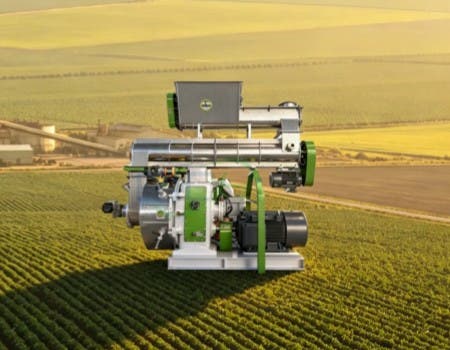
Modern biomass manufacturers are investing in the peanut shell pellet machine to improve fuel efficiency while reducing agricultural waste pollution. With proper processing technology, peanut shells can become a profitable and environmentally friendly biomass product suitable for both domestic and industrial markets.

Why Peanut Shells Are Ideal for Biomass Pellet Production

Peanut shells are produced in large quantities across major peanut-growing countries such as China, India, the United States, Argentina, and Nigeria. Traditionally, these shells were treated as low-value agricultural residue. However, rising renewable energy demand has transformed them into an important biomass raw material.

Peanut shells offer several advantages for pellet manufacturing:

  • High calorific value
  • Low raw material cost
  • Good combustion performance
  • Wide regional availability
  • Reduced environmental waste

Compared with loose biomass materials, pelletized peanut shells are easier to transport, store, and use in industrial heating systems.

How Peanut Shell Pellet Production Works

Biomass pellet manufacturing involves several important processing stages designed to improve pellet density and fuel quality.

Raw Material Preparation

Collected peanut shells are first cleaned to remove impurities such as soil, stones, or metal contaminants.

Crushing and Grinding

The shells are processed into smaller particles suitable for pelleting. Fine and uniform particle size helps improve pellet durability.

Drying Process

Moisture control is extremely important. Excess moisture can reduce pellet density and increase energy consumption during production.

Pelletizing Stage

A high-efficiency pellet maker machine compresses prepared biomass material into dense cylindrical pellets using pressure and friction heat.

Cooling and Packaging

Fresh pellets are cooled and screened before packaging for transportation or storage.

Why Biomass Investors Prefer Advanced Pellet Systems

Modern biomass factories require more than simple compression equipment. Industrial-scale projects focus heavily on automation, production stability, and energy efficiency.

Many biomass investors compare multiple agricultural pellet technologies, including the industrial rice husk pellet machine for sale, because both rice husk and peanut shell materials share similar processing requirements such as abrasive fiber structure and moisture sensitivity.

Advanced pellet systems usually include:

  • Automatic feeding systems
  • Wear-resistant pellet dies
  • Intelligent lubrication systems
  • Dust collection equipment
  • Energy-efficient motors
  • Automated control panels

These features improve long-term production stability while reducing labor requirements and maintenance costs.

Expanding Applications for Peanut Shell Pellets

Peanut shell pellets are increasingly used in:

Industrial Boilers

Factories use biomass fuel to reduce coal consumption and lower carbon emissions.

Commercial Heating Systems

Hotels, greenhouses, and food processing plants often adopt biomass heating technologies.

Biomass Power Plants

Compressed pellets provide stable combustion for electricity generation.

Agricultural Heating

Biomass fuel supports grain drying and greenhouse temperature control.

Because renewable fuel demand continues growing worldwide, peanut shell pellets are becoming an attractive business opportunity for agricultural processing companies.

Environmental Benefits of Peanut Shell Biomass

Converting peanut shells into pellets offers several sustainability advantages.

Reduced Agricultural Waste

Biomass processing prevents large quantities of shell residue from being discarded.

Cleaner Energy Production

Biomass fuel helps reduce fossil fuel dependence.

Lower Air Pollution

Pelletizing agricultural waste minimizes open-field burning emissions.

Circular Agricultural Economy

Waste materials become profitable renewable energy products.

Future Outlook for Peanut Shell Pellet Manufacturing

As renewable energy markets continue expanding, agricultural biomass processing is expected to play a larger role in industrial fuel systems. Improved automation, energy-efficient equipment, and smart factory technologies are helping biomass manufacturers achieve higher productivity and better fuel quality.

Businesses exploring biomass investment opportunities can find here valuable solutions for transforming agricultural residue into profitable commercial fuel products with long-term market potential.

More Classifieds

Post a classifiedPost