Neighbor News
LI Author Redefines Success After Years Of Mental Health Struggles
The Wheatley Heights native now works as a peer specialist, using his lived experience to help others through mental health recovery.


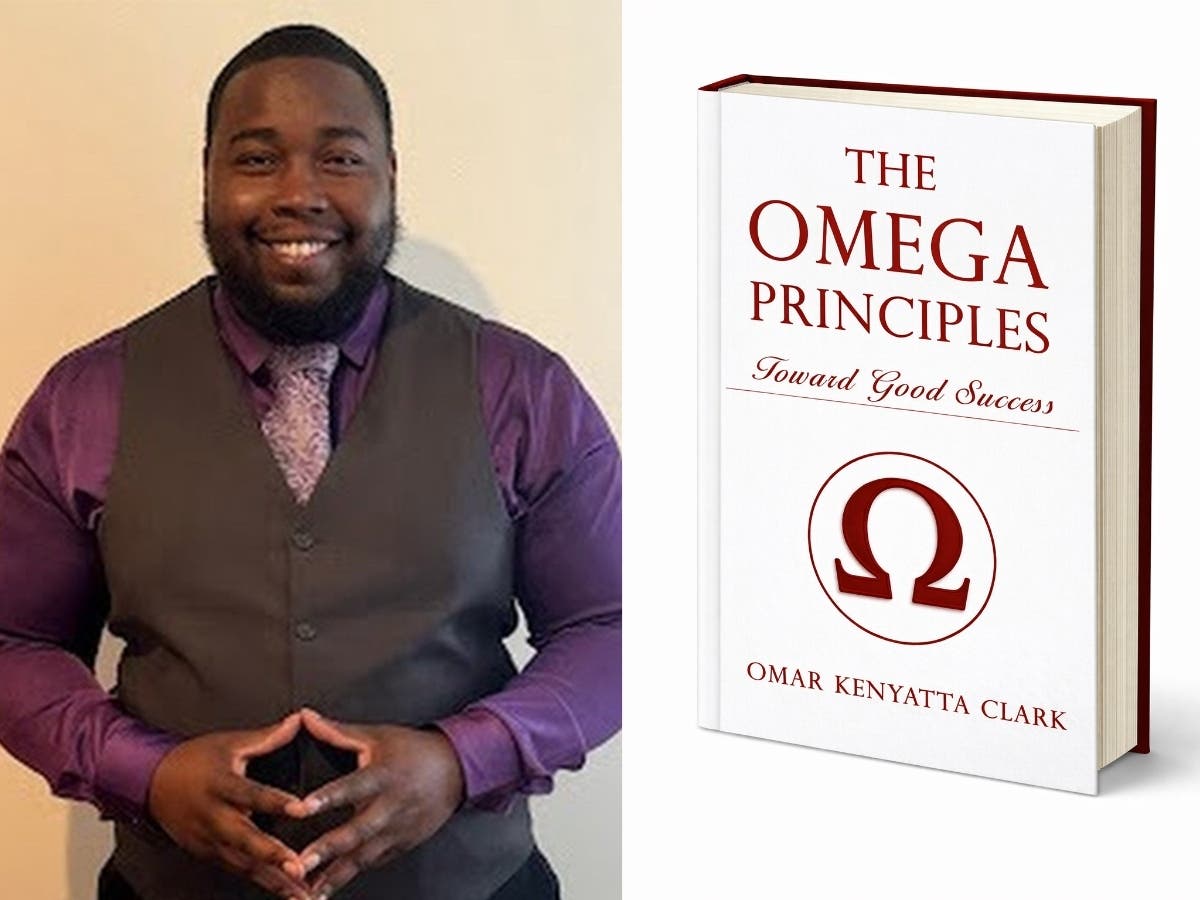
WHEATLEY HEIGHTS, NY — Omar Kenyatta Clark once believed success meant achievement, advancement and pushing toward the next goal.
Now, after a mental health crisis that changed the direction of his life, the Wheatley Heights native is asking readers to consider a different question.
Clark, 32, is the author of “The Omega Principles: Toward Good Success,” a book published April 24 by Breath of Hope Publishing. The book explores what Clark calls a deeper form of success, one rooted in faith, will, purpose and help.
Find out what's happening in Deer Park-North Babylonfor free with the latest updates from Patch.
“It’s about success that doesn’t cost you your soul,” Clark said. “Sometimes when we’re pursuing success, we can do that at the cost of our peace or the cost of our mental health or the cost of relationships.”
The book is both philosophical and personal. It draws from Clark’s background in psychology, his Christian faith, his lived experience with mental illness and the work he now does as a peer specialist in psychiatric inpatient units and support groups.
Find out what's happening in Deer Park-North Babylonfor free with the latest updates from Patch.
Mental Health Journey
Clark’s interest in mental health began before his own crisis. He studied psychology as an undergraduate at Misericordia University, with a minor in biology. After graduating with a bachelor’s degree in psychology, he began volunteering at Pilgrim Psychiatric Center in Brentwood.
“I wanted to really use that degree to serve those who may be suffering from mental health challenges,” Clark said. “To do that, I started by volunteering at Pilgrim Psychiatric Center, and when I got there, they told me, ‘If you can make it here, you can make it anywhere.’”
Clark moved through different areas at Pilgrim, including recreation, rehabilitation and psychology. The experience pushed him to pursue doctoral programs in clinical psychology so he could better serve the mental health population.
The first time he applied, he was denied. He applied again the next year and received seven interview invitations from doctoral programs across the country. After his first interview, however, Clark said his own mental health began deteriorating.
He went to the emergency room because he believed he was having a manic episode.
“Believe it or not, I diagnosed myself,” Clark said. “I ended up being right, but it progressed long without treatment, because I was in the emergency room and I wasn’t getting help.”
As time passed, he said, his condition worsened. The situation escalated, police were called, and Clark said he was tased and stopped breathing. He later woke up in the intensive care unit.
“At that point, what I saw as success and all my hopes of success became unclear and unstable,” Clark said.
Clark was about 25 at the time. He said he had no prior history of mental health challenges through childhood, high school or early adulthood. At first, he said, doctors diagnosed him with a brief psychotic episode. Over time, the diagnosis became bipolar I disorder.
During his recovery, Clark said, his family supported him in the hospital and helped nurse him back to health. His mother also arranged for him to complete a phone interview with Rutgers University while he was still hospitalized.
The interview went well, and Clark was accepted into Rutgers University.
He said his acceptance became evidence that his life and future had not ended because of a diagnosis or hospitalization.
“It became proof that life was not over,” Clark said. “I can still move forward, even though I’m having these challenges that I’m going through.”
Clark said his mental health challenges did not end with that first hospitalization. After he was accepted to Rutgers, he said he experienced multiple psychotic breaks at the end of semesters that led to hospitalizations, followed by periods of recovery and returns to school. The cycle continued for five years, from 2019 to 2024.
“Even though I was having success, it was at the cost of my mental health,” he said. “That is the point where I realized I had to take a stand for my mental health, and I ended up leaving the program.”
After leaving, Clark found peer support work. Unlike traditional clinical care, peer support is built around shared lived experience, mutual support and the idea that people in recovery can help others who are still moving through crisis.
“I use my lived experience to share what I’ve been through and help other people along with their recovery,” he said. “When I’m working with people, I’m also learning from their experiences.”
A Different Kind Of Success
Faith is central to Clark’s book and recovery. He said there were times during his hospitalization when his family could not be with him, and faith became a grounding force.
“The faith I had helped to ground me because there were a lot of things that were going on that were out of my control,” Clark said.
“The Omega Principles” is built around four principles: faith, will, purpose and help. Clark said he began to feel whole only when he understood the final principle — help.
The idea of help also came directly from his family’s support during his hospitalization.
“I really couldn’t have done it without them,” Clark said. “What I learned is that life is not meant to be carried alone, and when I couldn’t carry myself, my family carried me through that time.”
Breaking Stigma
Clark said his advocacy is also shaped by the stigma surrounding mental illness. For years, he did not talk openly about his diagnosis. Now, he shares his story through speaking, his book and his podcast, “Voices of Hope with Omar Kenyatta Clark.”
“There’s still a problem with access to care, especially in the Black community, and there’s so much stigma surrounding mental health and mental illness,” Clark said.
Clark’s company, Breath of Hope Incorporated, brings together his book, podcast and keynote speaking.
“Our mission is to walk with others who may be suffering and guide them toward deeper, more fulfilling, more meaningful, and more whole lives,” Clark said.
Clark said he often returned to his own writing during recovery and found encouragement in it. That experience makes him believe his book can help others who are encountering its message for the first time.
“I’ve been thrown into the fire,” Clark said. “Now I’m using that experience for the good, to help other people in their recovery, to encourage other people and to spread hope.”
The book is available through Amazon, Barnes & Noble and Apple Books, he said.
Get more local news delivered straight to your inbox. Sign up for free Patch newsletters and alerts.