Sports
A Baseball Oasis in the Heart of Brooklyn
A new season begins at the Prospect Park Parade Grounds
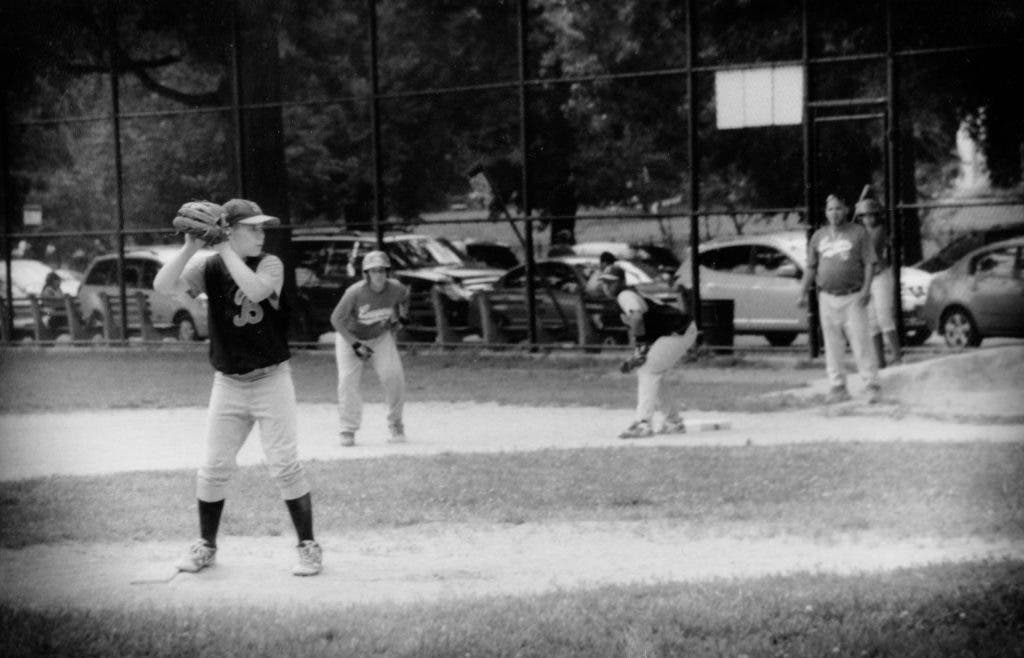


Springtime in Brooklyn means picnicking in the park, hanging out on rooftops, and biking around the neighborhood. For thousands of young athletes, it also means renewing one of the borough’s oldest traditions—baseball at the Parade Grounds.
Ever since the 1860s, players have trekked from all over the city to play ball at the Parade Grounds in the heart of Brooklyn. Today, hundreds of teams from throughout Brooklyn use the fields for practices and games.
In their heyday of the 1940s and 50s, the fields were packed with players from dawn to dusk throughout the summer months.
Find out what's happening in Ditmas Park-Flatbushfor free with the latest updates from Patch.
“The fields were utilized 120% of the time,” says Jerry Katzke, the director of the Parade Grounds Baseball League. “The place was just overflowing with games and baseball and people. When the best teams played, especially in the college age division, you’d get thousands of spectators.”
Future major league stars like Joe Torre, Sandy Koufax, and Willie Randolph all honed their craft as teenagers on the Parade Grounds. For them and thousands of others, playing there was a rite of passage.
Find out what's happening in Ditmas Park-Flatbushfor free with the latest updates from Patch.
“It was really the mecca of sandlot baseball in New York City,” Katzke says. “A lot of the best teams and the best players came out of the Parade Grounds.”
Originally designed by Frederick Law Olmsted to host military drills after the Civil War, the Parade Ground fields were quickly adopted for recreational purposes. As early as 1871, pioneering sportswriter and “godfather of baseball” Henry Chadwick was referring to them as “the finest free ball ground in the United States.”
Teams soon were crowding each other out for playing space. According to the , the 1885 season featured 900 baseball games and 150 cricket matches. In 1901, the Brooklyn Eagle even reported on a team of fanatics who kept playing baseball on the grounds all winter long.
The fields have been in constant demand ever since. Only twice have they come under serious threat. In the late 1950s, desperate to save the Brooklyn Dodgers, borough president Abe Stark offered the grounds as the location for a new stadium (he was turned down). Then, in the late 1990s, the Mets unveiled plans to build a minor league stadium on the grounds. The fields had fallen into disrepair, and the team figured that the plan would face little resistance.
They were wrong. Parents and other concerned citizens banded together to save the fields, which despite their poor condition still played a critical role in the community. The publicity generated by their campaign not only forced the Mets to move their minor league stadium to Coney Island, but also raised the necessary funds to give the Parade Grounds a much-needed facelift.
“Before 2004, there were really no workers at the Parade Grounds whose job it was to maintain the fields,” Katzke says. “When they renovated in 2004 [the Parks Department] made the commitment that there would be staff doing maintenance.”
Today, baseball continues at the Parade Grounds much like it has for over a century, with teams of all ages filling the fields after school and throughout the summer. Yet obstacles remain. Katzke says that the Parks Department maintenance teams have been less than satisfactory, forcing the Parade Ground League and the Prospect Park Alliance to raise money on their own.
“Between budget cuts and the number of things that the parks department is involved in, they really aren’t maintaining the fields the way they should be,” Katzke says.
The biggest threat, however, comes not from the city but from youth sports culture as a whole. In recent years baseball has had to compete for attention with increasingly popular sports like soccer and basketball, which have drawn young Brooklynites away from the erstwhile national pastime.
Today, most young baseball players only play during the spring, reserving the fall for soccer. As a kid playing for the elite Bonnie’s Youth Club (of which he is now President), Katzke and his friends played nearly year round. This means that there are far few truly elite youth teams in the borough today.
“In the '50s '60s and '70s there might have been 15 or 16 organizations like the Bonnies, groups that were competing at the top level of play in Brooklyn,” he says. “Now there’s really only one or two or three. There’s been a fairly significant proliferation of teams in general, but a lot of them only play spring, or only play once or twice a week.”
Yet, while the Parade Grounds may not be producing as many major leaguers as they did in the days of Torre and Koufax, but they still play a key role in the lives of many Brooklyn families.
For Brooklyn parent Jim Ferguson, whose thirteen-year-old son plays for the Bonnies, the importance of the Parade Grounds can’t be overstated.
“Both Prospect Park and the Parade Grounds are jewels,” he says. “There is always something going on here. I know for myself and for my family, it would be hard to imagine daily life without it. I’m sure a lot of other people feel that way too.”