Politics & Government
Federal Court Puts Brakes On East Hampton's Airport Noise Restrictions; Elected Officials Outraged
BREAKING: A federal court enjoined East Hampton's three local laws to restrict airport noise.


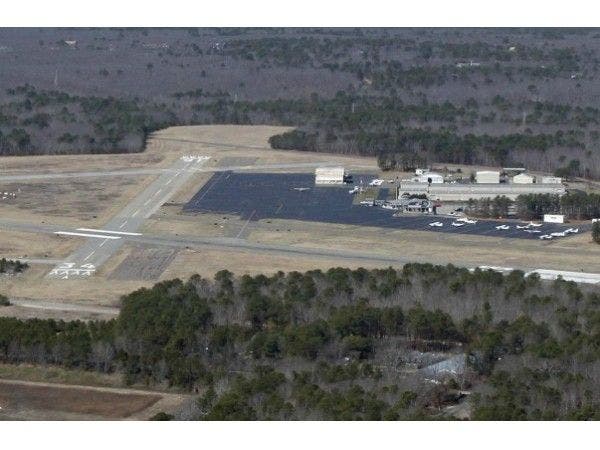
EAST HAMPTON, NY — Tempers flared on the East End Friday as a federal appeals court in New York ruled to enjoin East Hampton's three local laws restricting airport noise.
The Second U.S. Circuit Court of Appeals ruled in favor of the Friends of East Hampton Airport, Inc. Friday regarding access restrictions at East Hampton Airport.
The restrictions, proposed by Councilwoman Kathee Burke-Gonzalez in 2015, included a mandatory nighttime curfew from 11 p.m. to 7 a.m.; an extended curfew on noisy aircraft from 8 p.m. to 9 a.m.; and a limit on operations by noisy aircraft of one trip (one arrival and one departure) per week during the summer season — the third restriction was enjoined in 2015.
Find out what's happening in East Hamptonfor free with the latest updates from Patch.
A statement from East Hampton Town blasted the decision: "The court’s opinion undermines local control of operations at the town-owned airport property and establishes that the federal bureaucracy controls regulations in the area of aviation noise abatement and control."
In addition, the town said, "In its capacity as proprietor of the East Hampton Airport, the town board has always held the belief that it had a public policy responsibility to protect local residents from the loud and disturbing effects of aircraft noise."
Find out what's happening in East Hamptonfor free with the latest updates from Patch.
For years, East End residents have been crying out about helicopter and aircraft noise they say has shattered their bucolic quality of life.
With an eye toward providing those impacted by aircraft noise "meaningful and deserved relief," East Hampton Town adopted the three local laws in April, 2015 imposing use restrictions, the statement read.
Town officials said they relied upon written statements made by the Federal Aviation Authority to then Congressman Tim Bishop stating that the town was not required to engage in the lengthy Federal Aviation Administration bureaucratic review and approval process under the Airport Noise and Capacity Act, or ANCA, "but could instead, as proprietor of the airport, adopt reasonable noise restrictions. Unfortunately, the Second Circuit Court of Appeals decision has usurped the town’s local authority, contrary to the assurances of the FAA written statement to Congressman Bishop, therefore making burdensome ANCA review and FAA approval mandatory for any aviation noise regulations adopted by an airport proprietor," the statement read.
ANCA was adopted in 1990 with an eye toward creating a more comprehensive approach to handling aircraft noise nationwide.
Back in 2015, opponents, including The Friends of East Hampton Airport, sued in federal court to enjoin the local laws; in late June, 2015, Federal District Court Judge Joanna Seybert enjoined one of the laws that restricted noisy aircraft to one round trip per week.
The other two curfew laws have been in effect and enforced since July 2, 2015, the town said.
"The town board vigorously defended its enactment of these three reasonable local laws at both the District and Circuit Court of Appeals levels in attempt to effectuate the solutions arrived at through the deliberative process of the town board," East Hampton Town said.
Officials in East Hampton added that over the past two summer seasons of implementation, the town saw over 99 percent compliance with the curfew regulations.
"Although today’s court decision places the solution to aviation noise problem firmly at the feet of Congress and the FAA, the town will continue to explore every available option so that the residents of the East End won’t continue to be inflicted by an unrelenting din from the skies above," the statement from East Hampton Town read.
When the restrictions were first enacted, the Friends of East Hampton Airport Coalition voiced opposition. In a statement from spokesman Loren Riegelhaupt, the group claims they were "forced to consider legal action to remedy this unfortunate situation.”
She added, at the time, "While not surprising, the decision by the Town of East Hampton to implement these severe and illegal restrictions is certainly disappointing. Rather than working together to find a balanced, reasonable approach, as they promised, the town has passed restrictions that violate the law and result in dramatic loss in revenue for the airport and town.”
The court's decision, written by Judge Reena Raggi, said that all three local laws were preempted by ANCA.
Locally, elected officials were seeing red over the news.
"I am terribly disappointed in the court's decision to enjoin East Hampton's local laws that help mitigate the noise the region has to contend with from loud aircraft coming and going to East Hampton's municipally owned airport," said Southold Town Councilman Bob Ghosio, who serves as liaison to the town's helicopter noise abatement committee. "East Hampton's town board has in good faith recognized the problem and taken steps to lessen the negative impacts to our quality of life on the East End. Unfortunately, this has been met by a court that apparently doesn't agree that the local municipality has the right to local control, whether or not the town receives FAA funding."
He added that "this is not good news" for the sea of North Fork residents who have seen quality of life shattered due to swelling airport noise. In Southold, Ghosio said, "a good many pilots choose to fly transition routes to East Hampton right over our homes rather than use an all water route around Plum Island. The Southold Town helicopter committee will be reviewing the potential impacts of the decision."
Ghosio said the group would work with Southold Town Supervisor Scott Russell and the town board to weigh options moving forward.
Of the decision, Russell responded, "I would like to bypass Sen. Chuck Schumer, bypass the courts and post the names of the members of the Friends Of The East Hampton Airport on the town's website so we can take our complaints right to them."
A statement from the office of Congressman Lee Zeldin said he was being briefed Friday night on the latest update. Zeldin, the statement said, "will continue working closely with East Hampton Town regarding options moving forward at this point. Congressman Zeldin is a strong supporter of local control and ensuring that the FAA continues to honor its prior commitment not to take negative action against East Hampton Town for the enactment of aircraft noise restrictions; a commitment that has been honored since Congressman Zeldin secured House passage of legislative language preventing the FAA from taking negative against East Hampton Town."
Others, however, applauded the decision. According to a press release, The National Business Aviation Association lauded the decision by U.S. Court of Appeals for the Second Circuit, "which agreed with the argument made on appeal by NBAA and other aviation interests that the Airport Noise and Capacity Act of 1990 continues to apply to New York’s East Hampton Airport, making the town’s adoption of noise and access restrictions at HTO a violation of federal law."
In addition, the ruling, "which sets an important precedent for airports nationwide, holds that ANCA continues to apply to HTO, despite the town’s stated intent to no longer accept federal Airport Improvement Program grants," the release said.
“NBAA has long advocated against unlawful and unreasonable restrictions being imposed at East Hampton Airport,” said NBAA President and CEO Ed Bolen. “We are gratified that the Second Circuit agrees that East Hampton remains bound by ANCA and related FAA policy and regulations.”
ANCA requires airports to engage in a detailed study and obtain FAA approval for noise-based access restrictions before they can be implemented, the release said.
Get more local news delivered straight to your inbox. Sign up for free Patch newsletters and alerts.