Neighbor News
What to Know Before Buying a Diamond for Valentine's Day
When it comes to Valentine's Day jewelry, there's nothing more impressive than giving a diamond as a gift.
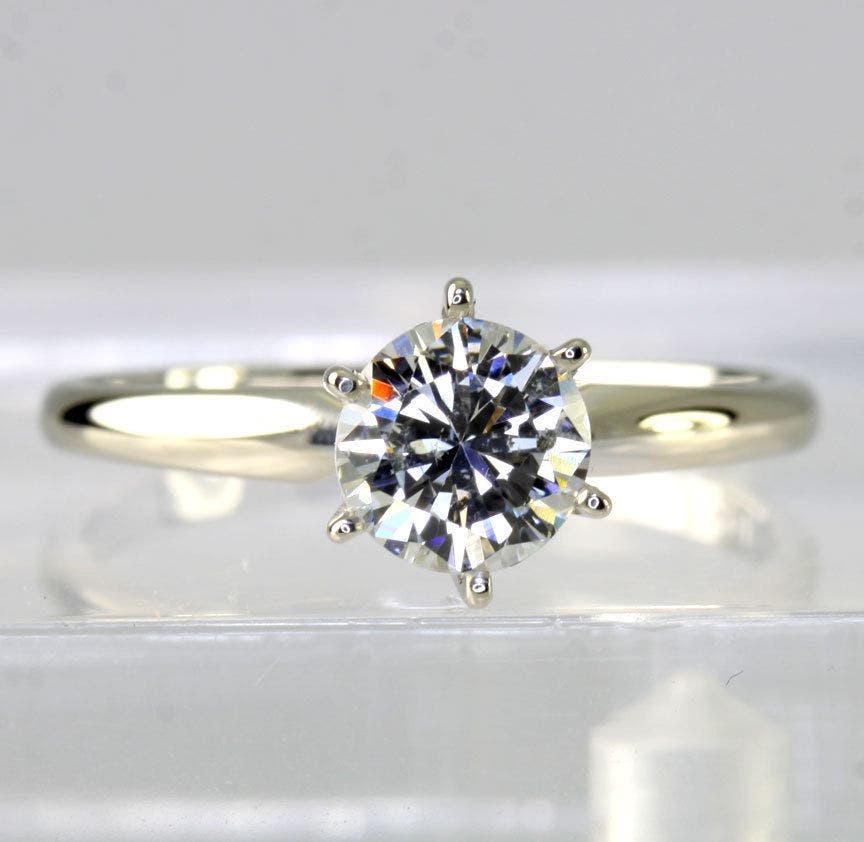
When it comes to Valentine’s Day jewelry, there’s nothing more impressive than giving a diamond as a gift. Before you buy, read these important tips from our diamond experts about “the 4 Cs” of diamonds, as well as some other diamond buying tips.
Understand the 4 Cs of diamond rating
Because diamonds are so valuable, and rating them can be complex, the Gemological Institute of America (GIA) created a universal rating system in the 1940s to standardize the diamond rating process, and ultimately protect consumers from getting ripped off. Known as “the 4 Cs,” the GIA International Diamond Grading System™ is the jewelry industry standard to objectively evaluate, compare and rate diamonds.
Find out what's happening in East Meadowfor free with the latest updates from Patch.
Carat. The standard unit of weight for diamonds is called a carat. The name comes from carob seeds because early gemstone appraisers used carob seeds as counterweights on their scales.
One carat weighs 0.2 grams, and one carat is equal to 100 points. Therefore, a quarter carat weighs 25 points, a half carat weighs 50 points and a three quarter carat weighs 75 points. It takes about 142 carats to equal one ounce.
Find out what's happening in East Meadowfor free with the latest updates from Patch.
A fraction of a carat can mean a big difference in the cost of a diamond, so precision in measuring is crucial. Carat weight is often measured to the hundred thousandths of a carat, and rounded to a hundredth of a carat.
Diamond carat should not be confused with gold karat, which refers to gold purity.
Color. Diamonds are valued by how closely they approach colorlessness — the less color a diamond has, the higher its value. The exception to this rule are the rare colored diamonds — known as “fancy” diamonds — which come in blue, red and pink.
Most diamonds sold in retail stores are near colorless to faint or light brown or yellow. The GIA’s universal color scale starts at D, representing colorless, and goes through Z and beyond to the fancy and vivid colors. The higher the letter, the more color is present in the diamond.
Clarity. Clarity is the rating based on a diamond’s blemishes and inclusions. Blemishes are external flaws, and inclusions are internal flaws. Inclusions are created when the diamond is formed, or when the diamond is cut. Because 100 percent “perfect” diamonds are very rare in nature, those with fewer blemishes and inclusions are rarer and cost more.
The GIA International Diamond Grading System™ Clarity Scale is the standard clarity grade scale, and contains 11 grades. Diamonds are assigned a clarity grade ranging from flawless (FL) to diamonds with obvious inclusions (I3). Most diamonds are graded in the VS (very slightly included) or SI (slightly included) categories.
To determine a diamond’s clarity, appraisers using the GIA Clarity Scale consider different variables, including the diamond’s size, nature, position, color or relief, and quantity of clarity characteristics visible under 10× magnification.
Cut. In 2005, after 15 years of research, the GIA released its rating system for grading the cut of standard round brilliants in the D-to-Z color range. The GIA system rates a diamond’s cut using five grades: Excellent, Very Good, Good, Fair and Poor. The system considers factors such as brightness, fire and scintillation, weight ratio, durability, polish and symmetry.
The cut of any diamond has three attributes: brilliance (the total light reflected from a diamond), fire (the dispersion of light into the colors of the spectrum), and scintillation (the flashes of light, or sparkle, when a diamond is moved).
Most diamond jewelry uses the standard round brilliant shape. All others are known as fancy shapes, and include the marquise, pear, oval and emerald cuts. Diamond shapes such as hearts and triangles are also gaining in popularity.
If you like it and can afford it …
Choosing the right diamond is also subjective: how you feel about it when you look at it, hold it and wear it. Don’t just focus on the GIA rating — go with a diamond that looks beautiful to you and is in your budget. If you’re buying for someone else, apply the same logic. Know his or her tastes. Does he or she prefer size over quality, or quality over size? If he or she prefers size and quality, you may need to do some real comparative shopping! Also, make sure you know the person’s ring size, as well as the jewelry store’s return policy.