Community Corner
‘Gratitude Is The Answer’: Woodmere Woman Reflects On Breast Cancer Journey After Four Years Cancer-Free
Haley DeSetta was 31 when she was diagnosed with breast cancer in 2021. After a long recovery process, she says she wouldn't change a thing.

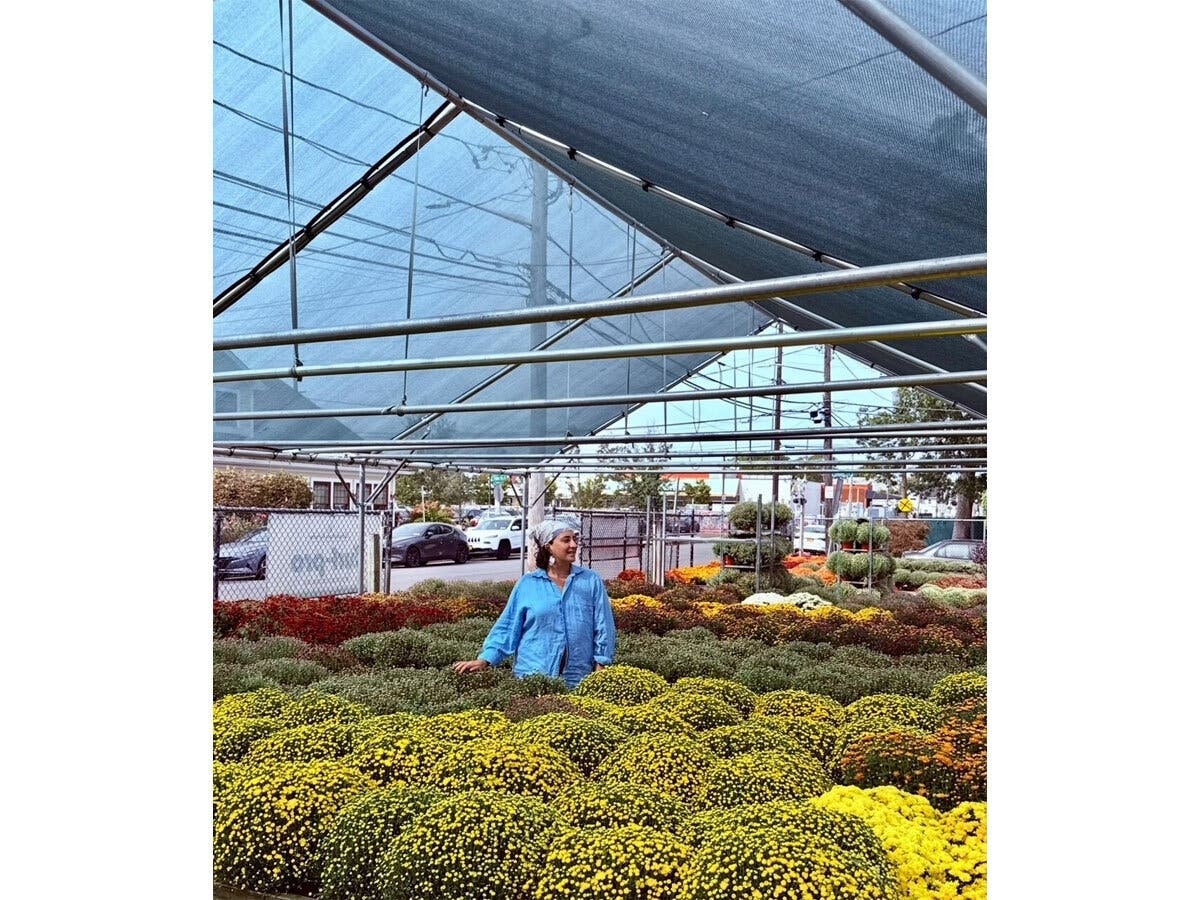
WOODMERE, NY — When Haley DeSetta got diagnosed with breast cancer in 2021, she realized there were two ways the next few months could go. It was the second year of the COVID-19 pandemic, and DeSetta — a 31-year-old food and beverage industry veteran — had been on unemployment for a year.
“This experience was going to suck, no matter what,” DeSetta said. “And I had a choice to make. It was either going to suck and I was going to be miserable or it was going to suck and I was going to have as much fun as possible. And I chose the latter. And that just really carried me through.”
DeSetta had made her first trip to the doctor at a women’s health clinic in New Orleans about five weeks before her diagnosis; after a brief conversation, doctors asked DeSetta if she had a cat — she did — and said they thought she had cat scratch fever. A month after this doctor’s visit, DeSetta said her next doctor’s appointment was with a dermatologist.
Find out what's happening in Five Townsfor free with the latest updates from Patch.
She went into the dermatologist’s office thinking she’d get this rash examined, and she left the dermatologist with a prescription for a mammogram. After a mammogram and a biopsy, DeSetta was told she had a rare, aggressive cancer known as inflammatory breast cancer.
The diagnosis is one that's becoming more common for women under 50: Breast cancer is already the leading cause of death for women under 50, and women under 30 are more likely to experience more aggressive forms of breast cancer.
Find out what's happening in Five Townsfor free with the latest updates from Patch.
For women under 50, the incidence rate of breast cancer is actually rising faster (1.4 percent annually) than it is for women over 50 (about 1 percent per-year).
“From the day that they took the biopsy to the day that I found out that I had cancer was maybe a week. When they called me to tell me, I don't know if I was shocked as much as I was realizing that this was going to change my life forever,” DeSetta said. “You don't really realize how much it changes your life, forever, until you're in it. But once you get that diagnosis, nothing's going back to being the way it was before, ever.”
From there, DeSetta began the battery of treatments that often come with breast cancer: chemotherapy, mastectomy, and “as many clinical trials as possible.”
“I knew a lot of them could benefit me, and I knew that this was valuable research, and data that that is needed, especially now that young people are getting more and more cancer,” DeSetta said. “I'm like a golden ticket to scientists, you know what I mean? I just said yes to everything, and proton therapy was one of these options that was proposed to me."
Proton therapy, a targeted, precise form of radiation therapy designed to protect healthy cells in the body while eliminating cancer cells, became an integral part of DeSetta’s cancer treatment process.
After conversations with doctors at Memorial Sloan Kettering Cancer Center, DeSetta connected with Dr. J. Isabelle Choi, an MSK radiation oncologist and the Director of Research at the New York Proton Center. Having already undergone a mastectomy, DeSetta said she was worried about what traditional radiation treatments might do to the healthy tissue in and around her heart.
While Choi said the radiation complications DeSetta was concerned about are relatively uncommon nowadays, she told Patch it’s important to limit radiation in and around the heart, especially in younger patients like DeSetta. Proton therapy, she said, became a way to do that.
“Proton therapy can be considered for patients when we believe it may reduce radiation exposure to nearby healthy organs while still effectively treating the cancer,” Choi said. “In breast cancer, this is often particularly relevant for patients requiring treatment to the lymph nodes, especially on the left side where the heart is close to the treatment area. Eligibility depends on several factors, including the patient’s anatomy, cancer stage, prior treatments, genetic factors, and the specific goals of treatment. Ultimately, treatment recommendations are individualized to each patient.”
As for the patient she got to meet in 2021, Choi said DeSetta was remarkable to work with.
“Haley was an exceptional patient to work with — thoughtful, resilient, and deeply engaged in her care throughout the treatment process,” Choi said. “She approached every step with remarkable strength and positivity, even during challenging moments. It was a privilege to be part of her care team and to see her use her experience to help educate and support others navigating a cancer diagnosis.”
DeSetta is four years cancer free. She has made a career change, leaving food and beverage behind to take up a role at her family’s garden center. She works there through the spring, summer and part of the fall, then spends the winter traveling — this past winter it was six weeks in Thailand and Vietnam, this coming winter she's thinking of going to Puglia, Italy, "on the heel of the boot."
“It’s a weird work-life balance, but, for me, it really pays off,” DeSetta says.
When she looks back at her cancer diagnosis and treatment, DeSetta says the day she got her diagnosis was “the last day [she] got to be the old Haley.” While she describes herself as happier than she’s ever been, DeSetta says it was a journey to get to this point.
“I literally had to mourn — and maybe I’m still doing it now — who I was before the diagnosis,” DeSetta says. “But, at the same time, I've changed so much, in so many positive ways, that I love who I've become through this experience. It's a terrible thing that I had to go through, but I probably went through 10 years of emotional growth in a two-year time period.”
Part of that emotional growth, DeSetta says, is the clarity that came from a diagnosis that is a matter of life or death for many people who receive it,
“When you experience this kind of ‘life or death’ situation, and you make it out to the other side, a wave of clarity comes over you,” DeSetta says. “Things that weren't clear to me before are very clear to me now…priorities, what's important to me, what I want out of my life…It’s a new way of being. In a weird way, it's almost like a gift. I say it's a curse and it's a gift.”
Another valuable part of her journey, DeSetta says, was the support of women who were facing similar diagnoses to hers. She joined a breast cancer support group while she was in treatment, and bonded with the women there by swapping notes and information as everyone navigated cancer together. At one point, DeSetta says the breast cancer support group got together for a group trip to Palm Springs. The members that live in New York, she says, still get together.
As she reflects on the “new” Haley, DeSetta says she wouldn’t take back her journey, even if she could.
“I wouldn't change it for anything. I genuinely mean that,” DeSetta says. “If you could take the proverbial ‘erase the cancer,’ magic wand, I don't think I would do it. I'm a different person and I'm on the path. I'm going in the direction that I should be going in, and that's it. I'm here now. I'm lucky to be alive. And gratitude is the answer.”
Get more local news delivered straight to your inbox. Sign up for free Patch newsletters and alerts.