Schools
Lawrence, Hewlett Face Fiscal Crisis
Lawrence has already laid off staff, while Hewlett-Woodmere may make that move later on.




While School District 15 recently announced layoffs, a School District 14 official said that it is in better shape than most and will have more options when it is forced to make cuts.
"Old reasonable is not the new reasonable," Dr. Peter Weber, Hewlett-Woodmere's assistant superintendent of business, said at the board of trustees work meeting last Wednesday. "The things we value most as a community are the things we'll fight hard to preserve."
The two situations illustrate each district's approach to their financial situations in especially difficult times when outside funds are drying up. In Lawrence, the board of trustees is committed to keeping its tax rate low; in Hewlett, residents pay nearly double Lawrence's school taxes and have approved the creation of "rainy day" funds. For the 2010-11 school year, District 14 residents in Class 1, which includes most homeowners, paid about $909.05 for every $100 of assessed home valuation. In Lawrence, the same class paid a rate of about $411.11, according to the Nassau County Assessment Review Committee.
Find out what's happening in Five Townsfor free with the latest updates from Patch.
It's important to note that District 15 has a shrinking public school population and added more than $30 million to its coffers from the sale of the Number One School. It also has many commercial properties, while Hewlett-Woodmere has very few. Weber said that means District 14 homeowners take on a bigger share of school taxes.
"In Hewlett, their taxes are double what ours are," said Dr. Asher Mansdorf, vice president of the Lawrence School Board. "Every politician in the country is saying we can't raise taxes, and we're like everyone else. Unfortunately, saving is putting people out of work."
Find out what's happening in Five Townsfor free with the latest updates from Patch.
Twenty-seven staff members across the district, including hall monitors, secretaries and security guards, will lose their jobs at the end of the year. Thirteen employees also had their hours reduced.
"One of the hardest things to come to grips with … is that it is not just a Lawrence problem, but it's a county, state and national problem," Lawrence Deputy Superintendent Gary Schall said. "This is not a problem caused by our tax rates, this is a problem due to the financial crisis we're facing as a nation."
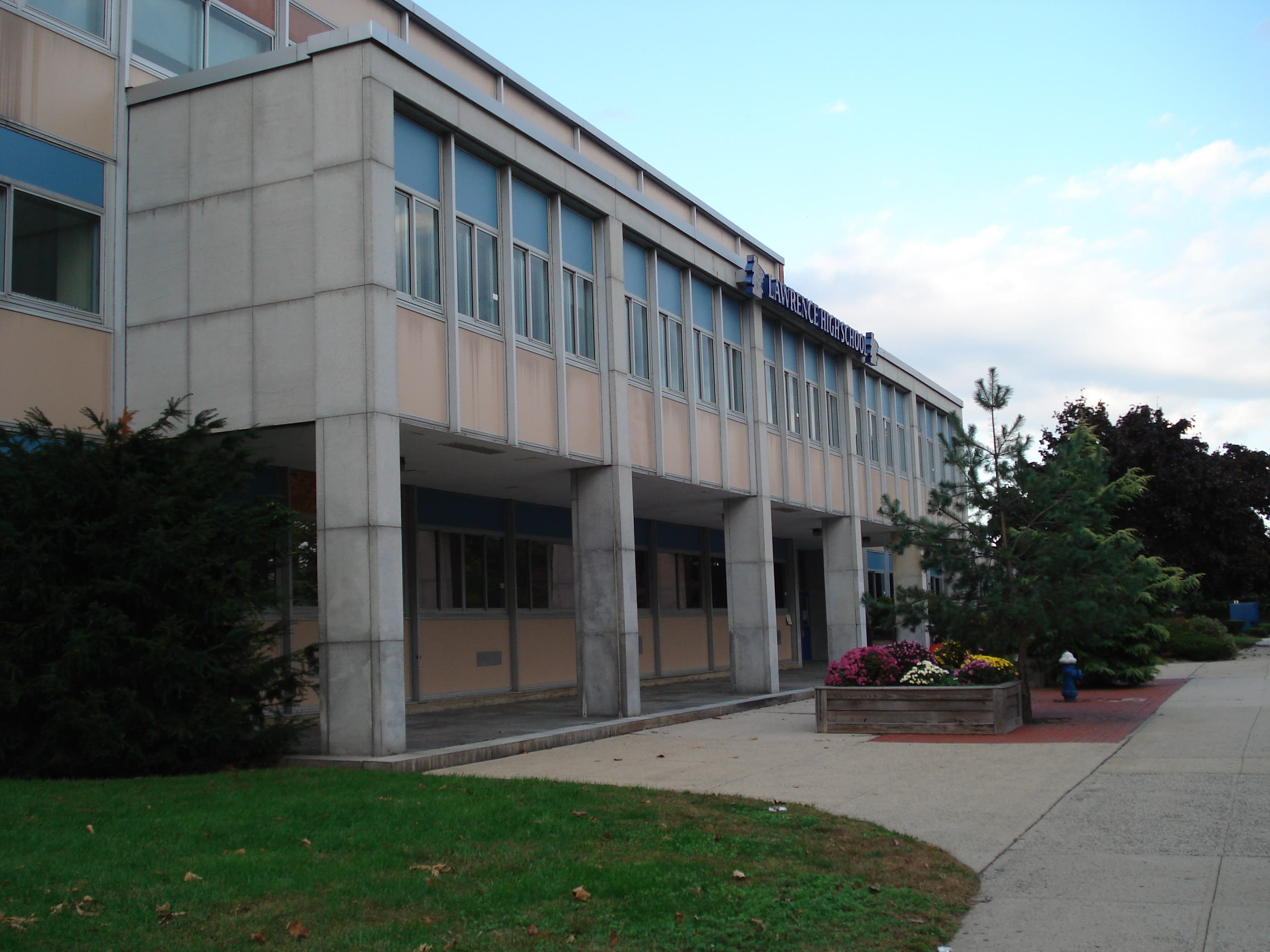
The secretary pool will be refined and technology will do much of the work the laid off staff has done, Schall said. Instead of hall monitors performing security duties, guards will now take over, he added. The district also plans to install alarms and cameras in the high school.
"What we're doing is building up a surplus for the year so we can have some sort of savings accrued so next year's budget won't face a rise in the tax levy," Schall said. "By making these cuts this year we're saving $450,000 and next year we'll save $900,000."
The financial pain is far from over for school districts. Not only have schools lost precious federal and state funding, but they also have to worry about rising costs such as pensions, health insurance, salaries, retirements and energy bills.
"Unless we fire a lot of staff or don't flush our toilets, these things are out of our control," Weber said. "What we face now, although there is a recovery, is a tremendous amount of lag in municipal money. New York State is putting off its day of reckoning and we'll have to deal with that."
Schools are also waiting on aid from the state and federal governments that may never come.
"This is fundamentally a problem that is stemming from the top down," said Martin Melkonian, an adjunct associate professor of economics at Hofstra University. "In the case of education, you're biting off your nose to spite your face. It's not going to work. We need significant amounts of money in this area."
Jay Breakstone, president of the Nassau-Suffolk School Board Association, compared school budgets to a home's budget: Either make more money or spend less. "The problem is no one is telling you how to spend your money at home," he said. "Schools have to follow state mandates. We have teacher evaluations and the state billing us for Regents' Exams per student that the state mandates we take."
Especially concerning to school officials is Governor-elect Andrew Cuomo's proposal to put a 2 percent cap on local property taxes, which determine school taxes.
"It is a horrendous idea, which guarantees that poor school districts get poorer," Breakstone said. "It guarantees that every school district is in an untenable situation. Tax caps are a phony solution to a real problem. The best tax cap is an informed electorate."
The Lawrence School District will have to work with what it has and make sacrifices to preserve education, Schall said. "We have to evaluate the budget every day and not be afraid to do what we did just now," he said. "It hurts, it's painful, but not to act would be that much more painful."
When the time comes for Hewlett-Woodmere, the district may face decisions similar to those that Lawrence has already made. "We will be planning for the worst," Weber said, "and celebrating if we get some reprieve."
Get more local news delivered straight to your inbox. Sign up for free Patch newsletters and alerts.