Community Corner
ICYMI: Subway Delays Cost New Yorkers $307M In Lost Work Hours Last Year, Study Finds
A new study shows how many hours New Yorkers spend waiting on subway platforms.


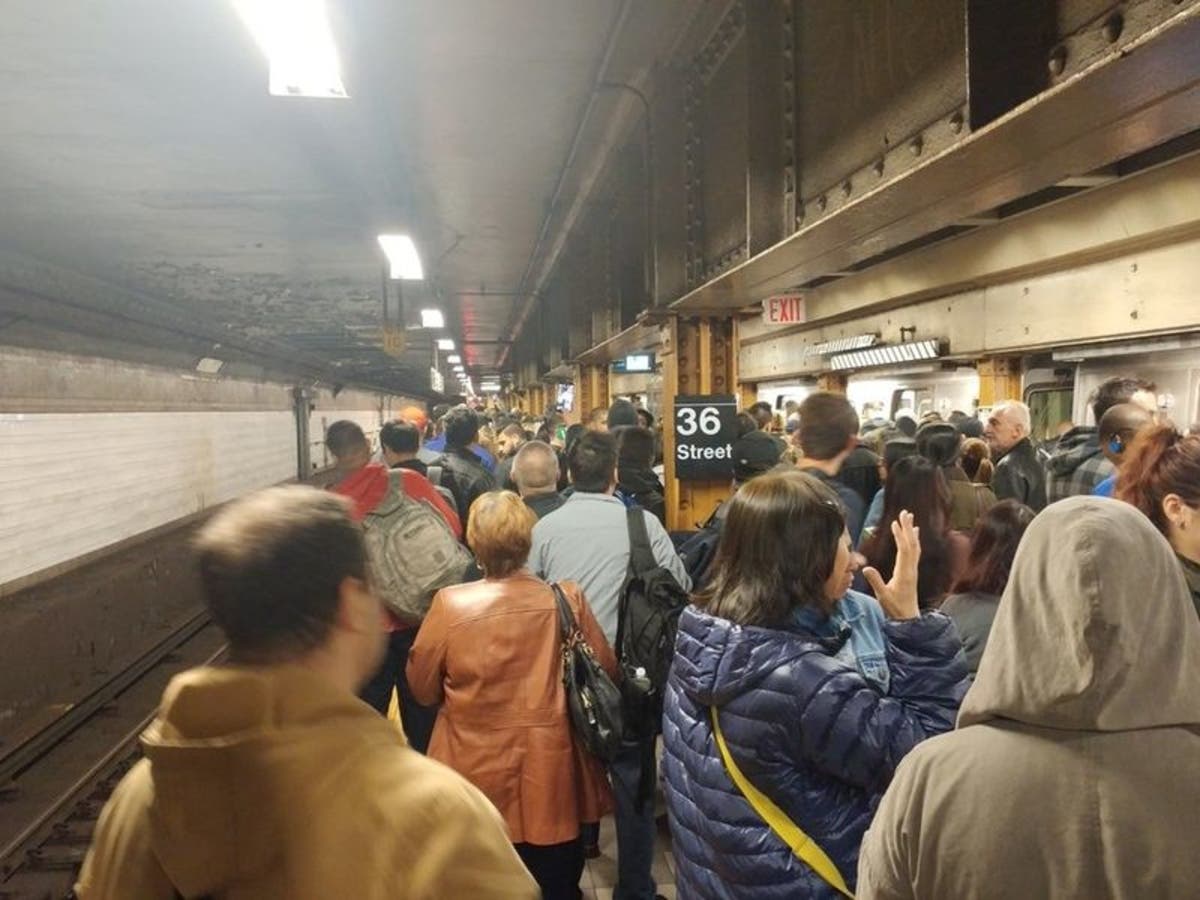
NEW YORK CITY – Subway delays have become so bad they force New York City commuters to waste about 35,000 work hours waiting for trains every day – time that's worth about $1.2 million, according to a new study on MTA service.
The New York City Independent Budget Office on Thursday released its report on how morning rush hour delays affect the city’s economy. It estimates that the time workers spent waiting on subway platforms in the past year was worth $307 million.
“That the magnitude of subway delays is getting worse is not just a matter of perception,” the report says. “Service disruptions are taking an increasing toll.”
Find out what's happening in Fort Greene-Clinton Hillfor free with the latest updates from Patch.
(For more on transit and other local stories, subscribe to Patch for daily newsletters and breaking news alerts.)
The study — which reviewed subway performance data between 2012 and 2017 — found the number of delays jumped “dramatically” from 20,000 per month to 67,450 per month.
Find out what's happening in Fort Greene-Clinton Hillfor free with the latest updates from Patch.
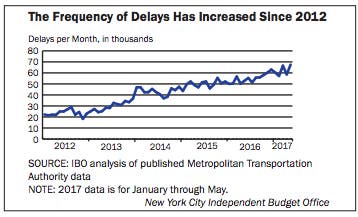
And passengers are losing more and more time waiting for trains every year — 2012 commuters lost about 24,000 hours per day while 2017 commuters averaged 35,000.That's a 24 percent jump.
Weekday commuters who rely on the 5 train lose the most time, logging in an average of 2,809 hours of extra platform time per day, the study found.
A train commuters come in second with a 2,775-hour waiting average and F train riders were third with an average of 2,524 hours per day.
G train commuters unexpectedly won the commuter race with just 274 hours of waiting for late trains per day.
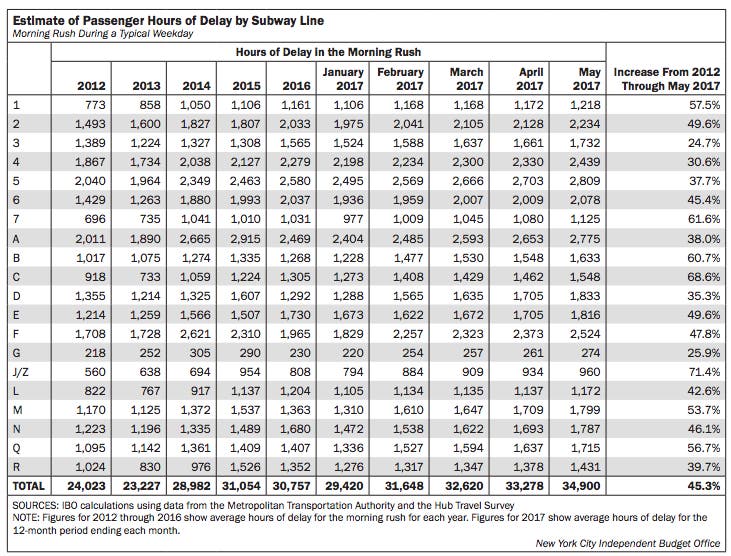
Service is deteriorating most quickly on the J and Z line — where waiting hours jumped from 560 in 2012 to 960 in 2017 — and on the C line, where waiting hours spiked from 918 to 1,548 in five years, the study found.
The IBO also measured which subways consistently have the worst performances. The
5, 6, and A trains are the least reliable with 34 percent of 5 trains running late, 33 percent of 6 trains running late and 30 percent of A trains running late.
But while the study found the hours of platform waiting were worth about $307 million in working time a year, it noted that the impact on the city's economy was slight because it's not companies who are losing those extra hours, but workers.
“Employees have given up some of their nonwork time, usually without compensation,” the study said. ‘As long as the necessary work is completed, the employer has lost little.”
IBO’s estimations, which can be found in this online report, are based on Metropolitan Transportation Authority data.
The study comes at the behest of Brooklyn Borough President Eric Adams, who requested an investigation after a massive train outage left thousands of commuters stranded in Brooklyn in May.
Header photo courtesy of Patrick Corbett/Twitter.
Charts courtesy of the New York City Independent Budget Office report.
Get more local news delivered straight to your inbox. Sign up for free Patch newsletters and alerts.