Community Corner
The Problem with 470 Vanderbilt
A local says that the impact of thousands of HRA workers and clients heading to the building at Atlantic Avenue will be immense.
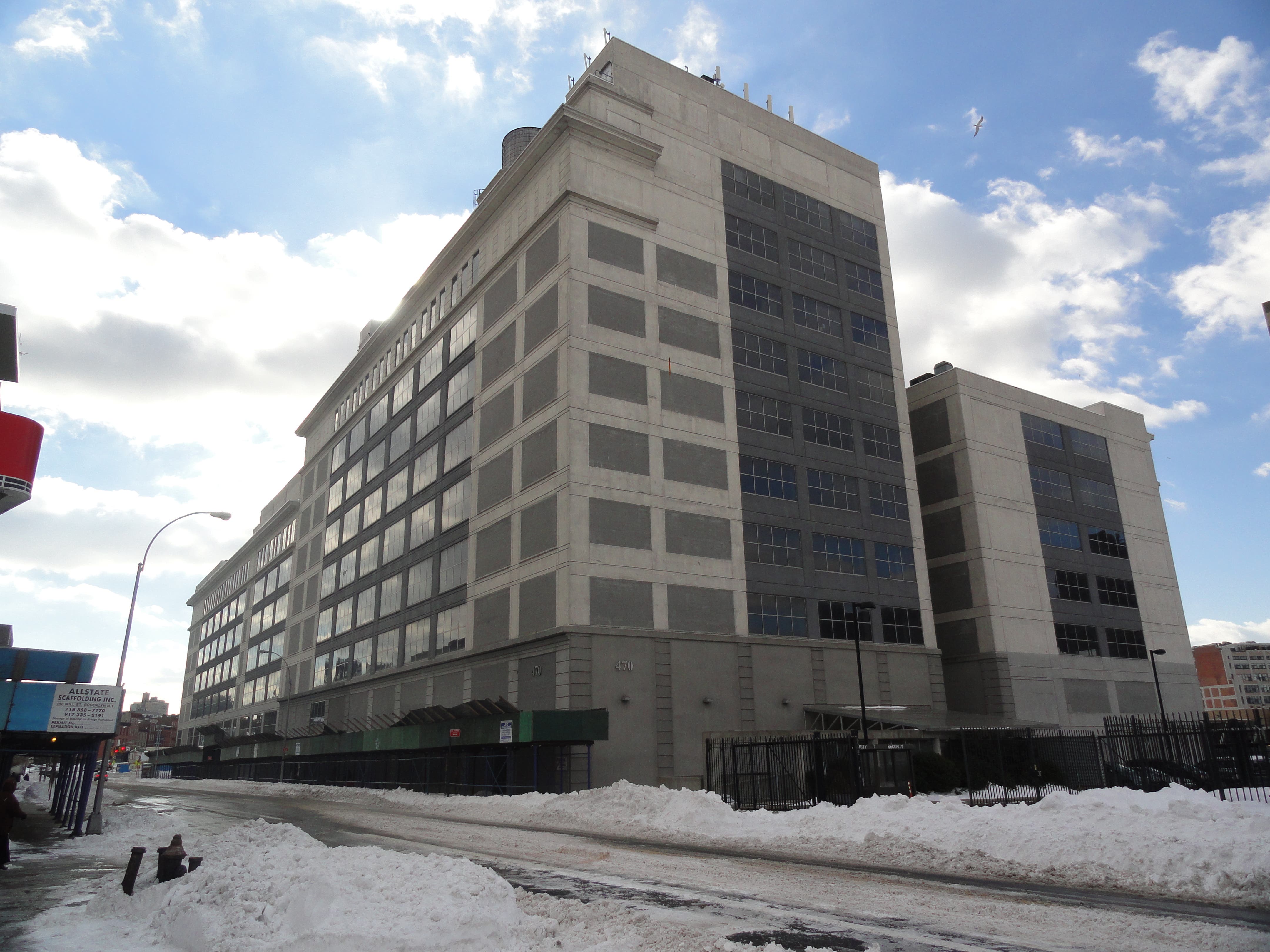
The last 100 years have been the best and the worst of times for 470 Vanderbilt Avenue.
The best came first, in another "Progressive Era" (1890-1919) when the country abounded with hope and inventions — the STOP sign, (1890) mouse trap (1894) cotton candy (1897) and airplane (1903). In 1891 alone, the US patent office christened the Ferris wheel, Tesla's electric coil, the zipper and the Schrader valve for pneumatic tires. The valve conceived for bicycles was adapted fast for the horseless carriage.
The beautiful colossus at 470 Vanderbilt became the manufacturing base for A. Schraeder's Sons, whose dominance of the horseless carriage tire valve market continues to this day — though not at 470 Vanderbilt, which has been empty (except for the second-floor ghost, NYCHA) since the 1980s.
Find out what's happening in Fort Greene-Clinton Hillfor free with the latest updates from Patch.
In 2012, this esteemed industrial headquarters will open again — for welfare and Medicaid. 470's now owner, the shadowy GFI Corporation, claims its property is "too big" for anyone else and is "excited" that 7,500 subsistence-seekers a week will generate $2-$4 million a year for stores on Fulton Street.
Eighteen-hundred Human Resources Administration workers will process 1,500 clients a day at 470 Vanderbilt.
Find out what's happening in Fort Greene-Clinton Hillfor free with the latest updates from Patch.
Mayor Bloomberg's single concern about moving two large HRA offices from 34th Street in Manhattan and Brooklyn Heights is parking for HRA staff. The Mayor said, "Find 125 parking spots!"
The Department of Transportation says it has found 117. Some, on Atlantic Avenue in flagrante of state restrictions imposed on Atlantic Yards. Informed of these prohibitions, the developer suggests, "If you fixed regulations on Atlantic, it would open up parking."
GFI would have lost 470 to foreclosure if the city council had not voted, in October, (51-0) to grant the defaultee 20-years of HRA rent.
A few weeks before, the city planning commission had also heartily approved the bailout (9-0), following the lead of the Brooklyn Commissioner Shirley McCrae, who had openly stumped for the developer in the neighborhood. Not one of the 60 voters of Council and Commission questioned the judgment of drawing the city's neediest cases into the tangled, dangerous Atlantic Avenue vortex.
The DOT has recommended "countdown clocks and curbed neckdowns" to lower the risk of getting run over on Atlantic.
HRA Staff won't get hit, because GFI will be shuttling them (minus the 125 who will drive) the three blocks from Atlantic Terminal to Vanderbilt on buses running for 90 minutes back and forth during the morning rush and again in the evening. The buses are only for HRA staff. HRA customers won't be able to ride because the liability for them would be "too high."
The poor will have to walk.
Schellie Hagan has lived in Clinton Hill since 1983 and has followed development in the neighborhood closely since her arrival. She has opposed the Atlantic Yards project since 2003.
