Politics & Government
Board Adopts Law As Protective Measure Ahead of Budget Talks
Village Counsel Peter Bee emphasized that this Local Law does not raise taxes nor does it direct the Board of Trustees to raise taxes.

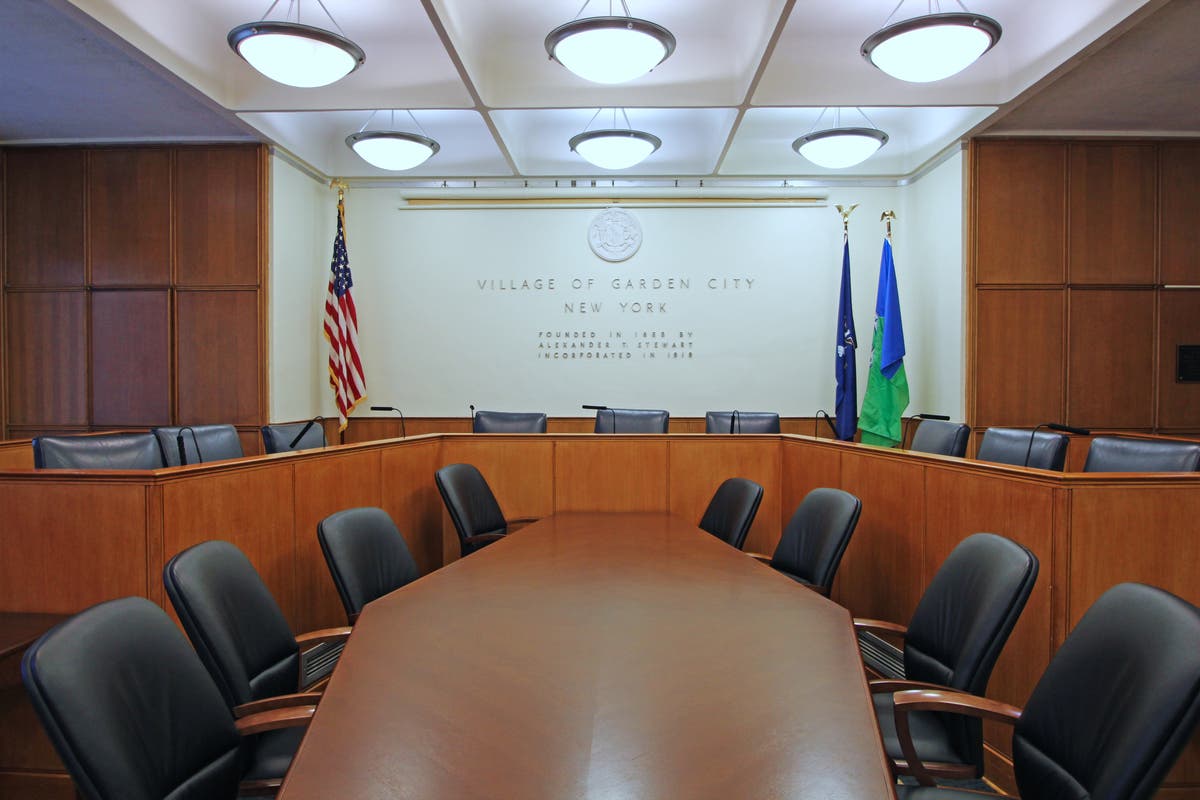
Solely as a protective and planning measure, the Garden City Board of Trustees adopted a Local Law at its last meeting on February 13, 2019 to allow the Board to override the limit on the amount of real property taxes that may be levied by the Village, as per General Municipal Law. This Local Law would permit the Village, if needed, to adopt a budget for the Fiscal Year commencing June 1, 2019 that would exceed the “tax levy limit.”
The Village Board is just commencing budget discussions and has not seen a draft budget. Despite many unfounded rumors, the Board emphasized that passing the legislation has nothing to do with any potential St. Paul’s project. As noted by Trustees Louis Minuto and Robert Bolebruch, these rumors circulated on Facebook pages should not be given any credit.
Village Counsel Peter Bee emphasized that this Local Law does not raise taxes nor does it direct the Board of Trustees to raise taxes. Rather, it allows the Board to raise taxes above the tax levy limit as defined by General Municipal Law if - and only if - the Board determined that it was appropriate to do so when enacting the budget.
Find out what's happening in Garden Cityfor free with the latest updates from Patch.
“It does not raise taxes by itself. It does not require the taxes to be raised now or in the future,” Mr. Bee emphasized. “It is a good insurance policy to have in place should some extraordinary, unforeseen circumstance come to pass. I do recommend its enactment.”
Mr. Bee further recommended that the legislation be reintroduced and voted upon annually. The Board last adopted the legislation back in 2014. In the past, because reserves had gotten low following Superstorm Sandy, it was deemed necessary to raise taxes to replenish the funds until FEMA funds were returned to the Village. For the next four years, however, taxes were not raised to the full extent allowable under the “tax cap.”
Find out what's happening in Garden Cityfor free with the latest updates from Patch.
Trustee Bolebruch noted that over the past five years the Village has averaged a tax increase of just 1.6 percent. “I challenge you to find another Village that has maintained that level of fiscal responsibility,” he said.
The Tax Levy Limit Formula consists of three components that contribute to the calculation of what we refer to as the tax cap, according to Village Treasurer Irene Woo. The first of the three components is the Allowable Levy Growth Factor (Inflationary Factor), which is provided by the New York State Comptroller’s Office. The law states that the Village can raise taxes 2 percent or the inflationary factor, whichever is lower. This is what most people refer to informally as the 2 percent tax cap. The inflationary factor for Fiscal Year 2019-2020 is 2.46 percent, which means that for this portion of the overall calculation, the Village is limited to 2.00 percent. In the past four years, the Village has been successful in maintaining the overall tax levy increases at or below the inflationary factor.
The second component is the Tax Base Growth Factor, which is provided by New York State Department of Taxation and Finance. This percentage takes into account any new developments and changes in taxable status of existing property in the Village. This factor is 1.37 percent for Fiscal Year 2019-20, Ms. Woo said. This combined with the 2.00 percent, allows the Village to raise taxes to 3.37 percent without piercing the tax cap.
The third component is the Allowable Carryover from previous fiscal years. “If you do not raise taxes to the full Tax Levy Limit amount in prior years, a portion carries over into the next year and can be applied to the current year,” Ms. Woo said.
“When you think about the tax cap, it’s not just limited to two percent. The Village is allowed to raise taxes based on all of these factors. That being said,” Ms. Woo added, “as in the past, I do not foresee the Village needing to exceed all those factors to pierce the tax cap in the 2019-20 fiscal year.”
Mayor Brian Daughney added, “I think we certainly all agree we’re not intending to go anywhere near it but we are beginning budget talks so we might as well leave options open in case we need to.”
“It’s strictly an insurance policy,” Trustee John Delany said. “Plain and simple.”
Trustee Minuto voted against the measure, citing more than $200,000 in State aid cuts as well as the Nassau County Executive’s reassessment plan. “Everyone throws rocks at the Board because we raise taxes and it’s not because we sit around saying we want more Diet Coke in the Board Room,” he said. “These guys wave a magic wand and make cuts and we have to eat it. I feel like we give them a pass when we make decisions like this. Maybe we need to get the red pen out instead of doing something like this.”
Addressing commentary on social media, Mayor Daughney said the law’s adoption has nothing to do with raising taxes to fund the proposed St. Paul’s plan. “That is absolutely not true,” he said. “We are just starting budget talks. Someone at our meeting wanted to tie comments in the Annual Report to this legislation. First of all, the quote in the Annual Report referred to St. Paul’s ‘or other large infrastructure projects.’ The commentator wanted to ignore the actual words. None of these potential projects have been planned, budgeted or determined. For example, because of the new nationwide water contaminant issues arising everywhere in the country, we may be looking at tens of millions of dollars in water cleaning systems in the near future – that alone may cause us at some point to exceed the tax cap.”
Trustee Bolebruch added, “This has nothing to do with St. Paul’s. This has to do with the operational running of the Village and the financial challenges that we face.”