Crime & Safety
Captain Frank: Closing An Outlying Firehouse Is A Safety Concern
Trustees discuss fire department's operating budget with Captain Harry G. Frank and Chief William Graham.


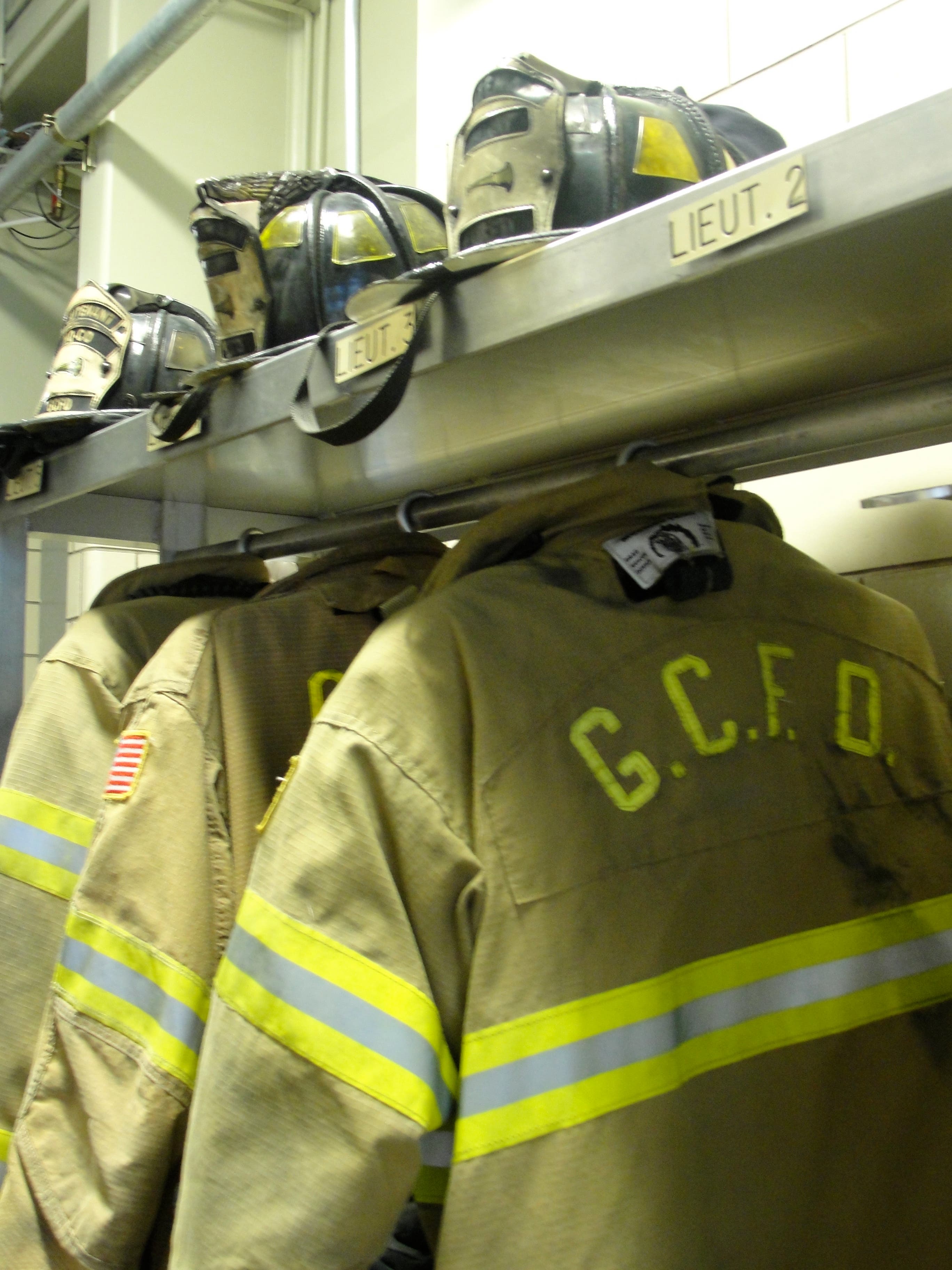
The Garden City Fire Department is one of only two on Long Island that has a combined force of both career and volunteer firefighters.
Serving roughly 23,000 village residents from three firehouses, Fire Headquarters located at the west end of village hall on Stewart Avenue, Station No. 2 located at at Edgemere Road and Stewart Avenue, and Station No. 3 located at St. James North at Clinton Road, the department responded to 1,000 plus alarms in 2009, two of which were actual signal 10s (working structural fires).
There are currently 27 career firefighters and 100 volunteers, approximately 50 of which are structural firefighters, serving the department. Structural firefighters have completed adequate training and physicals to perform interior firefighting.
Find out what's happening in Garden Cityfor free with the latest updates from Patch.
Chief William Graham, who came to the village's volunteer force with 15 years of career firefighting experience in New York City, said it's been more difficult to recruit volunteers though the ones already on board are quite committed.
"The more we ask them to do, the more they step up and do so I'm very proud of that," he said, adding a three to four year commitment is needed from these young volunteers before they become truly useful to the department and receive all required training demanded of them.
Find out what's happening in Garden Cityfor free with the latest updates from Patch.
"I don't know where they're going to be in three or four years, they don't know where they're going to be in three our four years to make that commitment," he said.
A large majority of the volunteer force is made up of young men, many of which come up through the department's junior program. Chief Graham admitted he didn't expect the level of training and the commitment his volunteers have to that training when he first joined.
"I think they're completely qualified, there's no doubt about that," he said. "Part of being a combination department is that it's a learning process because it is run differently. The apparatus is there and now you have to kind of fill in the blanks. Where are we going to use these personnel? In the city, if I'm in an engine company I'm trained as an engine company. My volunteers have to be trained as an engine company, a truck or a rescue company because I don't know when they get on that scene what I'm using them for so they are cross-trained."
An ongoing recruitment process is trying to target a difficult demographic in Garden City.
"We've tried to target people who are a bit older, a bit more established in the village. We've tried to get out to the soccer fields, places where dads might be. They have some roots and are going to be around a bit longer," Chief Graham said.
The department's career force complements the volunteer efforts.
Fire Captain Harry G. Frank, commander of Fire Headquarters, said 83 percent of the department's budget is salary committed. He is requesting that two firefighter positions frozen last year due to retirements be restored.
The department's regular salary line shows a 6.7 percent increase while overtime dropped by 43 percent.
"On the salary line, as far as what was budgeted last year and what's proposed this year," Captain Frank said, "its $177,000, which also reflects the two percent increase to the collective bargaining agreement in addition to the two salaries."
Three firefighters were injured throughout the course of the year; one with a torn wrist ligament out for approximately two months but is now back, another who had shoulder surgery and has been out since September but is expected back next week and another with a sprained ankle expected out for four weeks.
"To maintain the current minimum staffing of six firefighters, I do not have any additional staffing to fill those positions. It has to be done with overtime," Captain Frank said.
The average workweek for a career firefighter is 42 weeks per year. They are compensated twice in that year for the additional hours; 52 hours in December and 52 hours at the end of May.
Trustee Nick Episcopia thought it prudent to forecast two to three years from now when comparing overtime expenses versus hiring new firefighters in order to measure the financial effect.
"We understand you don't get the people right away and that they have to go through the training and you'd be paying the overtime until they come on board. That's why it can't be done for a year. It really needs to be stretched out for two to three years. I would recommend that any of these requests that come in, come in with that kind of a forecast so that we can take a look at it, people can look at it and we can come to a decision based on what the financial effect of that would be," Trustee Episcopia said.
The original overtime request for the current operating budget was $107,000 but Captain Frank said the department is going to exceed that by over $30,000 because of the extended leaves.
"We can't predict or budget for anybody that's out on extended leave," he said. "We try to factor it in, part of it is training for the career staff, bereavement leave. It's very similar to what the police department deals with. It's contractual replacement, personal time, bereavement leave, jury duty."
The department has up to three firefighters on vacation at any given time with only three relief positions. "So when I have three firefighters on vacation, three relief guys are covering for them. But if I have any other leaves, whether someone is sick for a week, two weeks, someone is on jury duty, whatever the case may be, I now do not have the flexibility to move somebody in on straight time to cover those vacancies and it has to be done with overtime," Captain Frank explained.
He believes two additional positions would give him that flexibility, noting that a staffing analysis performed with 29 firefighters saw a surplus of approximately 1,500 hours, providing a best-case scenario, during the course of the year.
"When discussed with Mr. Schoelle, as opposed to restoring the seventh firefighter on duty Monday through Friday, which has been in effect for I would say 18 years or so, that was done after an analysis based on the fact that a lot of volunteer personnel are out of the village during normal business hours," he said.
The analysis done by Captain Frank's predecessor showed that the volunteer response was the lowest during that time frame. "At that point they decided to add another on-duty firefighter, which gives us two firefighters on the engine at Headquarters, one on the ladder and two in each of the outlying stations on nights and weekends," Captain Frank said. "That went down from seven to six firefighters."
With the surplus hours Captain Frank believes will be had with two additional firefighters, he said the department should see the seventh position staffed during two-thirds of the year. "As opposed to having 28 firefighters running a deficit of about 500 hours that have to be made up through overtime," he added.
A day tour for a career firefighter begins at 7:30 a.m. and ends at 5:30 p.m. Career staffing is 24 hours a day, seven days a week with six firefighters and one lieutenant on duty. Captain Frank reports to Headquarters Monday through Friday during business hours. There is also a sixth lieutenant for relief, there to cover vacations or contract time any of the other lieutenants take.
"So 70 percent of the year he's filling vacation cards," Captain Frank said. "The other time he is a second lieutenant on duty and predominantly does code enforcement. He responds to alarms while he's on duty so we also have the advantage of having a second supervisor when he's working. "
Lieutenants are code enforcement officers and are responsible for certain sections of the village. While on duty, they schedule appointments and take the closest crew with them to perform code enforcement, one of keys in keeping fires and fire loss down, Captain Frank said.
Without a comprehensive program, he said the number of fires would increase.
"Nobody likes to pay for car insurance but when you have that accident you're certainly glad you have it. Unfortunately, that's what the fire service is, an insurance policy," Captain Frank said. "When you consider things, consider how you would value one life or how you would value your neighbor's or a family member's home. Factor that out, I think that's a big part of it."
He added, "What impact would losing one of our major occupancies on Franklin Avenue in the heart of the business district have? What impact would it have had losing one wing of Hilton Hall two years ago when we had a top floor fire? Fortunately, people arrived at that in a timely fashion and the fire was extinguished before it became a major incident."
Code enforcement also affords firefighters the opportunity to get into a building they may otherwise be unfamiliar with.
"Unfortunately, most of the time when we get into a building there's a smoke condition, it's pitch black and we have no idea," Captain Frank said. "That familiarization is invaluable to a firefighter. That's critical. We do pre-plans specific to that location, whether it be hydrant locations, standpipe locations, the sprinkler system, where the elevator shut offs might be, where the emergency panels might be."
These aspects, along with tenant and building contacts, are updated with each enforcement. Building tenants and many building owners in town have been cooperative during the process, providing the department with keys kept safe in a lock box located on a building's exterior.
"We carry a key for that box so that during after hours we're able to go in and get a key and deal with a specific area," Captain Frank said.
Other associated costs in the department's operating budget include $25,000 for fire hydrant rentals, a 5 percent increase. Essentially, Garden City rents water from itself, except for the western section of the village where the Jamaica Water District services residents. Captain Frank said Garden City's hydrants are $150 less than those of surrounding areas in Nassau County.
The money is treated as revenue to an enterprise fund, much like membership fees for the Garden City Pool.
"You have to think of the Water Fund as its own business," Village Auditor Jim Olivo said. "They supply the fire hydrants, they buy them, they install them and they charge the fire department."
It accounts for approximately 10 percent of village revenues, Olivo said.
Replacing the two-ton air conditioning units, which is part of the department's capital plan, was also discussed.
"We do have better prices now on the air conditioning replacement," Captain Frank said. "We're reflecting that $75,000 in this request based on the estimates of engineers in public works. We could budget $25,000 for the air conditioning replacement and defer the exhaust system."
Finance Commissioner John Mauk said he realizes this line item is important to volunteers but is looking for ways to cut back. "I know it's an important item for everybody but we're in a tough year. We've got a difficult situation," he said. "What's the effect going to be if we limp along for another year with the existing air conditioning?"
Chief Graham said it isn't a matter of getting by another year with the existing units since two are completely not functional and the other is leaking onto the apparatus floor.
"With it working it wouldn't cool the room and we'd have to have someone there emptying the bucket on a regular basis so it's not a matter of limping along," he said. "We've tried to get parts for it. We can't replace the parts that are broken. So they just can't be fixed anymore."
Captain Frank said the department received three estimates, $15,600, $17,400 and another just over $20,000 to replace three two-ton units with three three-ton units.
Chief Graham was under the impression that village staff could install the units, however Village Administrator Robert Schoelle said staff doesn't perform HVAC work.
Trustee Dennis Donnelly asked what kind of an impact closing an outlying firehouse would have on Garden City's finances and department response times.
"It's going to effect the response times to the area you choose to close the firehouse in," Captain Frank said. "It would be a real safety concern for whatever area you choose to close a firehouse in. You would probably add at least a minute to the first engine, provided now we have two firefighters on Headquarters' engine, which we currently do not, and the firehouse on Edgemere Road, which normally wouldn't come pass Fire Headquarters, would be the second due engine responsible to get a positive source of water, supply that first pumper with water so that we have a continuous ability to supply water on our fire."
From Edgemere Road to Meadow Street, where Trustee Donnelly lives, is quite a ways away, Captain Frank said, when you factor in certain times of the day and traffic in the village. "It could be substantial," he said.
The fire engine is on scene between two-and-a-half and three minutes, Captain Frank said, versus six minutes or better when compared to surrounding departments.
Deputy Mayor Don Brudie said the fire department's proposed budget has "a lot of potatoes but no meat."
"And the meat that I'm looking for I don't want you to guess at this. I would like it in writing, perhaps by Saturday," Brudie said. "I'd like to know the number of alarms you responded to with details of date, time, address of where you went, purpose, time expended there and which firehouse responded."
Captain Frank said he has provided that information to Trustee Episcopia, village fire commissioner, for the past two or three years.
Captain Frank asked the board to look through the smoke and mirrors of surrounding departments that call themselves "volunteer."
"Please don't be fooled by a lot of these volunteer fire departments that are saying they're volunteer fire departments," he said. "They have career maintenance workers or housemen or whatever they choose to call them that are on duty. They perform maintenance in the fire stations throughout their district and technically are allowed to punch out to respond to alarms so they are not on the books as a paid firefighter. They are now a volunteer fireman because they punched out. Most districts hire members of the volunteer fire department so they can perform that function."
Captain Frank, who has served a volunteer firefighter for 36 years, added, "Unless you have a crew sitting at the firehouse, they are responding from their home to a fire station, seven to ten minutes dependent on weather, depending on time of day."
In one minute, fire doubles in size, he warned. "From three minutes to four minutes that fire is doubled. From four minutes to five minutes it's doubled a second time. When you translate our response time from let's say three to nine [minutes], it goes from a small contents fire to a full blown fire ... Do you want to roll that dice?"
Get more local news delivered straight to your inbox. Sign up for free Patch newsletters and alerts.