Community Corner
Terrorism expert coming to Garden City in March
Terrorism expert, psychologist and author Alice LoCicero will speak March 16 at Nassau Community College in Garden City.
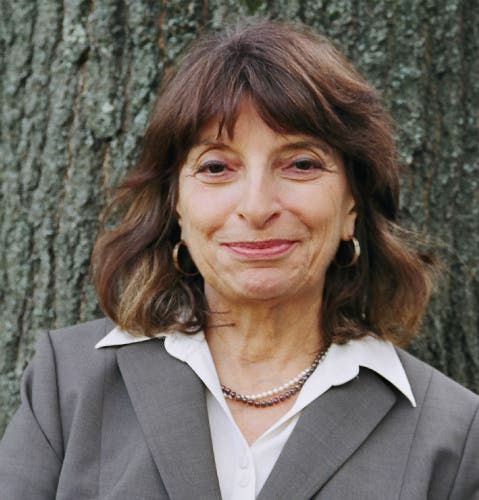

Acclaimed terrorism expert and psychologist Dr. Alice LoCicero is visiting Nassau Community College on March 16 for a special event that will be free and open to the public. She is the author of the 2014 book Why ”Good” Kids Turn Into Deadly Terrorists: Deconstructing the Accused Boston Marathon Bombers and Others Like Them.
EVENT DETAILS
March 16, 12 p.m. to 2 p.m.
Author event featuring terrorism expert and psychologist Dr. Alice LoCicero (“Why ‘Good’ Kids Turn Into Deadly Terrorists: Deconstructing the Accused Boston Marathon Bombers and Others Like Them”)
Free and open to the public.
Nassau Community College, Campus Center, 1 Education Dr., Garden City, NY
(516) 572-7501
http://www.ncc.edu/
In Why “Good Kids” Turn Into Deadly Terrorists, Dr. LoCicero argues that the exploitation, by opportunistic zealots, of children and young adults—whether from Sri Lanka, Somalia, Tunisia, or her own hometown of Cambridge, MA—can be stopped. After years of research into youth violence and martyrdom, Dr. LoCicero explains that communities have the power to better understand and successfully thwart recruitment efforts. With the upcoming trial of accused Boston Marathon bomber Dzhokhar Tsarnev, there has never been a better moment to explore how we can work toward helping impressionable youth from becoming pawns in battles they do not fully understand.
Find out what's happening in Garden Cityfor free with the latest updates from Patch.
A longtime psychologist, professor and trauma responder, Dr. LoCicero’s research focuses on children recruited to lives immersed in violence. She has met with young victims of trauma from Africa, Asia, Central America, Europe, and the United States. As the co-founder of the Society for Terrorism Research, Dr. LoCicero is a topic expert poised to guide the American public as it launches into an urgent nationwide discussion, already underway because of events in Syria, that will only become more topical with the trial of 21-year old Tsarnev.
Dr. LoCierco’s research and analysis is now available in her most recent book, Why “Good Kids” Turn Into Deadly Terrorists: Deconstructing the Accused Boston Marathon Bombers and Others Like Them (Praeger, 2014). “When the Boston marathon bombing occurred, and when I learned that the bombers were from my town of Cambridge and attended the same high school as my children, I felt compelled to understand how this could happen, and how to prevent it from happening again,” says Dr. LoCierco. “It has turned out to be a topic of importance for all Americans, and indeed for communities across the world, as parents try to prevent their children from being seduced into terrorist groups.”
Find out what's happening in Garden Cityfor free with the latest updates from Patch.
This timely book answers such questions as: What are the warning signs that youths are being drawn into terrorism? How can we avoid allowing children to be persuaded that violence is altruistic and honorable? Is it possible to help kids realize their potential in healthier and more productive ways? The book will spur meaningful conversations among parents, community leaders, teachers, politicians, and policymakers about what we can do to prevent such recruitment. It also addresses larger, related questions, such as whether humans are naturally violent, who benefits when young individuals engage in terrorism, and why minors are recruited to become killers. Dr. LoCicero’s conclusions regarding prevention are consistent with those of researchers working separately in Europe and other parts of the US.
Dr. LoCicero is a clinical and research psychologist who lives in Cambridge, Massachusetts. She is core faculty at the Center for Multicultural Training in Psychology at Boston Medical Center. In addition to this most recent book, she is also the author of, Creating Young Martyrs: Conditions That Make Dying in a Terrorist Attack Seem Like a Good Idea (Praeger, 2008).
Q&A WITH DR. ALICE LOCICERO
Why did you write your new book?
As one of the world’s top experts in children who are recruited to terrorist groups, I was sad, though not surprised, in 2013 at the first instance of so-called “homegrown terrorism,” something I had predicted in my first book on child terrorists, published in 2008. It could have happened anywhere, but it happened in Boston, and the accused perpetrators were from my own town of Cambridge, Massachusetts. My neighbors, stunned that such a thing could happen here, were asking how and why it did. All this compelled me to research and write specifically about this instance of youthful terrorism, as an example of how this can happen and what we can do to prevent it in the future.
Didn’t Cambridge do everything it could to support these brothers?
Cambridge did everything that any city could have been expected to do at the time the Tsarnaev brothers were growing up. But we all—inside and outside Cambridge—have to begin to do more than we did in the past. Now that we are more aware of the fact that many American youth, at a vulnerable time in their lives, are making choices that are consequential for themselves and others, often without consulting with the caring and engaged adults who could actually help them make the best choice possible, we have to find ways to make such consulting easier and more accessible. For example, adults who care about kids have to feel comfortable, and be rational, in discussing gangs, violence, and terrorism, and how kids may be seduced, misled, and recruited to act in ways that are against their own best interest, as well as the best interest of the people they love. Kids have to be helped to understand, I think, what it means to have multiple loyalties, and how they can best help others they care about.
Aren’t these sorts of kids bad, crazy, deranged, suicidal, etc.?
Each person who engages in violence has, of course, their own life history, and if we look hard enough, we will find some problems, some traumas, some personal challenges, and some losses. All this is important, but by itself is not sufficient to explain why young people like the Tsarnaevs resort to horrible acts of violence against innocent people. We must look harder at the context, culture, and, especially at the deliberate and ruthless methods of recruiters who would use them for their own gain, and who care not at all about the young people’s welfare. The recruiters are willing to talk young people into sacrificing their lives or at least their ability to have a productive life. They appeal to the inherent idealism of youth, and somehow convince them that the best thing they can do for people they care about is to kill other, innocent people, in order to make a statement. The young people who are recruited are, in a very counterintuitive sense, more likely to think of their action as altruistic, rather than as evil. But in their calculations, they fail to consider how much they could do if they survive, are educated, and act in non-violent manner to support others. This is the sort of thing that adults must be able to help with, in a calm and thoughtful manner. That is not, by the way, as easy as it sounds. We adults in the community will have to work hard to prepare ourselves.
What risks will people face if they try to discourage recruitment?
The greatest risk people face when they show an interest in terrorism in the US is that they will be misunderstood. Their neighbors, friends, coworkers, family members, and most worrisome, the law enforcement authorities, may think that they are too interested in terrorism, and may begin to look at them with some vague suspicion. They may be subject to increased scrutiny by security agencies. This is why I suggest that these efforts be undertaken as part of a larger group, and that officials and law enforcement be made aware that caring adults in the community are studying and creating ways to talk and listen to kids, and what their intentions are. I do not think law enforcement automatically has the wisdom or tools to intervene, though they have an important role. In Norway, interventions started with law enforcement and are now expanding to include members of the community at large. I think ordinary, caring adults who engage with children every day are in the best position to help.
How can you refer to people like the accused Boston Marathon bombers as “good kids”?
When the Tsarnaev brothers were younger, all reports from teachers, peers, and others indicate that they were good kids. One of the younger brother’s teachers referred to him as having a “heart of gold.” Their friends were horrified and also totally surprised that they could do such a heinous act. The same is true for kids around the world who later became terrorists. The Norwegian who participated in the Nairobi mall bombing was planning to be a physician and was viewed as a good kid. The Tunisian boy who put on a suicide vest was successful and sociable. The Tamil girl who was featured in a film about kids who joined a terrorist organization had wanted to be a nun. It is these very kids—caring, altruistic—who are targeted by unscrupulous recruiters who then manipulate the truth, bringing them to believe that the best, most caring, and most altruistic thing they can do is to bring attention to causes of concern by engaging in terrorist actions.