Community Corner
Two Nassau Landmarks May Become Official Historic Places
Hempstead Town Hall and Mitchel Field may soon be added to the registry of historic places.


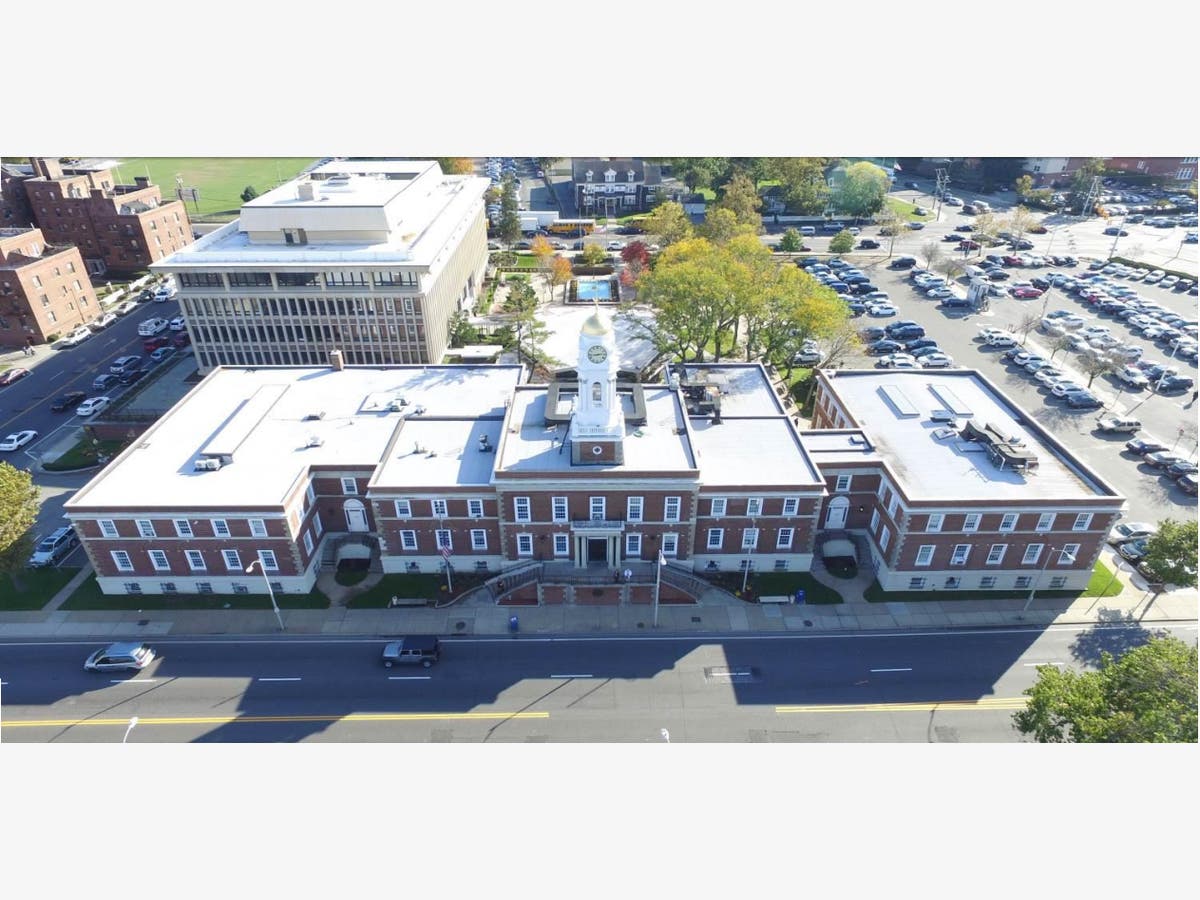
Two well-known Nassau County landmarks — Hempstead Town Hall, as well as Mitchel Field and its Flight Line — are currently under consideration to be added to the State and National Registry of Historic Places. They are two of just four Long Island locations being considered for the designation.
The state is also considering adding the Sisters of St. Joseph Motherhouse in Brentwood and the Wading River Radio Station in Wading River.
"This administration is committed to helping communities preserve the storied history of this great state,"said Governor Andrew Cuomo. "By designating these landmarks, New York is encouraging economic and community development, while supporting local businesses and preserving the rich character of the Empire State."
Find out what's happening in Garden Cityfor free with the latest updates from Patch.
State and national register listings can assist property owners in revitalizing buildings, making them eligible for various public preservation programs and services, such as matching state grants and state and federal historic rehabilitation tax credits. The state and federal program has spurred more than $3 billion of investment in historic commercial properties since 2013.
The first location under consideration is the Hempstead Town Hall, which is located in Hempstead Village. The town hall is actually a complex made up of three buildings: the original town hall, built in 1918 and updated twice through its history, the new town hall, completed in 1968, and the town meeting pavilion, which was also built in 1968. Because the three structures are connected by the plaza and underground tunnels, they are considered one property for the historic designation.
Find out what's happening in Garden Cityfor free with the latest updates from Patch.
The original Hempstead Town Hall was designed by architect Steward Wagner in 1918. The Colonial Revival building served the town well, and was built with additions in mind. As the town population grew, a new wing was added in 1929, and another in 1950, following the post-World War II boom that Long Island experienced.
As the town population continued to grow, the Town Board realized it needed even more space. In the 1960s, the town contracted the design of a new building, and construction started in 1966. Completed in 1968, the New Town Hall, done in a Modernist style by Heidelberger and Associates. The Meeting Pavilion was designed and built by Heidelberger and Associates at the same time, making sure that the town would have the space it needed for public meetings.
"Hempstead is honored that our Town Hall is nominated for placement on the historic registers," said Town Supervisor Laura Gillen. "My colleagues and I are incredibly proud to enter this building every day as we serve the residents; it is a powerful reminder of the history behind us and the future for which we strive."
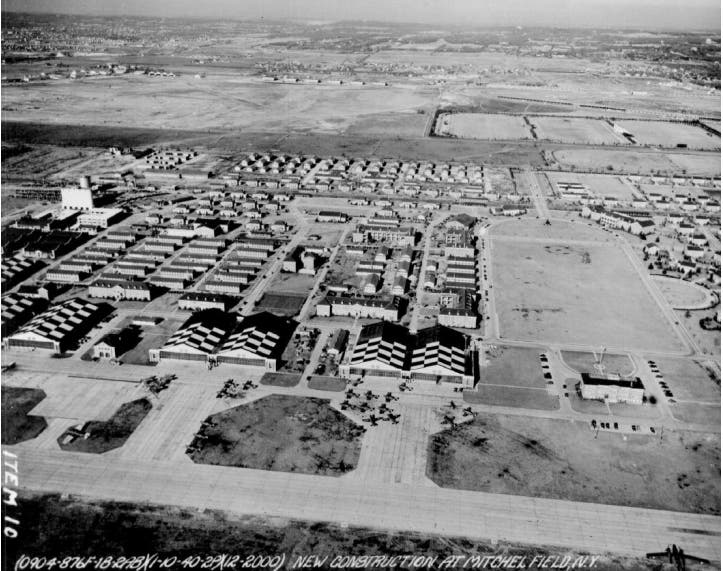
Even more well-known on Long Island is Mitchel Field, though not much of it is left today. Originally 1,117 acres, only the main 108 acres of the Mitchel Field complex remain, located in Uniondale. Originally, Mitchel Field was a hastily constructed air strip built during World War I. After the war, the government continued to expand it, and Mitchel Field became an incredibly busy air field during World War II. The Army closed the field in 1961, and property was sold off for other developments, or incorporated into new uses.
In 1938, Mitchel was the starting point for the first nonstop transcontinental flight by B-18 bombers. During World War II, Mitchel Field was one of the most important installations in the Northeast. It was the Headquarters of the First Air Force, the Northeast District, and the Air Force Reserve, and all aspects of strategy, defense, research and training of new pilots was directed from Mitchel Field. The field would send up regular anti-submarine patrols, and was used to house a fighter wing to protect New York City. It was also the primary embarkation point for soldiers leaving for the European theater of World War II.
Today, much of Mitchel Field is parking. Many of the old hangars and buildings have been absorbed by other locations in the area, like Nassau Community College and The Cradle of Aviation Museum. The massive suburban growth around the field in the 1950s meant it didn't have the space it needed to expand its runway to accommodate larger planes, forcing its eventual closure.
Photo: Tom Saltzman/Town of Hempstead
Get more local news delivered straight to your inbox. Sign up for free Patch newsletters and alerts.


