Community Corner
Murals Raising Awareness for Education Equality Pop Up Around Harlem
The murals are commissioned by Not A Crime — a campaign founded by a journalist, documentary filmmaker and former political prisoner.


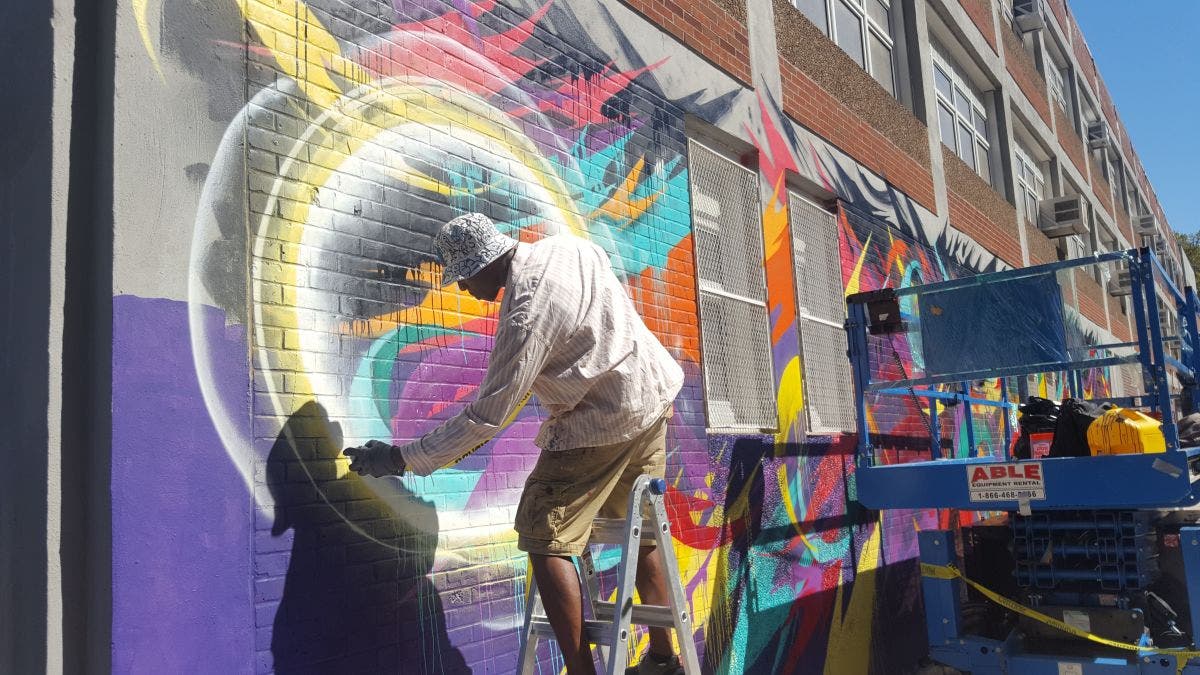
HARLEM, NY — The colors in street artist SeeOne's mural adorning a wall of P.S. 92 in Harlem represent the many opportunities education can unlock. At one end of the mural a girl's profile is depicted, and from her streams hues of red, yellow, teal, purple, green and orange. Further down the wall a glowing "orb of light" emanates with color and signifies that with education, the future is bright.
"It's is about life, choices and all the options people have with an education," SeeOne said while applying a layer of spray paint to the wall.
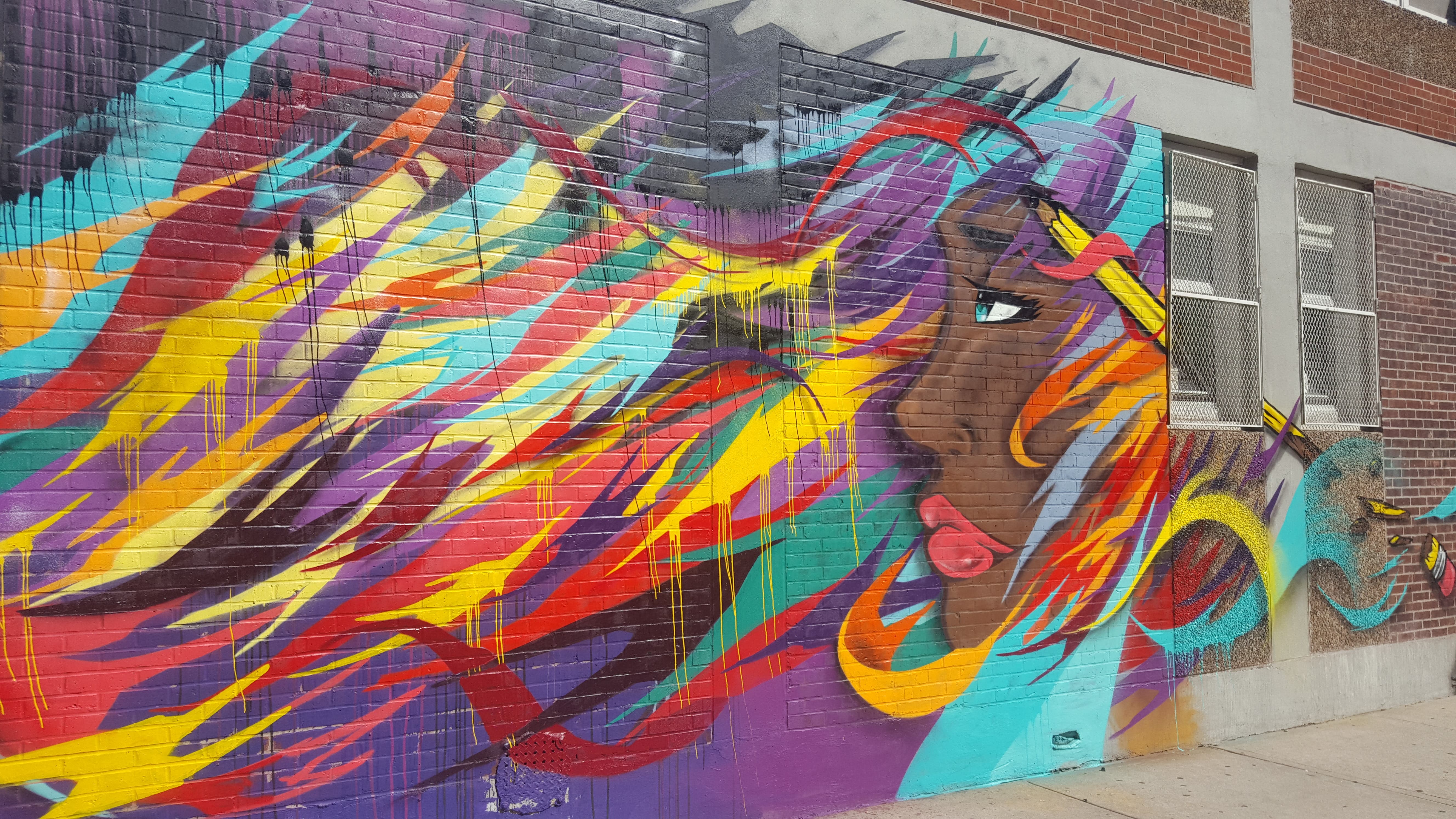
SeeOne's mural, currently untiled, is one of 15 being painted in Harlem this year by the Not A Crime campaign, which was created to raise awareness of educational discrimination of the Baha'is community in Iran and education equality worldwide.
Find out what's happening in Harlemfor free with the latest updates from Patch.
Three more murals, created by artists Tatyana Fazlalizadeh, Lmnopi and Marthalicia will join SeeOne's on the walls of P.S. 92 on West 134th Street.
Not A Crime was founded in 2015 by Maziar Bahari, an Iranian journalist, documentary filmmaker and former political prisoner. In 2014, Bahari created a documentary about Iran's persecution of the Baha'is, the largest religious minority in the country. In Iran the Baha'is are denied basic rights such as the right to education and employment, Bahari told Patch.
Find out what's happening in Harlemfor free with the latest updates from Patch.
After the film was released, Bahari realized that education discrimination was a universal problem, and launched the campaign worldwide.
Harlem has become the campaign's home in New York.
"When we did our campaign last year in different parts of New York we realized that people in Harlem get our message better, they understand us better and our message resonated much more with the people in Harlem than other parts of the city," Bahari told Patch.
Bahari told Patch that he remembered reading Langston Hughes poems while growing up in Iran, and that the culture of the Harlem Renaissance became widely popular in the country. Harlem is probably the second most famous place in the United States for Iranians (behind Los Angeles) and has become synonymous with art, Bahari said. Because Not A Crime has chosen art as its weapon to fight discrimination, suppression and bigotry, Harlem feels like a natural home for the campaign.
For the past two years Not A Crime has teamed up with Street Art Anarchy, a New York street art startup, to connect the campaign with talented artists. In Harlem, there are many opportunities for street art due to the neighborhood's many empty walls, said Andrew Laubie of Street Art Anarchy.
"We were very keen on Harlem because it has a unique history and the layout has a lot of available good walls that you don't see in other parts of New York, so there's a lot of opportunity here to push forward street art, murals and do something really positive," Laubie told Patch.
Photos: Patch
Get more local news delivered straight to your inbox. Sign up for free Patch newsletters and alerts.