Real Estate
New Signs Honor Harlem’s Civil Rights Legacy
New signs highlight the neighborhood's role in the Harlem Renaissance and March on Washington.


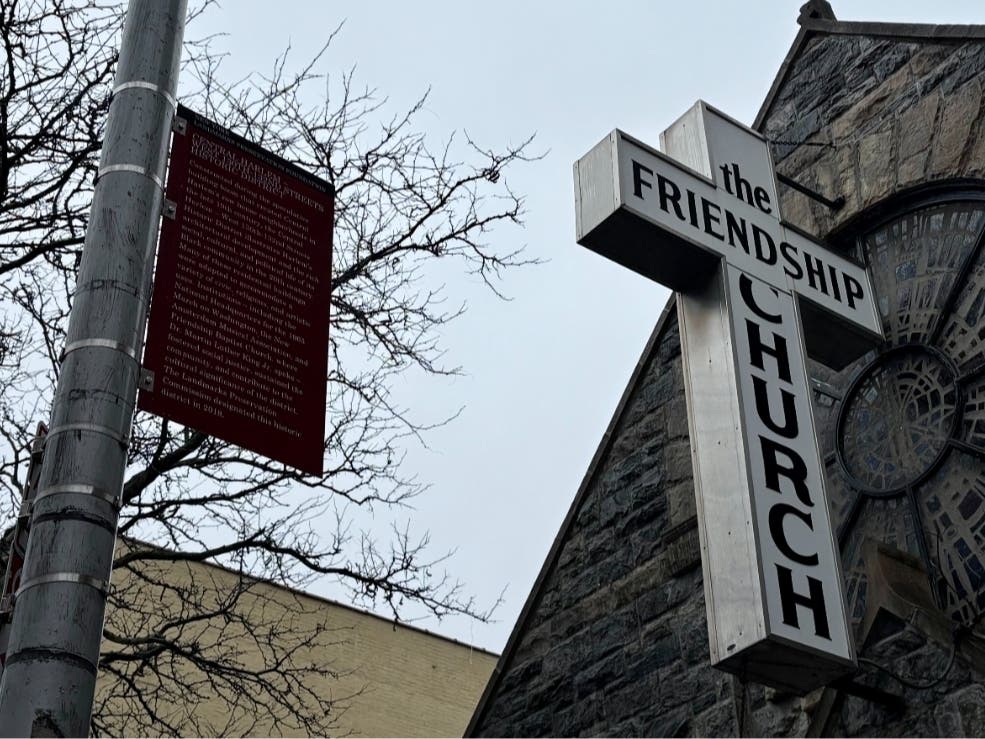
HARLEM, NY — New historic district signs now mark three blocks in Central Harlem, highlighting a neighborhood long known as a center of Black leadership, culture and activism.
The New York City Landmarks Preservation Commission unveiled the markers for the Central Harlem – West 130th-132nd Streets Historic District on Friday, joined by several Harlem leaders, including State Sen. Cordell Cleare, City Councilmember Yusef Salaam and members of Manhattan Community Board 10.
"If the sidewalks and stoops of Harlem could speak, they would sing," Mayor Zohran Mamdani said. "They would tell a story of ragtime and jazz, of tenant meetings and mass marches, of block parties and hard-won victories. They would tell us that Harlem has always been more than a neighborhood; it is a movement."
Find out what's happening in Harlemfor free with the latest updates from Patch.
The district, first landmarked in 2018, includes more than 160 buildings — mostly late 19th-century row houses — stretching from West 130th to West 132nd streets between Lenox and Seventh avenues.
While originally built as a suburban-style development, the neighborhood became part of what would grow into the nation’s largest Black urban community in the early 20th century.
Find out what's happening in Harlemfor free with the latest updates from Patch.
From the 1920s through the 1960s, the blocks became home to an extraordinary concentration of Black artists, organizers and institutions central to the Harlem Renaissance and the Civil Rights Movement.
Among the notable sites within the district:
- National Headquarters for the 1963 March on Washington (170 W. 130th St.) — Civil rights organizer Bayard Rustin planned the historic 1963 march from the building, coordinating transportation, fundraising and media outreach for what became the largest political demonstration in U.S. history at the time.
- Friendship Baptist Church (144-146 W. 131st St.) — The church played a key role in civil rights organizing. Martin Luther King Jr. delivered a sermon there in the 1950s, and the congregation supported planning efforts for the March on Washington.
- New Amsterdam Musical Association (107 W. 130th St.) — Founded in 1904, it is the nation’s oldest African-American musical association. Created after Black musicians were excluded from white-only unions, the group advocated for better pay, protections and training opportunities. The building continues to serve as its headquarters.
- The Frogs (111 W. 132nd St.) — A club formed in 1908 to support Black performers shut out of mainstream industry groups.
- The Colored Branch of the YWCA in Harlem (121-123 W. 132nd St.) — Established by Black women in the early 20th century, it became one of the most prominent YWCAs serving Black communities nationwide.
The signs — installed through the New York Landmarks Preservation Foundation’s Historic District Marker Program — are terra cotta-colored, 19-by-36-inch markers featuring a map and a brief history of the district. Three were installed across the neighborhood.
Supporters said the markers are about more than preservation.
"Preservation is about protecting memory, identity and legacy," City Councilmember Yusef Salaam said. "Today, Harlem’s legacy is being honored in a way that will endure."
For questions and tips, email Miranda.Levingston@Patch.com.
Get more local news delivered straight to your inbox. Sign up for free Patch newsletters and alerts.