Community Corner
No. 88: Dr. Daniel W. Kissam House Museum
The old red-and-white house on Park Avenue in Huntington has a venerable history.
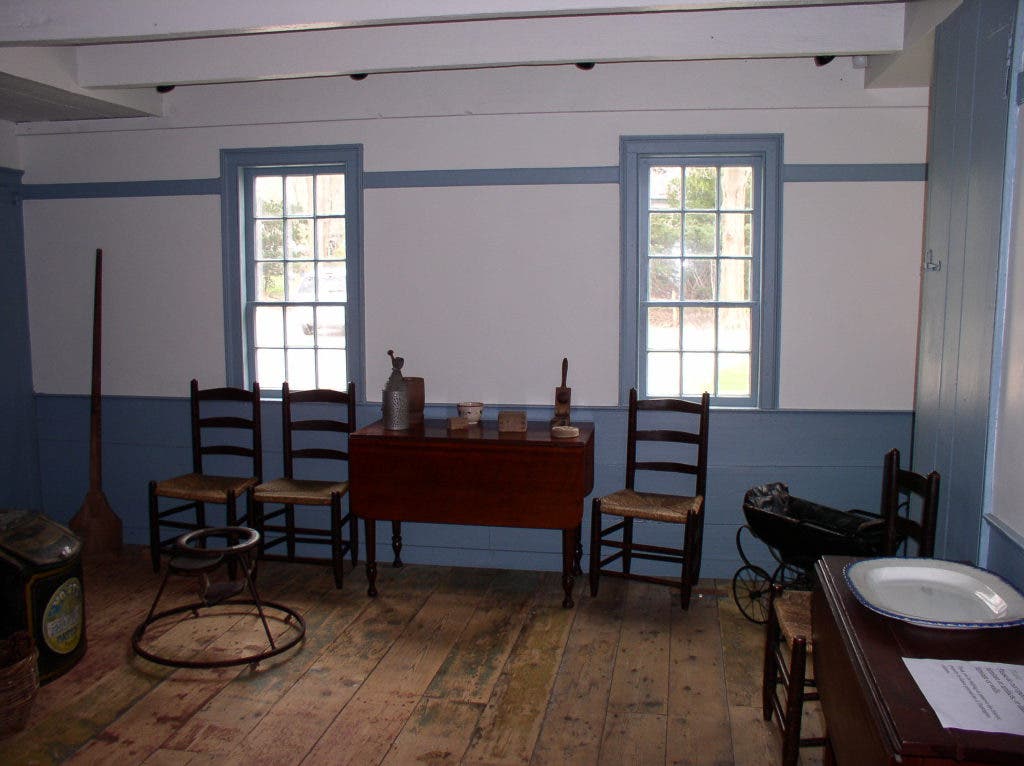


The mostly red house with the white front along Park Avenue has a story to tell, along with a spacious yard for visitors to wander, a period garden and a barn that is host to many events.
The at 434 Park Ave. has helped many a Huntington student learn what it would have been like to be alive and doing chores during Colonial times during its summer Passport to the Past programs, and the spring , which is coming up this year May 1.
The house was built in 1795 for Dr. Kissam on the site of a 1663 house that was burned down, most likely by the British when they left Huntington after the Revolutionary War.
Find out what's happening in Huntingtonfor free with the latest updates from Patch.
The front is painted white and the sides are painted red, reflecting the pragmatism of early settlers, said Robert “Toby” Kissam, executive coordinator of the and a 10th-generation descendant of the home’s original owner, Dr. Daniel Kissam. “White paint was more expensive than red paint, which was cheaper and done with local coloring ingredients,” Kissam said. “So they put their best foot forward and painted the front, toward the road, with the more expensive paint and then painted the rest red.”
The house has been added onto over the years, with a “new” kitchen in 1840 when what had been the kitchen storage room was doubled in size. The Kissam's were a thrifty lot (with 14 children by two wives, they had to be) and reused the original windows, woodwork and rear door in the redone kitchen.
Find out what's happening in Huntingtonfor free with the latest updates from Patch.
The house was lived in through the years, first by Dr. Kissam and his wives, Elizabeth Treadwell and then Phebe Oakley (he had seven children with each wife), and then by his son-in-law, Dr. Charles Sturgis, who married an older daughter who died and then married Sarah Jane Kissam.
The Sturgis’ turned the original kitchen into a formal dining room and added the “new” kitchen to the rear of the house in 1840. The Sturgis’ lived in the house until 1857, Kissam said, then it was owned by the Owen, Fuller and Taylor families until the Huntington Historical Society purchased it in 1967 from Hilda Taylor.
A kitchen with modern conveniences had been added over the years, so in 2006 the society restored it to the 1840s layout. The various rooms in the house have been restored to resemble what they would have looked like in the 1840s, Kissam said. Of particular note is the detailed woodwork in the second floor bedroom, called the front bedroom parlor, where the wife would have entertained her friends. The molding indicates the family was well-to-do, Kissam said, and is one of the better examples on Long Island that has survived from that time period.
Taylor, the last owner before the society purchased the house, was a portrait artist who added a second-floor room she used as a studio, Kissam said.
That non-historical room now houses Kissam family history, timelines, photographs and, most recently, the family Bible of Maria Louisa Kissam, whose grandson was William Kissam Vanderbilt II, the man who built the Eagle’s Nest house in Centerport, now a museum and planetarium.
The home is on the National Register of Historic Places. It is open for tours by appointment, cost of $5 per person; tours also are given during events at the property. Group tours may be arranged with Cathi Horozwitz, outreach coordinator, by calling (631) 427-7045, ext. 403.
The barn behind the home houses the summer camp program and special events, and the museum antiques and collectibles store next to the barn houses the society’s consignment store and kitchen. The museum store is open Tuesday, Wednesday and Sunday from 1 to 4 p.m. Consignment items are taken Tuesday mornings from 9:30 a.m. to noon.
Stay tuned for No. 87 next week, same time same place, as Huntington Patch explores the places and activities in town.