Health & Fitness
Nature's Signs of Spring
The weather is still cold and blustery, but heartwarming signs of spring abound, if you know where to look!



Welcome to Kings Park Focus on Nature!
The calendar says “spring” but as I write this, in late March, the temperature is in the 30’s, and snow is in the forecast. Despite the cold weather and the grey skies, heartwarming signs of spring can be seen and experienced in our area right now. So, let’s look on the bright side of life, as I highlight a few of natures signs of early spring stirrings.
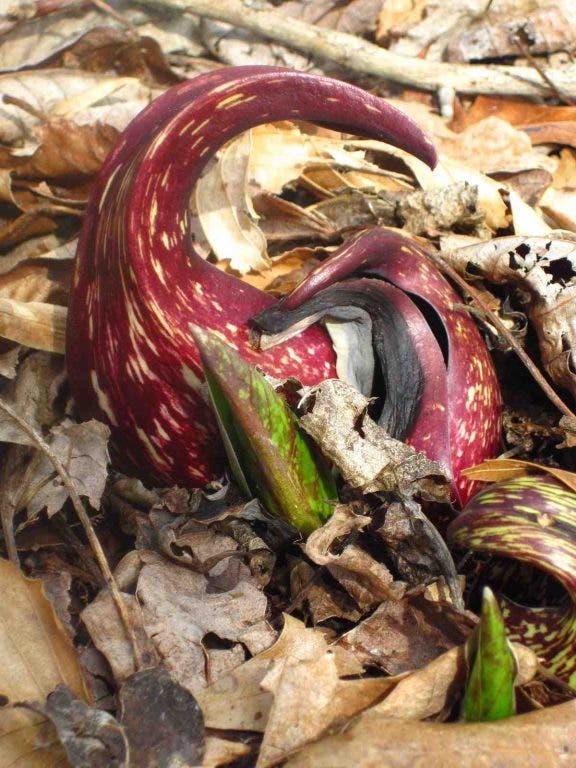
Skunk Cabbage (Symplocarpus foetidus) is a curious looking plant that is blooming right now. At this time of year it emerges looking rather like something you’d expect to find if you could time travel back to the Jurassic. The most notable feature is the hood like “Spathe” which houses the flower parts. It is a mottled green and purple structure. The other notable feature of this plant is it’s awful smell! It’s a foul smell, which is “skunky” and is offensive to human noses. Nonetheless, this odor attracts early season pollinating insects to the Skunk Cabbage. To help disperse the smell, this interesting plant has the unique ability to produce heat! This is possible through a bio chemical process called thermogenisis. The heat generated by the plant at this stage in its growth also helps keep it clear of snow, which helps facilitate pollination. Later in the spring and summer, the Skunk Cabbage develops very large bright green leaves that do resemble cabbage leaves. When these are torn they also exude the smell that contributes to this species scientific name “foetidus”. Look for the Skunk Cabbage along small streams, around ponds, in maple swamps, and other freshwater wetlands that are within woodlands. Great places to find these primeval looking plants are along the streams in Arthur Kunz Park in San Remo and wetland areas of Blydenburgh County Park in Hauppauge.
Find out what's happening in Kings Parkfor free with the latest updates from Patch.
We associate butterflies with the balmy days of spring and summer. Nonetheless, you might be pleasantly surprised to encounter a dark colored, bat-like representative of the Lepidoptera family gliding through the woods on a sunny day in late winter and early spring. This is likely a Mourning Cloak (Nymphalis antiopa). These butterflies are dark brown on their upper side, sometimes appearing to have a rich purplish tint in sunlight. The wing edges are outlined in cream color topside and underneath. A series of vivid, iridescent blue -violet spots are arranged all along the wing margins. When the Mourning Cloak butterfly’s wings are closed it is very well camouflaged. The undersides of its wings are patterned to look just like the tree bark that this insect often rests on. Mourning Cloak caterpillars pupate and metamorphose in late summer and early fall. The adult butterflies feed until cold weather triggers hibernation. They will find a sheltered location, such as under loose bark, or perhaps under the shingles of your house! When a late winter thaw occurs these hardy insects will venture forth to feed on tree sap, which begins to rise at that time of year. You can often see these butterflies in the woodlands along the Nissequogue at Sweetbriar Nature Center, in Smithtown, or the forests in Sunken Meadow State Park.
Early spring is also a time of activity for many amphibians. A variety of salamanders and frogs are breeding in this season. Among the earliest of these creatures to become active are the Wood Frogs, (Rana sylvatica). This frog is a handsome animal, tastefully colored with tan, brown, and coppery tones. Some specimens will appear more of an orange hue. A striking feature of Rana sylvatica is the dark brown “bandits mask” on the frogs face.
Find out what's happening in Kings Parkfor free with the latest updates from Patch.
Unlike many related species of frogs, this amphibian spends much of its life away from standing water. Instead they roam the woodlands. You may encounter these speedy, 1 1/2” to 3” frogs while hiking the wooded trails after a rain. However your best chance to see them is once a year, in late winter and early spring, when the Wood frogs migrate to water to mate. They favor “vernal pools” for this part of their lifecycle. Vernal pools are ponds that tend to form in early spring, and dry out in the summer, and thus do not support fish that would prey on eggs and tadpoles of the frogs. Thus they make ideal breeding locations for many amphibians.
As soon as the ice has melted off the ponds the Wood Frogs move in and set up shop. The first sign they have arrived is their mating calls. Their vocalization is a combination of a chuckling sound and quacking. In fact many people hearing Wood Frogs will incorrectly assume that the source of these calls are ducks.
Approaching the pond you will begin to see the wood frogs patrolling their territories. They will challenge males of the species, while trying to lure females to mate. The eggs are laid in masses, surrounded by a protective jelly. The dark colored tadpoles hatching from these eggs will spend the summer in the pool; metamorphosis takes place at the end of summer, as the pond begins to dry up.
As winter approaches Wood Frogs burrow into the leave litter and hibernate. They have the amazing ability to withstand freezing temperatures, as they possess chemical agents in their blood with act as natural antifreeze. The antifreeze keeps the frogs cells from being destroyed from ice formation.
Sharing the pond with the Wood Frogs is another noisy amphibian – the Spring Peeper (Pseudacris crucifer). These tiny frogs share much of the same life history with Wood Frogs. They spend most of their lives in woodlands, actively hunting insects at night. Although technically they are classified as part of the Chorus Frog family, rather than Tree Frogs as was once the case, but like tree frogs they have toe pads with enable them to climb trees and shrubs. They are light tan in color. The “crucifer” part of their scientific name refers to the darker brown cross like marking on the Peepers back.
Managing to see a Spring Peeper is difficult, as they are small, active at night, and tend to stay hidden under vegetation. Hearing Pseudacris Crucifer isn’t difficult at all. The call of an individual frog is a high-pitched whistle. When hundreds of these amphibians congregate to breed, their calls can be almost deafening! The frog expands a throat sac with air, and then releases the air to create the whistling sound. They will breed from March through late May in our area. The tadpoles will undergo metamorphosis in late summer, and then join the adults in the surrounding uplands. Reliable locations to hear Spring Peepers include the ponds at Hoyt Farm in Smithtown, the wetlands at the south end of parking lot 3 in Sunken Meadow State park, and any small pond in your neighborhood park.
These interesting plants and animals are playing their role in the ongoing cycle of the seasons, reminding us that spring really is here, so take heart. Head on out and see if you can observe some of these heralds of spring yourself. See you on the trails!