Neighbor News
Wet Wipes and the Environment: Gone but not Forgotten?
Let's take a closer look at these convenient little wonders before passing judgment on their merits, shall we?
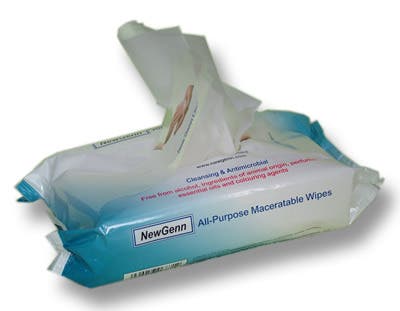
Wet wipes, pre-moistened towelettes, wet-naps, or whatever name you may car to refer to them by...there’s no doubt that in recent years these handy-dandy little sanitary aids have taken bathrooms by storm across America and the world.
The hook these little wonders have – aside from helping you clean up after you’re finished doing your business – is that they tout themselves as being “flushable.” Now, in a modern world where a great many people are doing their best to live an environmentally conscious “green” lifestyle, this may sound like just the ticket. Keeps you clean and it’s green? Oh no, no...not so fast. Let’s take a closer look at these convenient little wonders before passing judgment on their merits, shall we?
According to YellowPagesGoesGreen.org there’s a wide-degree of latitude to the definition of “flushable” when it comes to wet wipes; that latitude, sadly, does not include being environmentally sound, they say.
Find out what's happening in Kings Parkfor free with the latest updates from Patch.
“Yes, you can flush the wipes down the toilet and they will disappear from view. The problem is that, once they reach the sewer or septic system, these “flushable” wipes do not break down and decompose,” they said. “Instead, they clog pipes, sewer pumps and other machinery, causing backups in municipal sewage systems around the country and across the Western world, and wreaking untold havoc on private home septic systems (i.e., the cesspools used by many homeowners here on Long Island and in other areas). This wastes money, resources, and is just not Green on any level whatsoever!”
So, how harmful is a wet wipe? To give you an idea, New York Magazine reported on the results of a study in which wipes were compared to standard toilet paper; when it comes to which one broke down the fastest (or even at all), care to guess which one came out on top?
Find out what's happening in Kings Parkfor free with the latest updates from Patch.
“A recent Consumer Reports test, performed with a lab stirrer in a neatly simulated toilet, revealed that a sheet of toilet paper falls apart after about eight seconds in swirling water; a putatively flushable wipe didn’t so much as fray after half an hour,” they said. “Or, as one beclogged D.C. homeowner phrased it on a parents’ message board, ‘The cost per sheet of flushable wipe is $1—meaning for every flushable wipe, $.10 is for the wipe, and $.90 goes to the plumber.’ A few websites posit that aging cast-iron pipes, as opposed to new PVC, are likelier to have rough interior surfaces that cause snagging.”
Now, a few wipes a day might not seem like much to the average person, but imagine that number combined with the disposal habits of an entire nation; that can amount to a great deal of matter being sent to the sewer that simply won’t break down. Case in point- last year, England made headlines across the globe when, according to NBC News, a 15-ton “fatberg” was discovered clogging up the works beneath the streets of London, believe it or not. One of the key components of this blockage was – you guessed it – wet wipes.
“A 15-ton “fatberg,” caked with grease and fortified with wet wipes, was extracted from London sewers — in the nick of time — by an expert team of sewage flushers from the Thames Water company,” they said. “An eight-member team used shovels and jets of water to dislodge the pulpy aggregation of cooking fat and flushed wet wipes, uncovered after residents in Kingston, Surrey complained about unflushable toilets. Together, the wipes and grease formed ‘a congealed wet mash’ the size of a bus that smelled like ‘the worst wet dog you can ever think of.’”
However, it’s not just across the pond where wet wipes are posing a threat to the environment; it’s back home here in the good ol’ US or A, as well, NBC News said.
“In fact, flushed wet wipes are overtaking solidified cooking grease as the most costly clogger of sewage piping in some parts of the U.S.” they said. “USA Today reported that a truckload of cloth wipes were removed from a plant in Minnesota this spring, and in Raleigh,North Carolina, wipes are the biggest source of sewer blockages.”
However, the wipe industry is apparently listening, and is taking action to rectify the issues cuuse by their non-degradable wares, according to Oregonlive.com, who spoke with Dave Rousse, president of the Association of the Nonwoven Fabrics Industry.
“Rousse, the wipe industry representative, said that his association’s annual World of Wipes (WOW) International Conference this year will feature a prominent segment on “flushability,” part of an effort with wipe makers to better label products that should not be flushed,” they said. “The group is also working with manufacturers and wastewater experts to develop a wipe that will dissolve fully after flushing but won’t disintegrate in customers’ fingers during use.”
So, what to do? Well, in order to keep up with your commendable green lifestyle, you might want to consider going back to good old fashioned toilet paper, which has no issues breaking down once you flush it. But if you’re insistent upon using wet wipes, you can simply throw them in the garbage basket as opposed to flushing them once they’ve been used. Gross, yes, but certainly better for the environment.