Community Corner
Sputnik Days in Levittown
Now seen as "retro" by many, Levittown was originally ahead of its time.

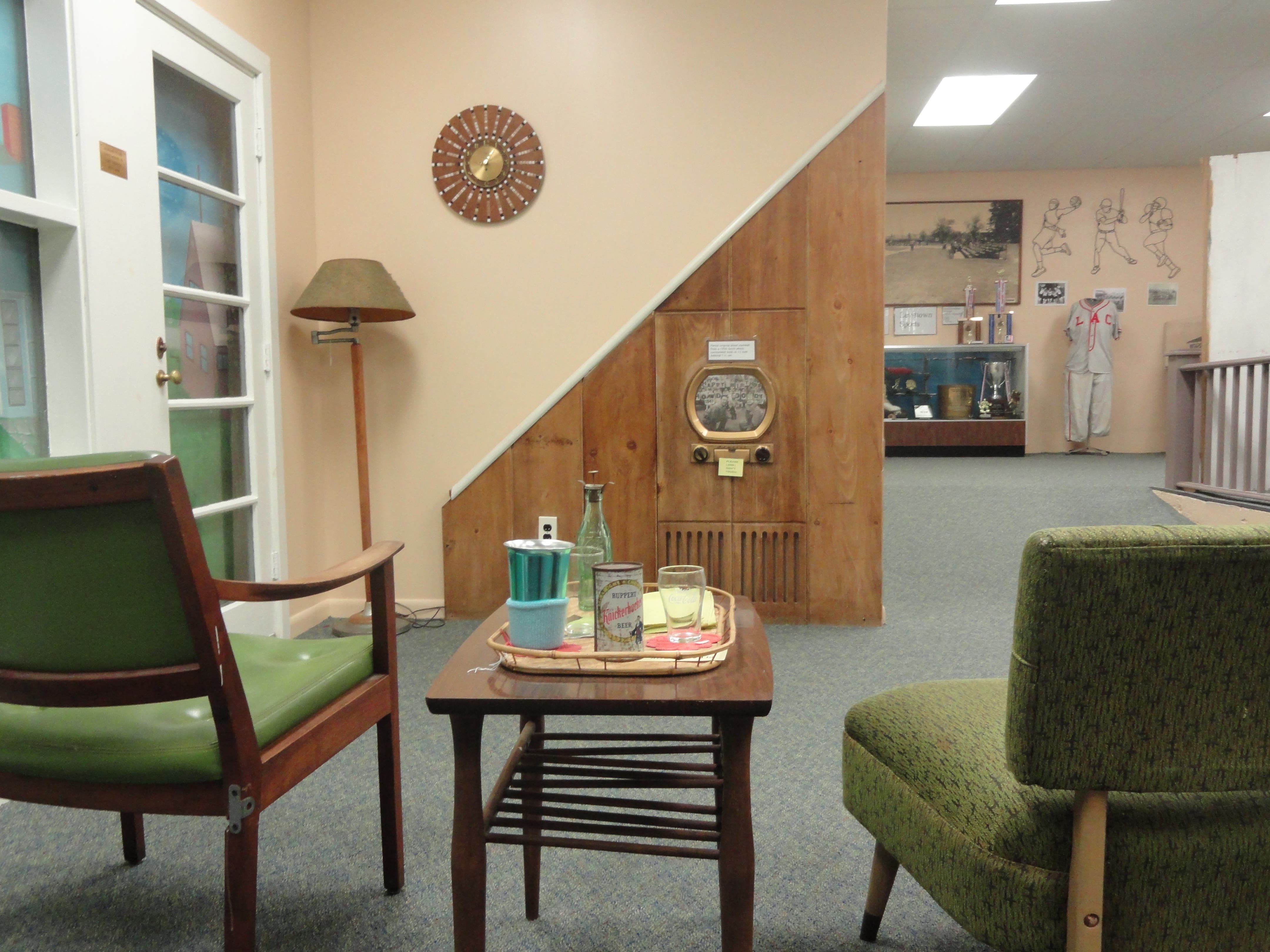
One could not be a suburban Baby Boomer growing up in the heart of Nassau County in the years between Hiroshima and Apollo XI and not be impressed by the fact that not only would we live in a technological society as Star Trek, Lost in Space, and The Twilight Zone predicted, but that we already lived in one.
Levittown in the 1950s and 6os was deemed as futuristic then as it seems retro today. In an age of technological expectations, when we are not shocked by the rapidity at which the trendy innovation of five years ago is now obsolete, it's difficult to imagine just how new and state-of-the-art it all seemed when Ike was in the White House.
Families often gathered in the home of the one neighbor who was the first on the block to own a TV set while Levitt & Sons included an Admiral TV set built into the living room of every 1950 Ranch home. In an age when people went to the neighborhood laundrymat, Levitt & Sons offered a Bendix washing machine in every home. People who grew up with deliveries from the ice man now had GE refrigerators. Travel agencies offered vacations to Europe - and not just for the wealth few. Some new Levittown residents in the 1950s and 60s purchased their first automobiles when they moved out to the suburbs. Ham radios allowed for instantaneous person-to-person communication with nearly anyone else in the world in a manner whose novelty is difficult to appreciate in the age of the Internet.
Find out what's happening in Levittownfor free with the latest updates from Patch.
Levittowners lived in mass-produced, petroleum-heated domiciles with an automobile in every carport. This was unheard of in 1930. We grew up with the often-repeated phrase "by the year 2000..." which always ended with cities in orbit, robot servants, and entire meals cooked in five minutes - except when it ended in a mushroom cloud. Such were the dawning of the Space Age and the Atomic Age. Ward Cleaver, the wise patriarch in "Leave it to Beaver" once told his son that every father dreams that one day "his son might become an atomic scientist on the Moon".
The popular culture of the time offered us a view of scientific and technological progress that became ever more curious. In Raymond Abrashkin and Jay William's "Danny Dunn and the Homework Machine" (1958), Professor Bullfinch predicts a day when not only will every classroom have a computer, but so too will every teenager's bedroom. Lester Del Ray's "Rockets Through Space" (1957) predicted an international space station and manned missions to the Moon. Arthur C. Clarke's "2001: A Space Odyssey" (1968) has the astronaut Heywood Floyd reading a newspaper on a book-sized, hand-held, flat-screened device that taps into a global computer network.
Find out what's happening in Levittownfor free with the latest updates from Patch.
In 1950, the world was sent into an uproar by "Worlds in Collision" by Emmanuel Velikovsky. His strange take on Newtonian mechanics, planetary billiards and ancient cataclysms was attacked by the scientific community but nevertheless enjoyed a kind of cult following in the popular culture. Though systematically refuted, it's worth noting that he prepared the world to accept revolutionary ideas and question orthodox views. Within 25 years, plate tectonics became established doctrine, humanity began onsite analysis of the Moon's surface and ocean floor, and new theories of evolution, dinosaurs, the origins of the Universe, and the historical nature of science revolutionized scientific thought and the culture. And, too, just as information sires misinformation, the Baby Boom era is also characterized by the popularity of UFO lore, "ancient astronaut" theories, and resurgent creationism. In 1947, Kenneth Arnold coined the term "flying saucer".
Far more conventional were the travel and nature books: the outdoor adventures of naturalist Edwin Way Teale, the "Golden Nature Guides" of Herbert S. Zim, Ed Dodd's "Mark Trail" syndicated column, and the popular astronomy books by Carl Sagan. These men were great popularizers of science and their books in the Baby Boom era concurred with documentaries by Jacques Custeau, David Attenborough, Marlin Perkins and National Geographic.
Suburban Long Island in the 1950s and 60s was a sea in which scientific investigation flourished: Bethpage's Grumman Corporation put the Apollo astronauts on the Moon, Brookhaven National Laboratory is still world-class for its atomic research as is Cold Spring Harbor Laboratory for genetics. Plum Island led the world in the study of livestock diseases and Hicksville's Sylvannia Corning Nuclear Corp. manufactured uranium fuel rods. It's easy to forget these days how much suburbia is a creation of mid-20th century science and technology let alone the impact they had on our lives back then. When the entomologist Howard Ensign Evans wrote of "a view of the universe from a suburban porch" he was speaking to the young Levittowner anxious for new discovery.
Want to learn more about the history of the Levittown and the surrounding communities? Visit www.levittownhistoricalsociety.org