Note that I am not an attorney and this is just friendly advice, not legal advice. Confer with counsel if things seem like they've gone off the rails.
For starters, you should know that serving on a Board of Managers for a condominium is a thankless, unpaid volunteer position. It subjects any person who holds the office to potential liability (though there is usually insurance that covers anything non-fraudulent). And there's always someone who's unhappy about the "tacky" wallpaper you picked or the "vulgar" lobby artwork.
But when a person serves on the Board, he or she has a fiduciary duty to the Condo Association AND all the Owners. And decisions are to be made using what is called "the business judgment rule". When this duty is breached or the funds collected by the Association are not used according to good business practices, there are some pretty serious consequences for the Board.
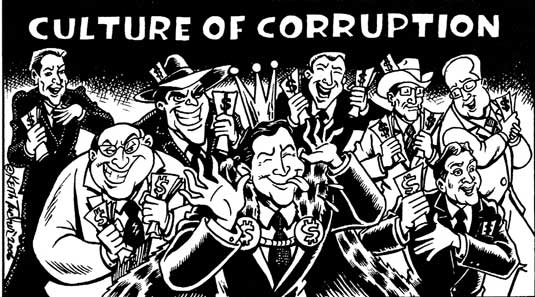
Some of the most common types of fraud that Boards engage in involve financial malfeasance. But some also affect the health and safety of all the Owners. For example, the Board hiring a sketchy contractor based on the fact that he's buddies with someone instead of using a sealed bid process is pretty bad. Not getting a surety bond when they hire him is even worse. Allowing the contractor to work without permits for months is dangerous. Failing to change waterlogged wiring can cause a serious health and safety hazard. Not inspecting and remediating mold or other hazardous substances in the building is also dangerous... and stupid. Leaving a fire door nailed shut for months while the building is occupied could be pretty problematic too.
What do you do, as an Owner, when the Board has done all of the above? You've notified the Building Department of the safety violations and have gotten a response - albeit a weak one. The fire door got fixed, but the whole building could still go up in an electrical fire and neither the board nor the Building Department seems to care. What's next?
Here's the bad news: unlike other states, New York doesn't really have concrete protections in place for condominium owners. There is the Real Estate Finance division of the Attorney General's office, which you can reach here: http://www.ag.ny.gov/
Unfortunately, they advise you on the AG's website that you should write a warm n' fuzzy letter to the Board which meekly calls attention to the oversight and hope and pray that one of them grows a conscience in the night. Then you can all link pinkies and skip down a daisy-covered hillside to happiness together. It doesn't work like that, of course, so I recommend a certified letter to them, with a copy to the AG's office and the building's attorney. (Note that the building's attorney represents the corporation, NOT the Board.) Outline politely but firmly what the problem is and what you expect to be done about it, and when. And good luck to you, because if the Board has its hands in the cookie jar or has done something outrageous, they will probably ignore you.
This is where your bylaws come in. The NYS Condominium Act dictates what must be in them when the condo association is formed. After that, though, you're more or less on your own. Unlike Florida and some Midwestern states, New York has little official help for condo owners outside of a courtroom.
You can gather the neighbors, ask for access to the records, and try to depose the miscreants on the Board or get the management company - if there is one - fired. These efforts will often be met with apathy by people who are not immediately affected by a clear and present danger. (Those people will often be the first to lawyer up if the place goes up in flames or a cloud of moldy fungi spores.)
Some older owners may be afraid to speak up. This is unfortunate but understandable. An 80 year old woman trying to live out her years with a little peace cannot be expected to storm into the managing agent's office with a scanner and start kicking open the file drawers. (Unless she is my Grandmother, who would have done exactly that.)
If you cannot afford legal representation, Legal Aid is a good source for inexpensive or free counsel. I would recommend trying to resolve the matter with the Board / Managing Agent with polite letters, documenting everything. Enlisting your neighbors is usually a good idea.
If that fails, then consider involving the local authorities if you believe that laws are being broken that affect public health and safety. And if THAT fails, take your carefully prepared file to an attorney.
You'd be surprised how quickly things get done when that happens.