Schools
Consultants Work with District to Improve Literacy
Education firm is helping to try to install sufficient curricula.



Last month the Board of Education voted unanimously to approve an agreement that expands the use of A.U.S.S.I.E. in the English Language Arts (ELA) Department’s work to improve literacy throughout the Long Beach school system. District officials cite the measure as professional development that, in this case, is directed specifically toward the enhancement of teachers' skill and methodology.
A.U.S.S.I.E. (Australian United States Services in Education) is a for-profit corporation that, through contracts, provides school districts with education consultants that districts then employ under subcontracts.
According to Joshua Anisansel, director of the ELA, the administrators use the consultants to communicate the curricula to the teachers and give training on how to implement them.
Find out what's happening in Long Beachfor free with the latest updates from Patch.
“We do need them to deliver what we want delivered in our Balanced Literacy Program,” he said. “They help develop professional learning.”
A.U.S.S.I.E. has been involved with Long Beach literacy education assessment and planning for four years and currently has three consultants working in the grades K to 6 in East, Lido, West, Lindell elementary schools, and, with the addition of a sixth grade addition, the Middle School, too.
Find out what's happening in Long Beachfor free with the latest updates from Patch.
Consultants perform different duties depending on what district they want. In Long Beach, Anisansel explained, they meet with administrators and “have a collaborative session where they align everything they do to our goals,” he explained.
Those goals are encapsulated by the term “balanced literacy,” which Anisansel unpacked during a presentation at the meeting last month, with assistance from two A.U.S.S.I.E consultants and the principals from the four elementary schools.
The concept was outlined in three topics, displayed in bullets on a slide:
1. Assess-Plan-Teach-Assess
2. Instruction Targeted and Individualized
3. Gradual Release of Responsibility
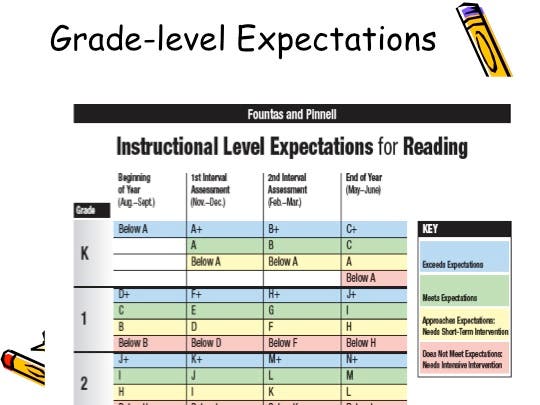
While the first is based on a benchmark grading system, the second and third are integrated with each other and comprise strategies selected by district administrators. The include a quotidian; a structured 90-minute period for all students to read; Read 180, a program marketed by Scholastic Inc., that is designed specifically for students who are reading with the same ability as those a grade or more below them; and a “leveled library,” which is a supply of books, also sold by Scholastic, that are meant to match varied reading levels.
To Anisansel, a key aspect of A.U.S.S.I.E.’s service is that the assessment, consulting, and training take place on site.
One consultant, Bill Richardson, works at Middle School. Last Wednesday, he spent the entire school day in classes, a different one each period, coaching teachers and evaluating the lessons. At the end of the day, he met with all the teachers for a group discussion and consultation.
Richardson has a definite number of visits slated, which he said he spreads out over the course of the school year. He will be in Long Beach again in coming weeks.
Asked how the efficacy of his service is evaluated, he said: “I have some clear goals that I want to meet, …and I will report against those goals twice a year to the district.”
“The first goal is around assessment and benchmarking, really making sure that teacher judgment is based on a common rubric,” he added. “If I see that at the end of the year we set up a really good benchmarking system, one of my goals have been met … Another one of the goals is certainly about differentiating the instruction, but ultimately you have to know what a kid does, you have to know what a kid knows before you attempt that.”