Community Corner
Long Beach's Jewish Past Remembered on Passover
Residents and spiritual leaders talk history as they commemorate the holiday.

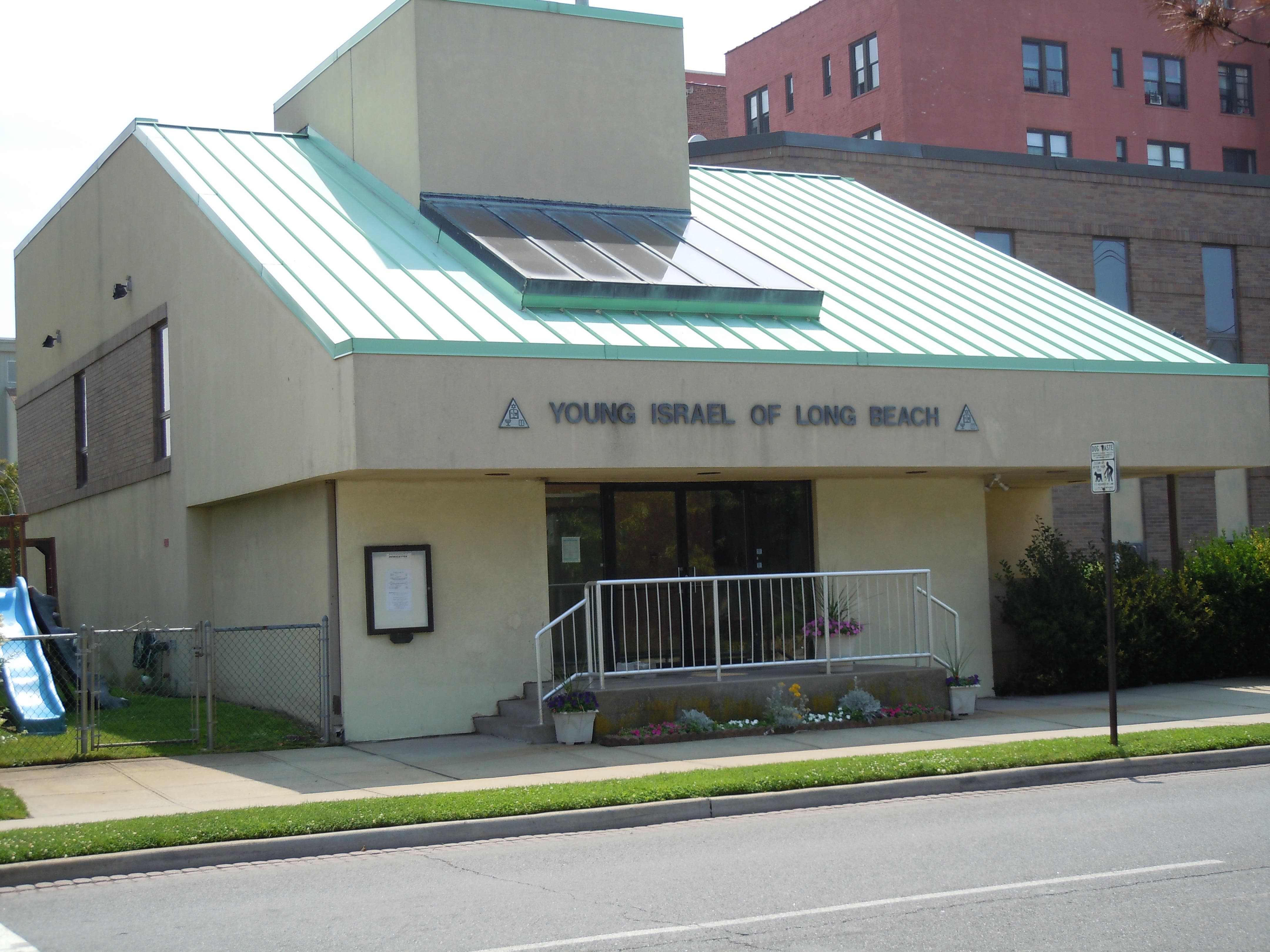


Jewish residents in Long Beach will join Jews around the world this week in celebration of the eight-day holiday of Passover. Beginning at sundown on Monday night, families will be gathered around dinner tables for the traditional Seder to commemorate the Exodus in which the ancient Israelites were freed from slavery in Egypt.
In the early days of Long Beach, Jews became an integral part of the city’s cultural and religious fabric and helped the city grow.
In the mid-1900s Jews at one point comprised about 80 percent of the city’s population, with a majority of the civic and charitable organizations headed up by Jewish leadership. In 1960, about 60 percent of the students attending public schools in Long Beach were Jewish.
Find out what's happening in Long Beachfor free with the latest updates from Patch.
In 1974 there were eight synagogues in Long Beach, 20 active Jewish organizations, four chapters of Hadassah, three arms of B’nai Brith and 10 kosher butchers, according to Carol Geraci, president of the Long Beach Historical and Preservation Society.
But during recent decades the Jewish population in Long Beach started to gradually decline and although there are no exact numbers to back up the decrease, the population in no way comes close to those early years. The city has about half the number of synagogues and only one kosher butcher.
Find out what's happening in Long Beachfor free with the latest updates from Patch.
“Today, the population is going down,” said Rabbi Bennett Hermann, spiritual leader of Temple Emanu-El of Long Beach for the past 17 years. “There’s a decreased membership in synagogues on the south shore, with some merging and having a hard time surviving.”
Hermann said Long Beach lacks Jewish Community Council, which is an important component that other communities possess.
“We’ve been trying to put one together,” he said. “It’s important for the different denominations to work together.”
In general, the city’s population has shown a 6.2 percent drop from 2000 to 2010, according to recent Census figures. A considerable part of that figure is believed to be Jewish residents. Long Beach has become too expensive for many of them to live in the community.
“They are moving away for a cheaper deal in Suffolk,” Hermann said.
The Jewish community began to take root in 1924 after Temple Israel, the community’s first synagogue, was built. At around that time their numbers were first noticed when many arrived in Long Beach for the long hot summers. They fell in love with the peaceful oceanfront community and moved to Long Beach from Brooklyn and Queens.
“When the Jewish population began to grow, they built synagogues,” Geraci said. “They excited the cultural growth of the city at the time.”
Four generations of Phyllis Wagner’s family have lived in Long Beach, starting with her grandparents Goldie and Isreal Rockmill, who moved from Manhattan and built a home on Magnolia Boulevard in 1926.
“They immediately fell in love with Long Beach and continued to absolutely love Long Beach,” said Wagner, who is Jewish. “We have felt very comfortable living here all these years.”
She said her mother ruptured her appendix as a child and her grandparents believed in the “curative” powers of the ocean air, which first drew them to the city.
Roslyn Bernstein wrote a collection of short stories called “Boardwalk Stories,” published in 2009, based on her experiences as a resident of the West End from 1948 to 1963.
“Many who moved to Long Beach were mostly middle-class families who left the Bronx and Brooklyn where they had outgrown their apartments and were looking to raise a family here,” Bernstein said. “They first started out as summer tenants and quickly felt at home here. At the time the housing stock was not too expensive and many worked in Manhattan and commuted to their jobs.
“It was a nice place to grow up, especially if you loved the beach,” said Bernstein, who now resides in Manhattan but whose 92-year-old mother still lives in the West End. “It was comfortable, friendly and you knew everyone’s name. But it has gotten expensive and people leave when their kids move on.”
Rabbi David Bauman, who has been spiritual leader of Temple Israel of Long Beach since July, said he is confident the city’s Jewish community will continue to survive.
“It’s a very bright future,” he said. “We have a very close-knit community here despite their denominational affiliation. People who have discovered Long Beach said they love it and didn’t realize it could be a viable option for their family to live. Their needs will be more than well served.”