Community Corner
Romance Still Fills the Air at Long Beach's First Home
The Spanish Renewal house on West Bay Drive, built by the city's founder Sen. William Reynolds, is full of history, heartbreak and true love.

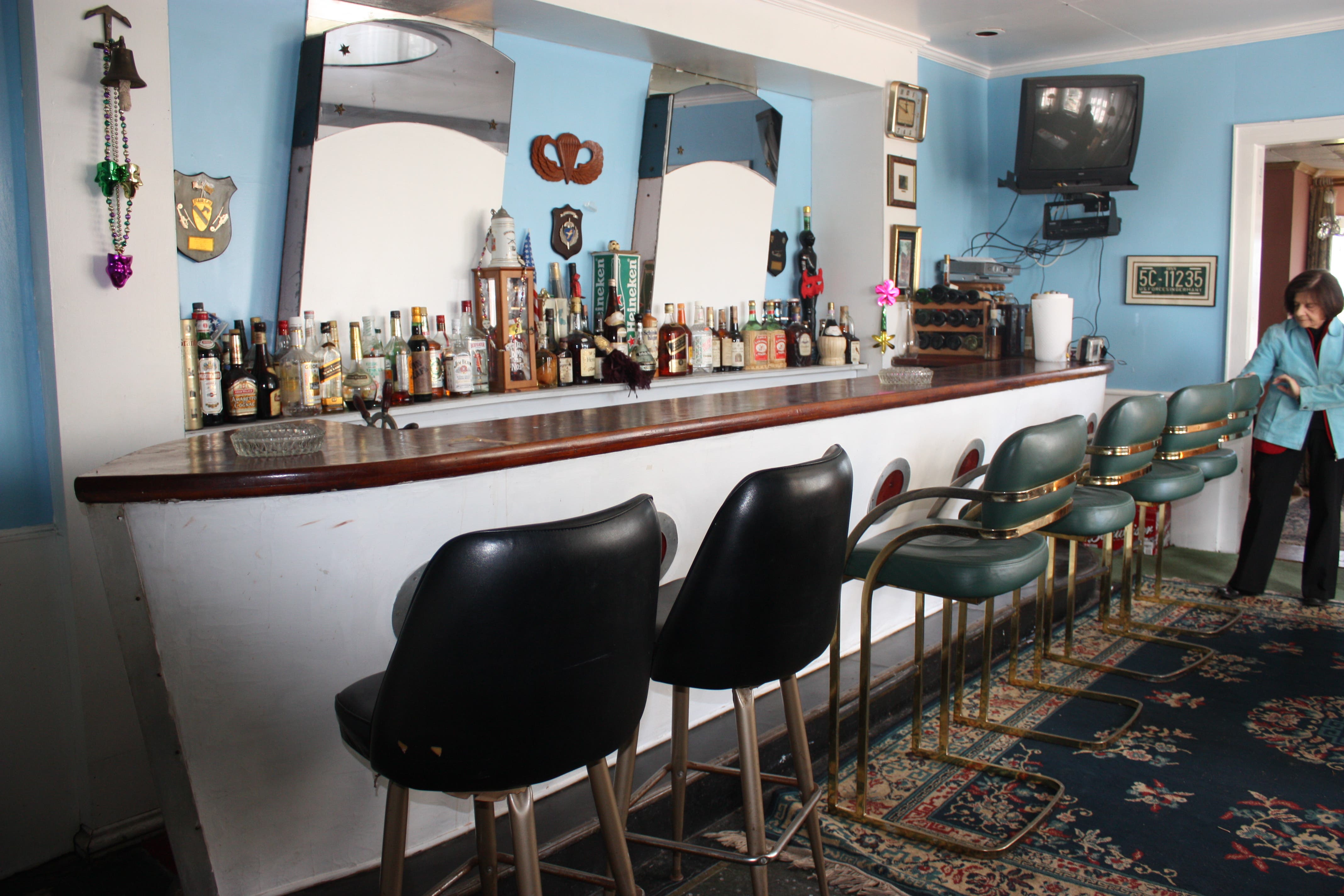


Long Beach's first home is for romantics. But it wasn't always that way. That reputation evolved, through the couples that lived there, and is crystallized in its name, the Villa Clara.
The Spanish Renewal home overlooks the bay on West Bay Drive at Laurelton Boulevard, and was build for Long Beach's founder, Senator William Reynolds, in 1908. Now Daniel Steele and his two sons, Charles and Bob, own the home, and the history, heartbreak and artistry behind it has made it a must-see for many people.
"It's the most sought after home on Long Beach, and on Long Island," said Alexandra Karafinas, president of the Long Beach Island Landmarks Association.
Find out what's happening in Long Beachfor free with the latest updates from Patch.
Reynolds built the home in the West Bay area that he made an exclusive community known as "Seaside Cottages." Building homes on the bay, rather than on the ocean, provided privacy and docking spaces for homeowner's yachts.
Though Reynolds owned homes in other areas that he developed, such as Bedford-Stuyvesant and Coney Island, it is said that he frequented his Long Beach home the most.
Find out what's happening in Long Beachfor free with the latest updates from Patch.
After he sold it to the Alamore Corporation for $50,000, the rumor became that it turned into a speakeasy during Prohibition. Judge Benjamin Shalleck, then New York State's youngest and longest serving judge, purchased the home with his wife, Lillian Roth, a singer and movie star in the 1930s who was known for such films as "Honey" and "Animal Cracker," and the couple uncovered several bottles of liquor there.
Shalleck was Roth's fourth husband, and it was at the Long Beach home that she left and divorced him, leaving the halls with sorrow and emptiness until Daniel and Clara Steele purchased the home in 1976.
"I had grown up in Nebraska in a two-bedroom house with no electricity or plumbing," Steele said. "So can you imagine what it was like to live in this home for me?"
Clara was from Trieste, a beautiful seaport in Italy, where Steele, an officer for the U.S. Army, was stationed. After a brief courtship, the couple married, beginning a military life that kept them moving from one country to the next, and bearing seven children until Steele retired 30 years later at Fort Totten in Queens.
Spotting an ad in the New York Times for Reynolds' prior home, the Steeles voyaged to Long Beach, a place where they had never been, and saw the home that Clara feel in love with. Thirty-five years later, it's Clara's work and detail added to the home that has viewers asking to see it again before they've leave its doorstep.
The house has been featured in The New York Times and on PBS. Among its features are molding scrolls and a cherubs in a heavenly sky painted on a domed ceiling, a chapel with jeweled doors and walls, and a mural above a bedroom wall. Clara transformed her Spanish Renewal home into a Renaissance spectacle.
"This is what she was proud of," Steele said about his deceased wife. "It's what she loved doing."
After raising seven children, living in five countries and a lifetime together, Steele's face still lights up when he talks about Clara, who died in 2006. Steele has named his own Taj Mahal after her, calling it Villa Clara, which is Italian for "House of Clara."
It is because of his continued love for his wife that he opens his doors every December for Long Beach for a house tour, so that others can see what a remarkable woman and home decorator she was.
"The Steele's home is one of the most requested homes of the homes tour,'" Karafinas said of the Landmarks Association's guided tours around Long Beach. "People wait all year and call months ahead of time to see this home specifically. I don't think I could ever take it off the tour."