Health & Fitness
South Nassau Designated Baby Friendly Hospital by World Health Organization
The hospital was awarded the distinction for its commitment to mothers and supporting breastfeeding.


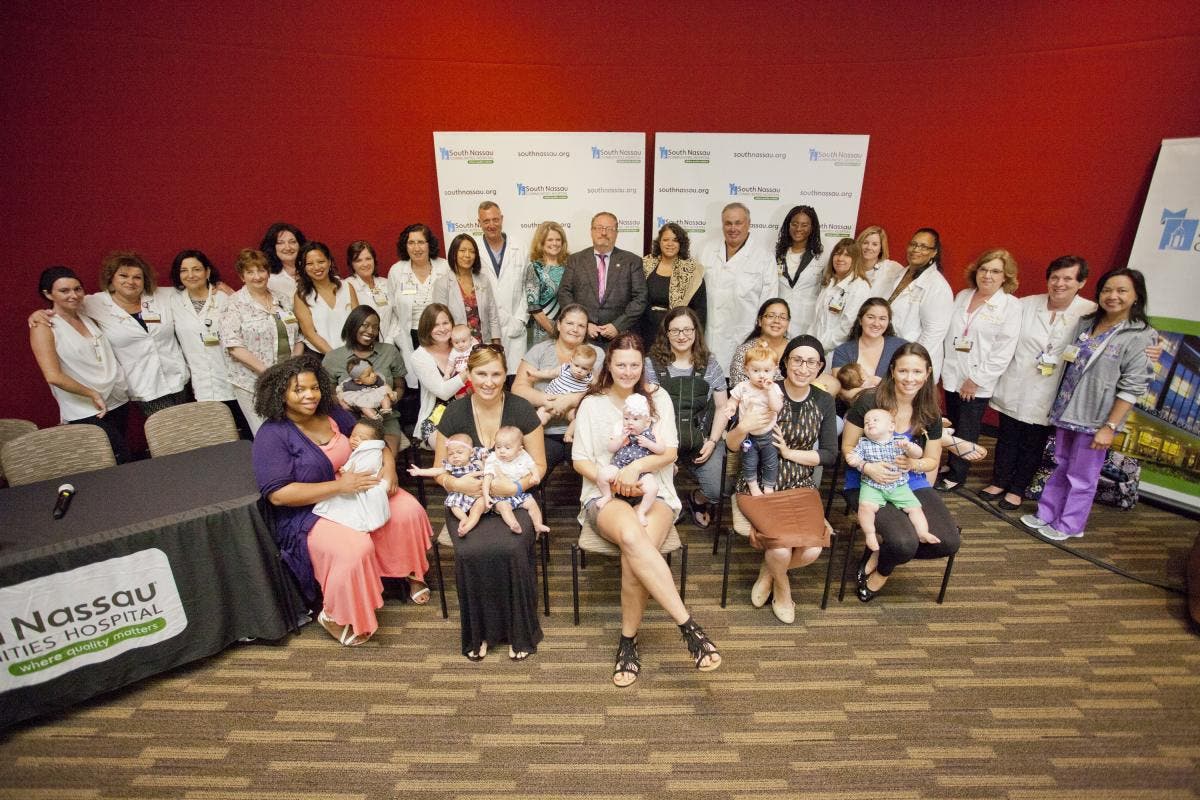
South Nassau Communities Hospital has been named a Baby Friendly hospital by the World Health Organization for its commitment to mothers and newborns and in recognition of its effort to foster breastfeeding.
The designation -- awarded by the World Health Organization (WHO)/United Nations Children's Fund’s (UNICEF) via Baby-Friendly USA, Inc. (BFUSA) -- has only been won by two hospitals on Long Island.
The Baby Friendly designation recognizes birth facilities that offer breastfeeding mothers the information, confidence and skills needed to successfully initiate and continue breastfeeding their babies. The designation is for a period of five years during which time South Nassau will establish and maintain a data tracking system to collect and maintain statistics that will be reported annually and are related to the “Ten Steps to Successful Breastfeeding.”
Find out what's happening in Long Beachfor free with the latest updates from Patch.
“This designation is the latest in a series of recent recognitions by national organizations that South Nassau is a place where quality matters and where patient care is paramount,” said South Nassau’s President and CEO Richard J. Murphy. “In addition to being a WHO Baby Friendly hospital, we recently won recognition from the American College of Surgeons as a Trauma Center and have been approved for new surgical and OB/GYN residency programs by the Accreditation Council for Graduate Medical Education (ACGME). These are all signs of our growing role as a regional medical center."
The Ten Steps to Successful Breastfeeding were developed by a team of global experts and consist of evidence-based practices that have been shown to increase breastfeeding initiation and duration. Baby-Friendly hospitals and birthing facilities must adhere to the Ten Steps to receive, and retain, the Baby-Friendly designation. The Ten Steps are:
Find out what's happening in Long Beachfor free with the latest updates from Patch.
1. Have a written breastfeeding policy that is routinely communicated to all health care staff.
2. Train all health care staff in the skills necessary to implement this policy.
3. Inform all pregnant women about the benefits and management of breastfeeding.
4. Help mothers initiate breastfeeding within one hour of birth.
5. Show mothers how to breastfeed and how to maintain lactation, even if they are separated from their infants.
6. Give infants no food or drink other than breast-milk, unless medically indicated.
7. Practice rooming in -- allow mothers and infants to remain together 24 hours a day.
8. Encourage breastfeeding on demand.
9. Give no pacifiers or artificial nipples to breastfeeding infants.
10. Foster the establishment of breastfeeding support groups and refer mothers to them on discharge from the hospital or birth center.
Scientific evidence points to lower risks for certain diseases and improved health outcomes for both mothers and babies who breastfeed. Breastfeeding is the natural biological conclusion to pregnancy and an important mechanism for the continued normal development of the infant. With the correct information and the right supports in place, under normal circumstances, most women who choose to breastfeed are able to successfully achieve their goal.
Photo: Breastfeeding mothers and their babies are joined by South Nassau staff members from several departments, including Labor and Delivery, Lactation Resource Center, Neonatal Intensive Care Unit, Obstetrics and Gynecology, Pediatrics, Parent-Child Education, Maternity and Administration. Courtesy South Nassau Communities Hospital.
Get more local news delivered straight to your inbox. Sign up for free Patch newsletters and alerts.