Politics & Government
New York Primary Previews: Meet Marvin Williams, Candidate For New York’s 4th Congressional District
Patch asked Marvin Williams several questions ahead of the Republican primary in New York's 4th district. Here are his responses.

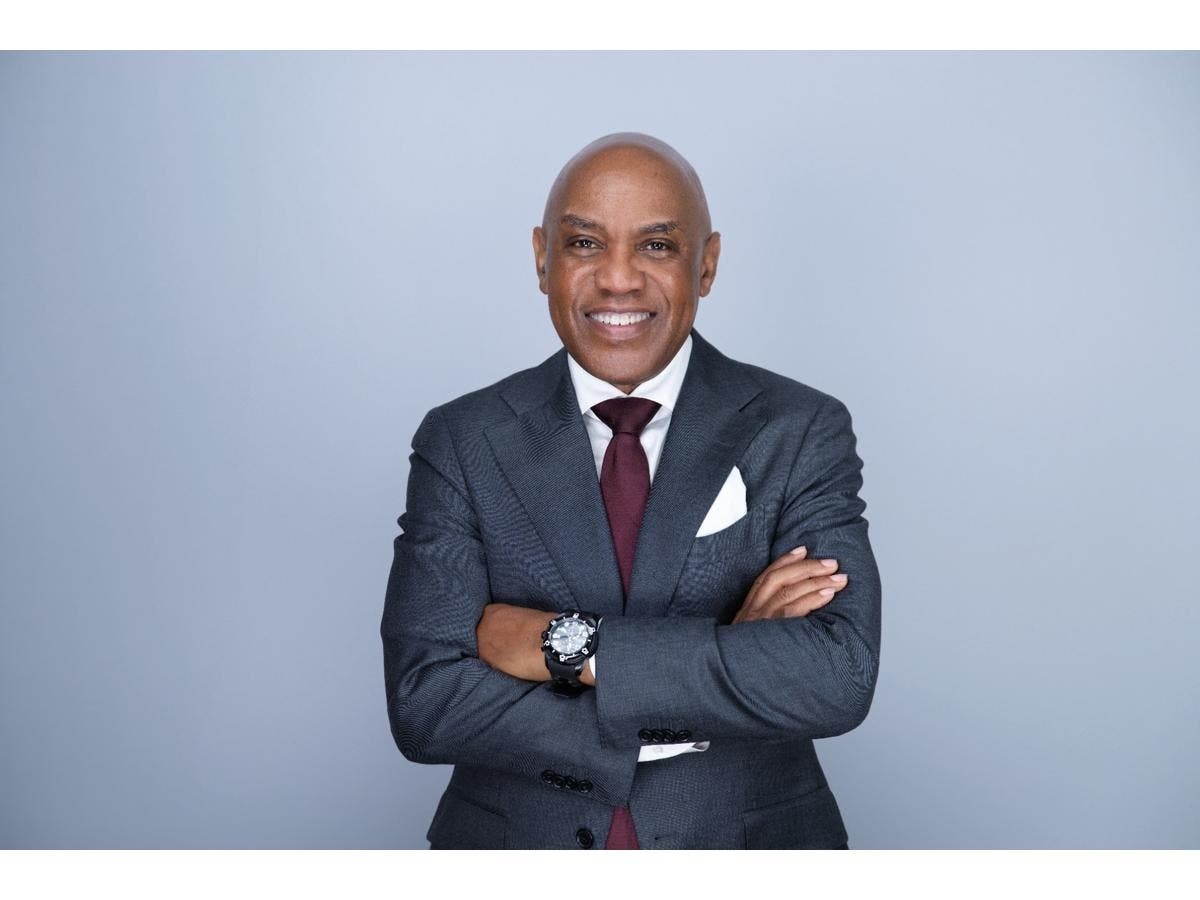
NASSAU COUNTY, NY — Marvin Williams is running for congress as a Republican in New York’s 4th congressional district, with a primary election on Tuesday, June 23. Williams will face Town of Hempstead receiver of taxes Jeanine Driscoll in the primary to decide who will run against incumbent Democrat and former Town Supervisor Laura Gillen, who is running for reelection.
The 4th district covers much of the southern half of Nassau County, stretching from the Queens border in the west to its eastern borders in East Meadow, North Bellmore, Seaford and Wantagh. The district spans from the barrier islands off the south shore to Garden City and Floral Park in the north.
Ahead of the election, Patch got in touch with Williams to ask several questions about his platform, policy positions and district.
Find out what's happening in Long Islandfor free with the latest updates from Patch.
EDITOR’S NOTE: The following article contains information about one of multiple candidates who have announced their campaigns for New York’s 4th district in the 2026 primary. Patch has sent the same questions to other candidates and will post replies as they are received. None of Williams’ responses have been fact-checked.
Patch: How old will you be as of Election Day?
Find out what's happening in Long Islandfor free with the latest updates from Patch.
MW: 64
Patch: Does your campaign have a website?
MW: Yes — marvinforcongress.com
Patch: What city or town do you live in?
MW: Garden City, New York
Patch: What's your educational background?
MW: B.S., Old Dominion University; M.Div. Interdenominational Theological Center; M.A. and Ph.D., Vanderbilt University. Air Force professional military education, including Air Command and Staff College and Air War College
Patch: What is your occupation?
MW: Retired U.S. Air Force Lieutenant Colonel and Chaplain. Ordained minister, Presbyterian Church (U.S.A.). Currently serving as the founder and CEO of the Cultural Collective Foundation, an independent global policy think tank. Previously held Senior Executive Service positions in the federal government, including with the U.S. Department of State and the Equal Employment Opportunity Commission.
Patch: Do you have a family? If so, please tell us about them.
MW: My son is a graduate of Kellenberg H.S. and a rising junior at Binghamton University. I grew up in New York City. I am an ordained minister.
Patch: Does anyone in your family work in politics or government?
MW: No!
Patch: Have you ever held a public office, whether appointive or elective?
MW: I have never held elected office. However, I have held senior federal positions, including the Senior Executive Service (SES) level, which is the highest level of service in the federal government.
Patch: Why are you seeking this office?
MW: I am concerned that Long Island families are being squeezed by taxes, inflation, and a Washington that has stopped listening. Affordability is now the top priority for the 4th District. Our senior population are facing a crisis as they choose between healthcare and taxes. For thirty years I served this country in uniform, and for nearly a decade after that I served in senior federal roles at the State Department and the EEOC. I know how Washington works, and I know what it costs us when it doesn't.
I'm not running for the next promotion. I'm running because Long Island deserves a representative who genuinely cares about the quality of life in Long Island. I will work with President Trump to lower costs, secure our border, support our police, and stand with our allies, including Israel. That's the service Long Islanders deserve, and it's the kind of service I've spent my entire career delivering.
Patch: Please complete this statement: The single most pressing issue facing constituents is:
MW: The affordability crisis. Long Island families are paying more for groceries, gas, energy, housing, and property taxes than they can sustain, and the SALT deduction cap has hit our region harder than nearly anywhere else in the country. Until we restore the SALT deduction, hold federal spending accountable, and bring inflation under control, every other issue is downstream of working families' inability to afford to live in the communities where they were raised.
Patch: What needs to be done to address water quality issues on LI?
MW: Long Island sits on a sole-source aquifer, and we have known threats — 1,4-dioxane, PFAS contamination, saltwater intrusion, aging infrastructure. Three things need to happen:
First, full federal partnership in funding water-district remediation. Our local water districts cannot bear these costs alone. I'll push for sustained federal infrastructure investment specifically targeted at Long Island's drinking water systems.
Second, holding polluters accountable. The companies that contaminated our aquifer must pay for the cleanup, not Long Island ratepayers.
Third, robust federal standards for emerging contaminants, properly funded so EPA enforcement is real rather than aspirational. Our families should not be the test case for whether the federal government takes water quality seriously.
Patch: What do you think can be done to help improve our infrastructure, highways, etc.?
MW: Long Island's infrastructure, our roads, bridges, rail, sewer, and water systems, is a national-security asset and an economic engine. Three priorities:
Federal investment that actually reaches Long Island. Too much infrastructure funding gets routed through Albany and never makes it to Nassau. I'll fight to ensure our region gets its fair share.
LIRR reliability and Penn Station access. Working families depend on the trains. Sustained federal coordination with the MTA on capital projects, including East Side Access follow-through and Penn Station modernization, is essential.
Smarter permitting. Federal infrastructure projects take too long because of duplicative review processes. Streamlining without sacrificing environmental protection is achievable, and overdue.
Patch: Cost of living is a big issue facing Long Islanders, how would you try to address that if elected?
MW: Three concrete priorities on day one:
Restore the SALT deduction. The cap has cost Long Island families thousands of dollars each year. Full restoration is non-negotiable.
Bring inflation down. That means responsible federal spending, secure energy supplies, and reducing regulatory burdens that drive up prices on everything from groceries to construction materials.
Lower energy costs. Long Island has some of the highest electricity rates in the country. I will support an all-of-the-above energy strategy that brings prices down without sacrificing reliability.
Introduce a tiered tax system that will bring relief to the most vulnerable populations in our district.
Affordability is not just a slogan. It's whether your daughter can buy her first house here, whether your parents can retire here, and whether your business can keep its doors open. Every vote I cast in Congress will be measured against that standard.
Patch: How would you plan to help local business owners, who are struggling because of high rents, inflation and labor shortages?
MW: Small business owners on Long Island are the backbone of our economy and the first to feel every policy mistake out of Washington. My priorities:
Tax stability and SALT relief: small business owners are hit twice by high local taxes and the SALT cap. Restoring SALT is small-business relief.
Reasonable regulation: federal regulations should be written so a Garden City florist or a Freeport contractor can actually comply without hiring a compliance lawyer. I'll work to roll back the most burdensome mandates.
Establish a workforce policy that includes legal immigration reform paired with strong border enforcement, our labor shortages are real, but the answer is a legal, enforceable system, not an open border.
Energy and supply-chain stability: small businesses can't absorb energy spikes or supply disruptions. Federal policy that produces stable energy prices and resilient supply chains lowers costs at the register and at the storefront.
Patch: How are federal issues impacting local government?
MW: Federal policy hits Long Island harder than almost any other suburb in America. The SALT cap, federal immigration enforcement decisions, federal infrastructure funding, federal Medicaid and Medicare policy, federal energy regulations—all of it lands on our families and on our towns. When Washington fails, Long Island pays the bill. Our local governments are working harder with fewer resources because Washington has not been a reliable partner.
Strong federal-local partnership is essential. I will work with Long Island's town supervisors, mayors, and county leadership regardless of party to make sure federal resources actually serve our communities.
Patch: What are the major differences between you and our opponent?
MW: My opponent, Jeanine Driscoll, is Hempstead Town's Tax Receiver, endorsed by the Nassau County Republican machine. She is the party's pick.
I am the grassroots candidate, accountable to voters.
I spent thirty years in uniform as an Air Force Lieutenant Colonel and chaplain. As a local pastor, I know the heartbeat of the Fourth District and the families who live here. I served in senior federal roles at the State Department and the Equal Employment Opportunity Commission. I have a Ph.D., have managed major federal budgets, and have led teams through hard decisions.
Congress is a federal job. Long Island deserves federal experience and grassroots accountability.
This race is a choice between a candidate selected by the party organization and a candidate accountable directly to voters. I'm asking Long Islanders to choose accountability.
Patch: What other issues do you intend to address during your campaign?
MW: Public safety and supporting law enforcement. Our officers deserve the resources, training, and respect required to keep our communities safe.
Border security and a legal immigration system. The chaos at the border has direct consequences for Long Island — for our schools, our hospitals, and our public safety.
Standing with Israel and confronting antisemitism. Long Island has one of the largest Jewish communities in the country. Standing firmly with Israel and against the rising tide of antisemitism is not optional.
Caring for veterans. Having spent thirty years in uniform, I will fight every day to ensure veterans get the health care, the benefits, and the respect they earned.
Restoring accountability in Congress. Term limits, transparency, and ethics reform. The institution has lost the trust of the American people, and that has to change.
Patch: What accomplishments in your past would you cite as evidence you can handle this job?
MW: Thirty years of Air Force service, retiring as a Lieutenant Colonel and chaplain. I led service members through deployments, family crises, and moments of moral and ethical complexity. Military service teaches you that decisions have consequences and that leaders are accountable for outcomes.
Senior Executive Service appointments at the U.S. Department of State and the Equal Employment Opportunity Commission. These are the most senior career roles in the federal government. They require running large organizations, managing complex budgets, and getting results across administrations.
A Ph.D. from Vanderbilt University. Academic discipline matters. The ability to read a complex document, ask the right questions, and reach defensible conclusions is exactly the skill Congress requires.
Decades of community service on Long Island — chaplaincy work at Mercy Hospital, pastoral work in Hempstead, teaching, mentoring. Long Island is not an abstraction to me. It is home.
Patch: Is there anything else you would like voters to know about yourself and your positions?
MW: As a descendant of slavery, I was born at the Naval Hospital in Manhattan, raised in Bedford-Stuyvesant, Brooklyn, and have made my life on Long Island. I know what working families are facing because I am one of them. I have spent my entire adult life in service—to my country, to my faith community, to the people who needed help.
This campaign is not about me. It is about whether Long Island gets a representative who will work every day for the families who live here. I am asking for your vote in the Republican primary on Tuesday, June 23rd. Early voting is open now through Sunday, June 21st.
Get more local news delivered straight to your inbox. Sign up for free Patch newsletters and alerts.