Politics & Government
New York Primary Previews: Meet Raj Goyle, Candidate For New York State Comptroller
Patch asked Raj Goyle several questions ahead of the Democratic primary for New York State Comptroller. Here are his responses.


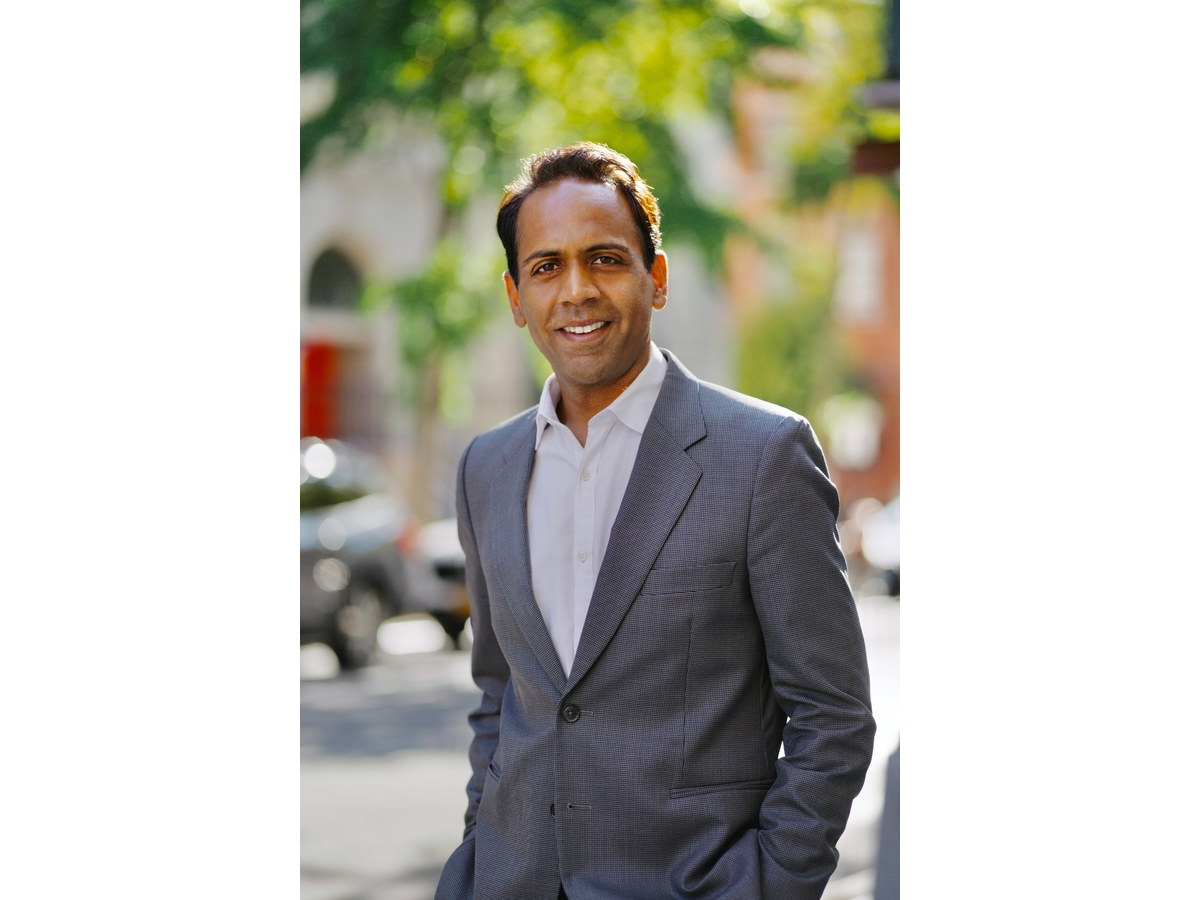
NEW YORK — Raj Goyle is running for New York State Comptroller in the Democratic primary on Tuesday, June 23.
Goyle is one of the candidates seeking the Democratic nomination for comptroller, the state’s chief fiscal officer. He is running against incumbent Tom DiNapoli and Drew Warshaw in the primary.
Ahead of the election, Patch got in touch with Goyle to ask several questions about his background, fiscal priorities, government oversight and plans for the comptroller’s office.
Find out what's happening in Long Islandfor free with the latest updates from Patch.
EDITOR’S NOTE: The following article contains information about one of multiple candidates running in the 2026 Democratic primary for New York State Comptroller. Patch has sent the same questions to other candidates and will post replies as they are received. None of Goyle’s responses have been fact-checked.
Patch: How old will you be as of Election Day?
Find out what's happening in Long Islandfor free with the latest updates from Patch.
RG: 51 years old.
Patch: What city or town do you live in?
RG: Lower Manhattan, New York City.
Patch: What’s your educational background?
RG: B.A., Duke University; J.D., Harvard Law School.
Patch: What is your occupation?
RG: Tech entrepreneur, former civil rights attorney (ACLU/NAACP), and former state legislator. I was the founder and CEO of Bodhala, a successful New York-based technology firm that built machine-learning tools to audit corporate legal billing, expose waste, and root out fraud.
I also founded and led Phone Free NY, the coalition group that helped pass the nation's most comprehensive school cell phone ban to protect our children's mental health and focus right here in New York.
Patch: Do you have a family? If so, please tell us about them.
RG: I live with my wife, Monica, our two daughters, and both sets of grandparents are on the same block in New York City. I’m proud to say my greatest achievement has been building a multi-generational New York family.
My parents immigrated to Rochester from India, and my wife and her family grew up in Orange County, NY.
Patch: Does anyone in your family work in politics or government?
RG: No.
Patch: Have you ever held public office, whether appointive or elective? If so, please list the office and years served.
RG: Yes. I served as a State Representative in the Kansas House of Representatives from 2007 to 2011. I ran as a proud Democrat in a competitive, 2-to-1 Republican district, flipped the seat by defeating an extreme conservative, and maintained a proud progressive Democratic voting record while standing as a brick wall to protect reproductive rights and gut anti-immigrant bills.
Patch: Why are you seeking election as New York State Comptroller?
RG: I am running because New York is in the grip of a brutal affordability crisis, and the office that controls the state’s massive $300 billion pension fund and chief auditing power has been asleep on the sidelines.
For twenty years, the Comptroller's office has been run like a passive, retrospective Albany bookkeeping shop. But when utility bills are skyrocketing, when young families are being priced out of their communities, and when our public dollars are being used to fund global harm, passive leadership is active complicity.
I want to bring my background as an ACLU civil rights attorney and a successful technology founder to Albany to transform this office into an active Affordability Watchdog that protects your family's pocketbook and uses New York’s immense financial power as a shield for working people.
Patch: What do you see as the most important responsibility of the New York State Comptroller?
RG: The Comptroller has two co-equal, vital responsibilities: first, acting as the Sole Trustee of the $300 billion Common Retirement Fund to maximize safe, risk-adjusted returns for our public retirees; and second, serving as the state’s Independent Chief Auditor to protect public assets, eliminate waste, and hold state agencies and corporate monopolies accountable to taxpayers.
This office has massive powers to make pensioners more money, fight the affordability crisis, and root investments in New York’s values.
Patch: The comptroller serves as the state’s chief fiscal officer. What would your top fiscal oversight priority be if elected?
RG: My top fiscal priority will be launching immediate, comprehensive forensic audits of state-regulated utility monopolies—such as PSEG Long Island, Con Edison, and National Grid—alongside the Public Service Commission (PSC).
Long Island families are being squeezed by regressive utility rates that are among the highest in the country. For decades, the PSC has acted as a corporate rubber stamp, allowing these monopolies to hide corporate lobbying fees, executive bonuses, and gold-plated project estimates inside your monthly utility bills. We will use the Comptroller's constitutional audit power to turn the lights on these hidden "junk fees," expose the math to the public, and force ratepayer clawbacks and rate rollbacks.
Patch: The comptroller oversees audits of local governments and school districts. What fiscal issues on Long Island do you believe deserve closer scrutiny?
RG: On Long Island, we must direct aggressive audit scrutiny to three key areas:
IDA Accountability: Long Island IDAs routinely grant massive, multi-million-dollar property tax breaks and sales tax exemptions to wealthy corporate developers under the guise of "economic development." We need to audit these deals rigorously. If developers accept public subsidies but fail to create the promised, high-paying local union jobs, we must enforce strict clawback provisions. Taxpayers should not be subsidizing corporate profits.
Special District Waste: Long Island's fragmented local government structure—including water, fire, sanitary, and library districts—often hides administrative duplication, bloated executive salaries, and questionable procurement contracts. We will launch targeted municipal audits to streamline these districts, root out political patronage, and reduce the regressive local property tax burden.
PSEG Long Island Operational Overcharges: We must audit the public-private operating model of PSEG Long Island to ensure that taxpayers are not being overbilled for storm preparedness, emergency management, or infrastructure upgrades that fail to prevent chronic power outages.
Patch: How would you use the comptroller’s audit authority to protect taxpayers and improve government accountability?
RG: I will modernize the auditing division from a slow, paper-pushing bureaucracy into a real-time, tech-forward oversight engine. Currently, Comptroller audits are retrospective, historical post-mortems published three years after the money has already left the building.
As a technology founder, I know how to build modern data-tracking systems. My administration will build a public-facing "State Spending and Contract Dashboard" and utilize machine-learning tools to ingest state invoice data in real-time. We will flag fraudulent patterns, administrative waste, and predatory vendor markups before the checks are cut, shifting the office from a reactive state to proactive protection.
Patch: How should the comptroller’s office respond when audits find waste, fraud, abuse or repeated mismanagement?
RG: We must end the culture of gentle wrist-slaps and ignored audit recommendations in Albany. When an audit uncovers clear evidence of waste, fraud, or criminal abuse:
We will immediately refer the findings directly to the State Attorney General, local District Attorneys, and federal authorities for swift criminal prosecution and asset restitution.
We will implement a public, red-flag list of corrupt, wasteful, or repeatedly underperforming state contractors and enforce a mandatory ban on future state procurement contracts for repeat offenders.
We will utilize the public reporting power of this office to aggressively "name and shame" the entities and officials responsible, forcing immediate administrative overhauls.
Patch: New York’s comptroller is sole trustee of the state pension fund. What is your philosophy on managing the pension fund, balancing investment returns, risk and responsibility to retirees?
RG: My investment philosophy is built on an unyielding principle: Fiduciary duty and moral clarity are mathematically aligned. Fiduciary responsibility means managing long-term structural risk prudently to protect our public workers' retirement savings. Investing billions of dollars in highly volatile, politically sensitive corporate enablers of human rights abuses (such as $430 million in Palantir, an ICE deportation contractor) or structurally declining, heavily subsidized legacy energy conglomerates (fossil fuels) is not a safe investment hedge—it is a massive, unhedged financial liability.
We will implement a "Fiduciary First" strategy: shifting pension assets away from high-fee active Wall Street managers who consistently underperform simple market benchmarks, and utilizing low-cost customized passive indexing through Separately Managed Accounts (SMAs). This allows us to protect our public workers' retirements while ensuring our capital is never used to fund global destruction or local suffering.
Patch: Should environmental, social or governance considerations play a role in state pension fund investments? Why or why not?
RG: Yes, because ESG considerations are not "political"—they are structural, material risk indicators that directly impact long-term financial performance.
If an asset manager ignores the rapid transition to clean energy, global carbon taxation, or the intense reputational and regulatory risks carried by companies that violate human rights, they are failing their fiduciary duty of risk mitigation. Incorporating rigorous ESG criteria is a standard, conservative portfolio-management tool used by the world's most sophisticated institutional allocators to filter out stranded, toxic, and volatile liabilities before they drag down retirees' returns.
Patch: How would you approach investments involving fossil fuels, renewable energy, affordable housing or infrastructure?
RG: We will go on the defense to stop the bleeding, and go on the offense to build New York's future:
Fossil Fuels: We will launch a rapid, systematic divestment from all fossil fuel conglomerates, pipeline operators, and legacy coal giants. These are stranded assets undergoing long-term structural decline, and holding them is a direct threat to our fund's solvency.
Affordable Housing and Local Infrastructure: We will treat housing and local green infrastructure as a premier, stable, and physically secured asset class. We will reallocate our capital away from risky, opaque overseas ventures and high-fee Wall Street hedge funds, and invest it directly in local municipal bonds. This capital will fund the construction of union-built, permanently affordable middle-class social housing and green energy grids right here in New York, creating high-paying local union jobs and building the local tax base.
Patch: What steps would you take to protect the pension fund from political influence?
RG: To ensure absolute independence, I will implement a strict, legally binding ethical firewall:
Ban on Pay-to-Play: The Comptroller, investment staff, and board members will be completely banned from accepting any lobbyist-funded travel, luxury gifts, or campaign contributions from financial entities, hedge funds, or corporate lobbies doing business with the state pension.
Personal Blind Trust: I am the only candidate in this primary pledging to place 100 percent of my personal assets into a verified, third-party blind trust on Day One to eliminate even the appearance of a conflict of interest.
Transparent Indexing Rules: We will establish objective, quantitative "Fiduciary First Index Guardrails" to automate index-tracking decisions, preventing the fund from being used as a political favoritism tool for foreign governments or corporate insiders.
Patch: What would you do to increase transparency around state contracts, procurement and spending?
RG: I will pull back the curtain on Albany's backroom deals by launching a public, searchable "Pension Security Dashboard" and a real-time "State Procurement Portal." Every New York taxpayer and retiree will be able to see, in real time, exactly what individual stocks and private equity funds our state pension is holding, along with the specific terms, active bids, and billing structures of every single state contract. No more waiting years for annual reports or navigating opaque freedom-of-information blockades to find out how your tax dollars are being spent.
Patch: New York residents often complain about high taxes and affordability. What role can the comptroller realistically play in addressing those issues?
RG: While the Comptroller cannot write tax laws, they hold the single most powerful tool in state government to lower your cost of living: the Watchdog Power.
Lowering Utility Bills: By auditing corporate utility monopolies, we can expose the hidden corporate lobbying costs and overcharges used to justify rate hikes, forcing rate rollbacks and keeping hundreds of dollars a year in your pocket.
Reducing Local Property Taxes: By launching rigorous, forensic audits of school districts and local special districts to eliminate administrative waste, patronage, and corporate tax giveaways (IDAs), we can directly alleviate the local property tax pressures choking Long Island families.
Stabilizing Housing Costs: By investing state pension capital into building affordable social housing at scale, we can lower the rent and purchase costs that are forcing our kids and young workers to flee the state.
Patch: What is your view of New York’s current debt burden, and what should be done to keep borrowing responsible?
RG: New York has a significant debt burden, and we must stop using high-interest public borrowing to fund speculative corporate vanity projects, such as subsidizing billionaire developers for sports stadiums.
Borrowing should be strictly, responsibly tied to long-term capital assets that yield direct public productivity and economic growth—such as repairing our failing water mains, modernizing Upstate and Long Island electric grids, and upgrading our transit systems. We must also demand total transparent bidding on all state-issued bonds to eliminate wasteful bank underwriting fees and protect taxpayers from predatory debt service structures.
Patch: How would you assess the financial health of New York’s local governments, especially on Long Island?
RG: Long Island's local governments are under severe, unsustainable structural stress. They are heavily reliant on regressive property and sales taxes, burdened by soaring utility costs, and starved of reliable state aid flows.
To restore their financial health, we must move away from Albany's historic practice of providing unpredictable, one-time political band-aids. As Comptroller, I will partner with local municipalities to audit and optimize state aid formulas, ensure predictable funding, and use the state pension's purchasing power to buy local municipal bonds at lower interest rates, helping Nassau and Suffolk counties fund local infrastructure upgrades without raising local taxes.
Patch: What role should the comptroller play in reviewing economic development incentives, tax breaks and subsidy programs?
RG: The Comptroller must be the ultimate referee for economic development. Programs like the Upstate high-tech corridors, local IDA tax abatements, and corporate subsidies must be subjected to rigorous, ongoing performance auditing.
If a multi-billion-dollar corporation receives public tax breaks under the promise of local revitalization, but instead hires out-of-state workers, undermines local labor, or fails to meet job creation benchmarks, the Comptroller must enforce immediate clawbacks. We must end the era of corporate welfare on the backs of New York taxpayers.
Patch: What would be your first major priority if elected comptroller?
RG: On Day One, I will issue executive directives to immediately halt all future purchases of Palantir shares and Israel Bonds, let existing positions wind down, and reallocate those public dollars to fund local social housing and green energy projects in New York.
At the same moment, I will file formal, forensic audit demands against the Public Service Commission, Con Edison, and National Grid to freeze utility rates and protect New York families.
Patch: What accomplishments in your past would you cite as evidence that you can handle this job?
RG: My career is defined by taking on powerful interests on behalf of working families and winning:
Business Founder: I founded and led Bodhala, a successful New York legal-technology company that built machine-learning software to ingest millions of lines of corporate invoices to root out billing fraud and waste, giving me the direct technical experience needed to audit state government.
Civil Rights Attorney: As an attorney at the ACLU, I fought in federal court to protect our immigrant neighbors, South Asian communities, and civil liberties after 9/11.
A Progressive Legislator: In the Kansas Legislature, I flipped a deep-red seat, maintained a progressive Democratic voting record to gut anti-immigrant bills, and earned the endorsements of Planned Parenthood and Barack Obama.
Fighter and Winner: I founded Phone Free NY, taking on Big Tech lobbies to pass the nation's most comprehensive school cell phone ban to protect our children's mental health and focus.
Patch: Is there anything else you would like voters to know about yourself and your positions?
RG: Representation and serious governance must go hand in hand. As a South Asian candidate and the son of immigrants, I know what is at stake for our communities, and I understand the fear families are experiencing under federal overreach.
But representation is about more than just a seat at the table—it is about the purse. I am running to ensure that the massive financial power of our state is used as a shield to protect our families, our climate, and our communities. Our grassroots movement has raised a record $4 million and mobilized thousands of volunteers because New Yorkers are ready for a Comptroller who knows how to fight and win. I ask for your vote in the Democratic primary.
Get more local news delivered straight to your inbox. Sign up for free Patch newsletters and alerts.