Politics & Government
Election 2011: 3rd Councilmanic District
Republican incumbent James Darcy is being challenged by Democratic candidate Owen Rumelt.


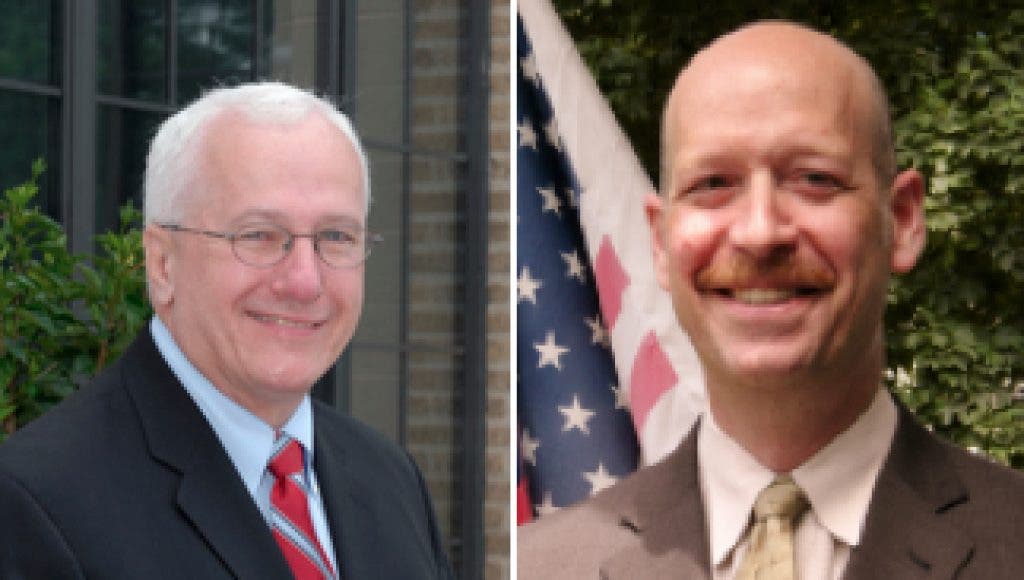
On Tuesday, Nov. 8, Republican incumbent James Darcy will go up against Democratic challenger Owen Rumelt for the position of 3rd district council member.
The 3rd Council District includes portions of Elmont, Franklin Square, Hewlett, Lynbrook, North Valley Stream, Valley Stream, West Hempstead and Woodmere; and all of Atlantic Beach, Cedarhurst, East Atlantic Beach, Inwood, Lawrence, Malverne, North Woodmere.
Polls will be open from 6 a.m. to 9 p.m. Click here to find your polling station.
Find out what's happening in Malverne-Lynbrookfor free with the latest updates from Patch.
Candidates appear in alphabetical order.
James Darcy
Find out what's happening in Malverne-Lynbrookfor free with the latest updates from Patch.
- Hometown: Valley Stream
- Occupation: Council member, 3rd District
- Time in Office: 11 years (2000)
Before being elected to serve the residents of the 3rd Council District, Darcy served as assemblyman for the 21st Assembly District (Southwest Nassau) since January 1999. While in the Assembly, he served as a member of the Education, Judiciary and Aging Committees, as well as serving as ranking minority member on the Ethics and Government Operations Committees.
Before being elected to serve the residents of the 21st Assembly District, Darcy served as mayor of the Incorporated Village of Valley Stream since April 1995. As its Chief Executive Officer, Jim Darcy was responsible for the formulation and operation of an $18 million plus annual budget. He supervised a staff of more than 250 full-time and 300 part-time employees. He also worked to meet the needs and concerns of his more than 39,000 constituents.
Owen Rumelt
- Hometown: West Hempstead
- Occupation: Attorney
Rumelt is 23-year resident of West Hempstead and a partner in Levy Ratner, P.C., a labor law firm in Manhattan. He earned his degree in applied mathematics and statistics from Stony Brook University and his J.D. from the National Law Center at George Washington University.
Rumelt and wife, Betty Altas, have two daughters, Joanna and Allison. Soon after moving to West Hempstead, he became active in his synagogue, the Young Israel of West Hempstead, and served in various capacities before becoming its president. At the same time, he began his involvement in community affairs and, two years ago, became a member of the board of trustees at the West Hempstead Public Library.
Patch: Many areas in the Town of Hempstead are plagued by commercial vacancies. Is there a way to help fill these storefronts and is there any way to assist existing small businesses who may be struggling to stay afloat?
James Darcy: Businesses everywhere, including our town, are fighting to remain viable. Fortunately, Hempstead Town has been playing an important role in helping businesses to weather the storm and persevere. This is unique, as municipal governments ordinarily have very little to do with providing economic assistance. Rather, they furnish typical municipal services in areas such as parks, highways, beaches, street lighting, tax collection and licensing. Hempstead, however, has performed impressive downtown beautification work, helping to add new luster to aging downtowns and create attractive destinations for shoppers. More streetscape and facade work is coming to Elmont, Franklin Square and other areas.
The Town of Hempstead Planning Department oversees a small business low-interest loan program, and our HempsteadWorks “workforce center” is helping train workers for local businesses. The center even provides meeting facilities for business owners.
Owen Rumelt: In our current economy, small businesses are often hardest hit. One necessary step to helping bring businesses back to our commercial districts is to review our zoning laws and streamline the permit process to make it easier to create and operate new businesses. Other possible solutions are revenue-neutral tax incentives to help businesses keep afloat in these trying times and the increased use of available federal and state aid and grant programs for small businesses. The Town of Hempstead Democratic Committee's "Jobs Now!" platform address these concerns and will be implemented immediately.
Patch: Many officials throughout the town believe the proposed HUB development will take business away from local downtowns, which are already hurting in this down economy. What will be done to mitigate concerns?
Darcy: Most economists and officials who deal with municipal and commercial planning realize that the synergies involved in commercial growth are vital to a region’s survival. In fact, a common saying among economists is “If you don’t grow, you die.” Clearly, new residential development, as well as other business, technology, educational, office and commercial uses create demand for services and goods offered by businesses in our downtowns. Clearly, the key to successful development is the balance of new types of construction uses as they relate to existing commercial development. The township’s newly approved building construction zone for the area around the Coliseum allows for hotel, convention center, offices, technology, education, a refurbished Coliseum, a minor league baseball stadium, residential and commercial uses. Indeed, the businesses, resident and convention centers/hotels will be utilizing local merchants if they follow the model of any other similar economic growth patterns across the nation.
Rumelt: The key to mitigating concerns is to ensure that the development which takes place at the HUB creates new employment opportunities, rather than a replication of businesses which are already struggling in our commercial districts. For example, given the HUB's location and the planned establishment of a medical school at Hofstra, the Town should work with the University on development of bio-medical research facilities and attracting other research and development industries. Employees in the new jobs created by this innovative development can then help support local economies by making their purchases in the now-struggling businesses.
Patch: What can you do about illegal housing in some parts of the district, such as Inwood, where populations have grown during the past decade while the number of houses remained flat?
Darcy: Hempstead Town is responsive to the issue of illegal housing, dealing with the matter in the same time-tested fashion as all local jurisdictions. Specifically, our town’s building department handles resident complaints professionally, investigating them and working to get those who would turn homes into boarding houses to comply with local building regulations. Our building department keeps complaints confidential and works to preserve the residential character of our region.
Rumelt: The town has to review current zoning laws to bring them into the 21st Century in order to recognize the housing crisis currently facing town residents. When elected, I will bring community organizations, residents and business owners together to create next generation homes, while preserving the suburban model.
Patch: Can you assure people that the Town of Hempstead will continue to support local non-profits, such as the Five Towns Community Center, who provide much needed support to lower-income resident?
Darcy: People of Hempstead Town take genuine comfort in knowing that our township is a model of fiscal integrity. While other governments are in fiscal chaos, we are freezing all town taxes in 2012 while maintaining services in full force. Unlike other governments, we have preserved life-enhancing programs that are funded with town funds. Clearly, we have no control over federal funds that are administered by the town. At the same time, we will be aggressive advocates to maintain federal funding for vital programs. Obviously, we would point out that a vital key to maintaining federal grants is for residents to appeal to their U. S. senators and representatives.
Rumelt: Due to the state of the economy, there have been significant decreases in federal, state and local support, which has had severe implications to the provision of "safety net" services. Calls to maintain financing for these programs have been of limited success. As a result, we must determine how to ensure the continued provision of critical services and programs for town residents. We must begin to think "outside the box” and work together, rather than individually, with other groups providing these services. In addition, we have to ensure that our local nonprofits which have entered into contracts with Nassau County are being paid by the county on a timely basis. Nonprofit agencies should not have to take out loans to make payroll and meet other costs due to a failure of the county to meet its payment obligations.
Patch: Many Malverne residents and those in neighboring communities have expressed complaints with excessive air traffic noise, brown tap water and cuts to service on the Long Island Rail Road. How would you help address these issues?
Darcy: Malverne residents are served by a private water company. Issues such as rust in water are under the authority of the state’s Public Service Commission. Concerns over whether the water is healthy are policed by the Nassau County Department of Health. We’ve been happy to advocate for neighbors on these issues to ensure that they are addressed.
Similarly, the Long Island Rail Road is under the state’s purview, and we’ve worked with state legislators to assist neighbors with concerns. Fortunately, our state legislators are fighting hard to preserve train service and to improve performance.
Finally, air traffic noise is a matter for the FAA and the Port Authority to address. Congressional representatives deal with the FAA, a federal agency, to bring about policy changes that help residents. Hempstead Town formed a committee with local villages years ago to advocate for residents on the issue of air traffic noise. In fact, we recently proposed a “one number-one name” concept that would provide one telephone number for resident complaints and inquiries to the FAA and the Port Authority. The idea of the one number was to curtail the practice of “bouncing” calls from one bureaucrat to another when complaints are received. We’ve also called upon the FAA to go back to the drawing board on their new air traffic routes, which are increasing noise in our neighborhoods.
Rumelt: As a resident of West Hempstead and a daily LIRR — or, as I refer to it, the “Silver Snail” — commuter on the West Hempstead line, I share the complaints of Malverne residents. LIRR service — or, more accurately, the lack thereof — and excessive air traffic noise would fall outside of the jurisdiction of the town council. However, as the elected representative of the voters of the 3rd District, I would consider it my responsibility to meet with the appropriate state and federal agencies, as well as state and federal elected officials, to ensure that these complaints and issues are being heard and, to the extent possible, addressed. The issue of "brown water," however, is an issue that can be dealt with at the town level. One possible solution would be to establish a public agency to provide water in lieu of private companies. Alternatively, increases in water rate should be tied to the success of water company efforts in providing "clean" water to consumers.
Patch: Hempstead Turnpike, which runs through West Hempstead, is one of the most dangerous roads in New York State, especially for pedestrians. What do you think can be done to make this roadway safer for both drivers and pedestrians?
Darcy: What should be done about Hempstead Turnpike is a great question for the New York State Department of Transportation or state legislators, as Hempstead Turnpike is a state roadway. That being said, our town put a great deal of thought into the new construction zone it approved for the area surrounding the Coliseum as it relates to Hempstead Turnpike. Specifically, our zone includes “complete streets” that redistribute traffic onto Earle Ovington Boulevard, James Doolittle Boulevard and Merrick Avenue (north of Hempstead Turnpike). This traffic plan is aimed at mitigating traffic impacts on Hempstead Turnpike. The Lighthouse Plan only included minor local roadways within the site, not the type of complete streets for which we have provided.
Any other development proposals for the Hempstead Turnpike area will receive a thorough review of traffic impacts on Hempstead Turnpike.
Rumelt: Potential solutions for making the roadway safer for both drivers and pedestrians are greater enforcement of speed limit, road safety and cellphone (i.e., hands-free) usage laws, increased education concerning the dangers of texting and driving, more frequent road repairs to ensure the quality of road surfaces and usage of more easily read signage, so that drivers' attention is not diverted from the road while searching for their respective destinations.
Get more local news delivered straight to your inbox. Sign up for free Patch newsletters and alerts.