Schools
Massapequa Freshmen Study Nature Preserve DNA Samples
The Ames Campus students took a trip to the Dolan DNA Learning Center at Cold Spring Harbor Laboratory.

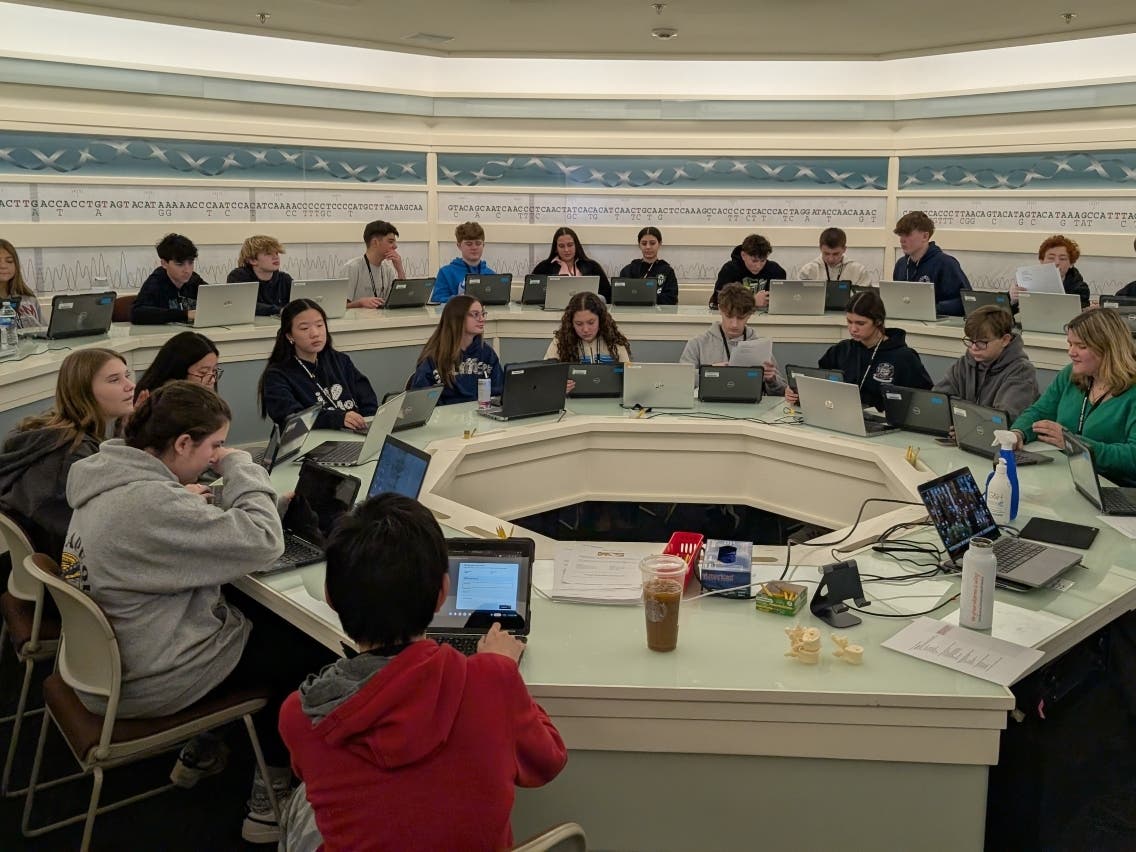

MASSAPEQUA, NY. — Science research students at the Massapequa High School Ames Campus took a spin as lab technicians Feb. 5, as the freshmen traveled to Cold Spring Harbor Laboratory to examine organism samples they had collected at the Massapequa Preserve.
The students started their research process by collecting the samples in October, which district officials say is part of a multi-year study of the ecosystem in a stream at the preserve. Once the samples were collected, students brought them to the laboratory for DNA extraction, copying the organisms’ DNA sequences through electrophoresis. In the Feb. 5 visit, students used a National Institute of Health genetic sequencing database to examine and compare the organisms they had found.
For science research teacher August Eberling, the research trip is a valuable opportunity to get Massapequa freshmen doing work that would normally be well beyond their years. In most cases, Eberling said, this kind of research would only be done by graduate-level researchers or professionals.
Find out what's happening in Massapequafor free with the latest updates from Patch.
“This is a higher level of skill that most students wouldn’t even do in college,” Eberling said. “It gives them experience working in a real-world situation at a much younger age than you would normally see.”
According to curriculum associate Daniel Mezzafonte, who handles science curriculum in grades 6-12, Massapequa’s environmental science program has already been studying Massapequa preserve for 15 years to learn about its biodiversity. The science research students, Mezzafonte said, joined the study four years ago to learn about the DNA sequences present in the preserve.
Find out what's happening in Massapequafor free with the latest updates from Patch.
Eberling said the long-term study will allow students to track the presence of new or invasive species in the preserve, or if any particular organisms undergo changes over time. In one case, a student saw a high number of mismatches in their DNA samples, which usually signals a mutation or an unidentified species. To figure out which, Eberling said, more research will need to be done. If the research is up to snuff, students like Colin Temme could even see their name included in a published research paper, depending on what they discover.
“I like how we started this hands-on project, gathering organisms and progressing
throughout the year to find out what they truly are through the DNA barcoding,” Temme said. “Each trip, we build onto it more. It’s just an amazing opportunity to do this through school.”
For Temme’s classmate Richard Ferrantino, the research process is a thought-provoking chance to get his hands dirty, learning how complex scientific concepts take shape in the real world.
“It’s very interesting seeing how all of the species interact and how one subtle
difference in DNA can change how something looks or how it functions,” Ferrantino said.
Both boys said they’d like to pursue medical or scientific careers. Luckily, this won’t be the last time they interact with Cold Spring Harbor Laboratory in their freshman year: The school district has a visit scheduled from entomologist Jeff Petraca, employed at the lab, who will advise and support the students as they work on research and presentations for a June symposium that the lab is hosting. District officials said the students will also submit their work to the Molloy College Science Fair and the Long Island Science Congress.
Get more local news delivered straight to your inbox. Sign up for free Patch newsletters and alerts.