Business & Tech
Ju-jitsu : Sensei Jeff Shows the Way
Merrick dojo teaches self defense; stresses 'walk and talk' and self confidence.



It pains me to write this story.
It has nothing to do with emotion, or the usual pains of writer's block. Rather, physical discomfort, from the assignment itself.
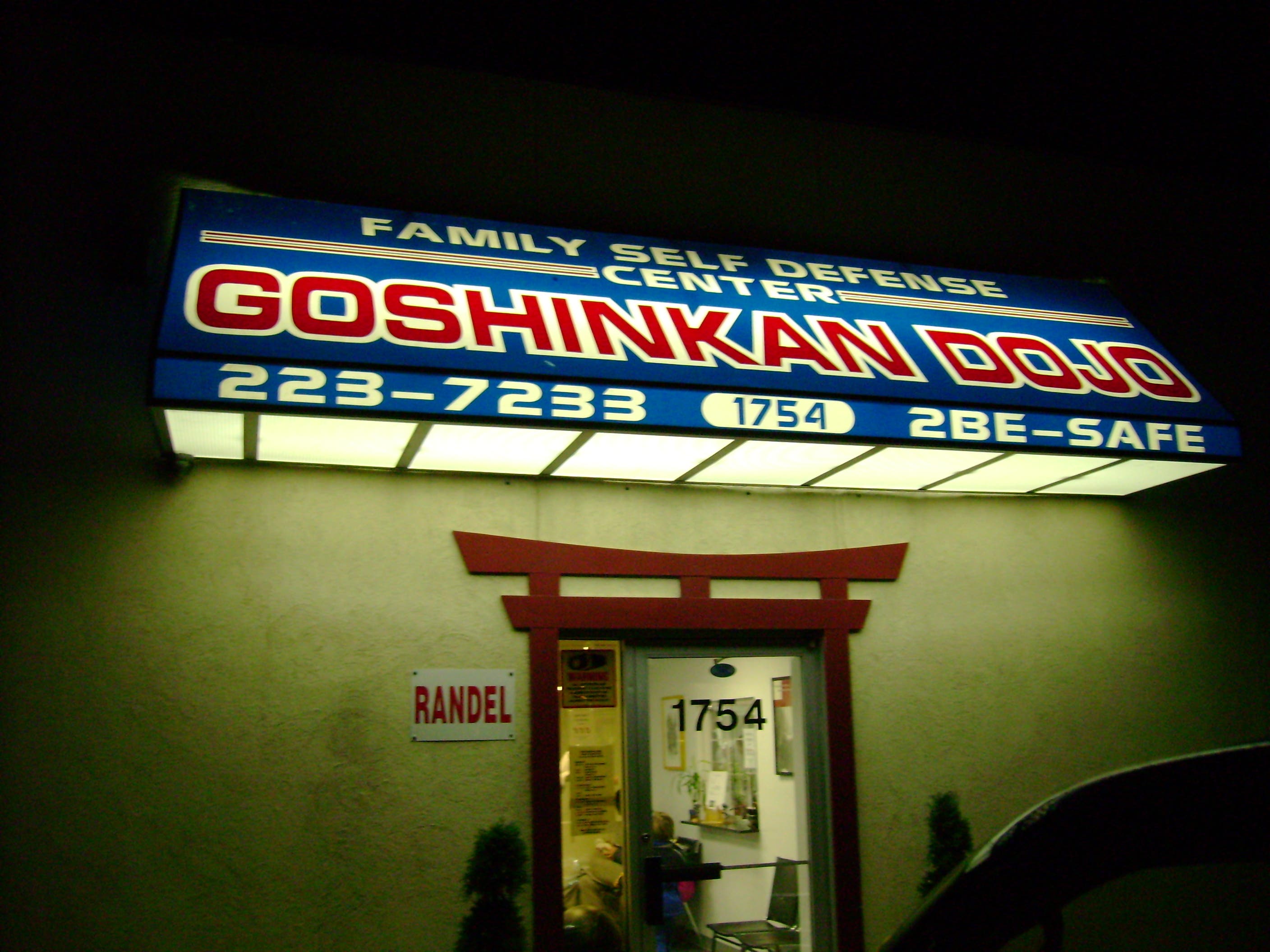
I spent a couple hours training at the Goshinkan Dojo on Merrick Avenue on Thursday. Getting dressed the next day - a process, to say the least. It's also somewhat of a chore to sit upright at my desk, and type this article.
Find out what's happening in Merrickfor free with the latest updates from Patch.
Don't fret though, it's a good kind of pain, with the rush of endorphins in my mind helping to mitigate the soreness of the muscles in my rear. You can feel that rush yourself at Goshinkan after a class or two.
Sensei Jeff
Find out what's happening in Merrickfor free with the latest updates from Patch.
Owner Jeff Lovering has been operating dojos for over 25 years, and has been at his current location for the last four. Inside the walls of his dojo, he is Sensei Jeff. He is a 7th degree black belt, and while his teachings do include fight techniques, actually getting into a fight is something he wants all his students to avoid.
"The best thing we can teach is the 'walk and talk': walk away from a fight or talk your way out of it," Lovering says. "You can avoid a situation by being aware, it makes the chance of having to defend yourself much less...people who are aware are more confident, they carry themselves better, it's a win-win situation for all of us."
Ju-Jitsu
Self confidence. That's what Lovering stresses the most. If somebody simply knows they have the skills to defend themself, it changes their whole demeanor, and that is the most effective deterrent to getting into a fight in the first place.
The skills that are taught are derived from ju-jitsu, loosely translated it means 'the gentle art.' It's much more than simply punching and kicking, and according to Lovering, a lot more effective.
"We don't want to approach things in an angry, aggressive manner, we want to redirect a person's energy to use it against them, [the person] who's trying to hurt us," he says.
Ju-jitsu turns an attackers own force against them, putting them off balance. Lovering encompasses this in his 'training for life' system, which utilizes immobilization techniques. This could include targeting a foe's pressure points. It all serves to avoid causing long-lasting injury to an attacker, and oneself.
"It's all about getting home safe, that's the number one rule," Lovering says.
The Little Dragons
Sensei Jeff's teachings seem to stress loyalty as well. Many of his instructors started out as students themselves. Katie Carroll is a third degree black belt. She has been with Lovering for 15 years, first starting her training as a ten year old.
"I was always interested in karate and martial arts as a kid, I used to watch the Ninja Turtles," she says with a laugh.
Carroll teaches the children's classes at the dojo. Kids as young as 3 1/2 years old (the 'Little Dragons') can learn focus and confidence. 'Mighty Dragons' (ages 5-6) begin learning self defense. It all comes back to when and when not to fight.
"The phrase we teach them is we don't fight first, but we fight back," Carroll says.
Lovering says the hairs on the back of his neck stand up when he recounts a story from years ago, of a mother and young boy who came into his dojo crying, upset that the child was being bullied at school. He was terrified to simply get on the bus.
Sensei Jeff worked with him for a few months. The boy returned one day, beaming.
"Sensei, I have to tell you what happened at school today," Lovering recalls the boy telling him. As it turned out, the boy was attacked again, and he was able to use his newfound skills to ward them off - permanently.
"He said he wasn't afraid to go to school anymore. It was one of the greatest thrills I had as an instructor," he says. Years later, the child brought his own daughter to train at Goshinkan.
First Hand Experience
One is never too old to learn, and the dojo offers adult classes as well. That's where my pain comes in...right at the condensation-steamed door of the dojo. In between interviews and photos, it was time to train.
Classes start with a healthy dose of calisthenics. Jumping jacks, with my calves already feeling the burn as my feet tap against the soft, yet firm mat which covers the dojo floor, wall to wall.
Soon come push ups. Two handed. On the fists, and one-handed too. Will I even make it past warm ups? Eventually I do, stretched out, sore, and ready to learn some ju-jitsu.
I team with Carlos Pandullo, a 1st degree black belt. I'm not even wearing a belt. This could get ugly.
We work on methods designed to fight back if someone wraps you up from the back. Shaking someone loose doesn't get it done, suffice to say. It all comes back to leverage, using the attacker's force against them.
I'm taught to breathe in, creating slight separation. Then, simply drop down and move your arms forward. Now, slide sideways and grab the attackers arm, putting pressure above the elbow with one hand, and pulling up on the forearm with the other. You have your attacker on the ground.
It's not as easy as it sounds, but it can come in handy, especially if you're a policeman.
Lovering says officers frequently come to him to learn techniques to subdue suspects. He shows me one. Long story short, I end up face down with one arm behind my back. This is the part where the officer wants the second hand to slap the handcuffs on.
What happens if he resists? I soon find out, courtesy of Sensei Jeff's finger pushing deep below my ear. A pressure point makes the point. I give up my other arm. A suspect would be wise to do the same. At least I had the semi-comfort of the mat beneath me, not the pavement.
I make it through my first training session. Sensei Jeff applauds my effort, saying it's always great to get 'fresh arms' in his dojo. At least they are still attached to my body.
Happy To Be Here
Before the night ends, Lovering mentions how blessed he is to be doing what he loves. Sensei Jeff is a prostate cancer survivor, and has been cancer-free for over five years. He returned to his dojo less than two weeks after surgery.
"I wasn't in good shape, but I was back on the floor teaching," he says.
Lovering credits the support of those at the dojo in helping him get through his ordeal. He says what he does never feels like work, and he never dreads having to wake up and come to his dojo.
Sensei Jeff aims to establish a family atmosphere at Goshinkan. And family is the word heard most often when talking to students about why they keep coming back, and why they become senseis themselves.
It's a common bond they share. And trust me, it's a bond you'll feel the next morning.
Goshinkan Dojo is located at 1754 Merrick Avenue. They can be reached at 223-7233. For more information, and to find out how you can take a class free of charge, visit www.2be-safe.com.