Traffic & Transit
'More Traffic Than I've Ever Seen:' Community Reacts To LIRR Strike
"Everybody's losing money." 300,000 commuters are without the LIRR since Saturday, and Nassau County members are sharing their voices.

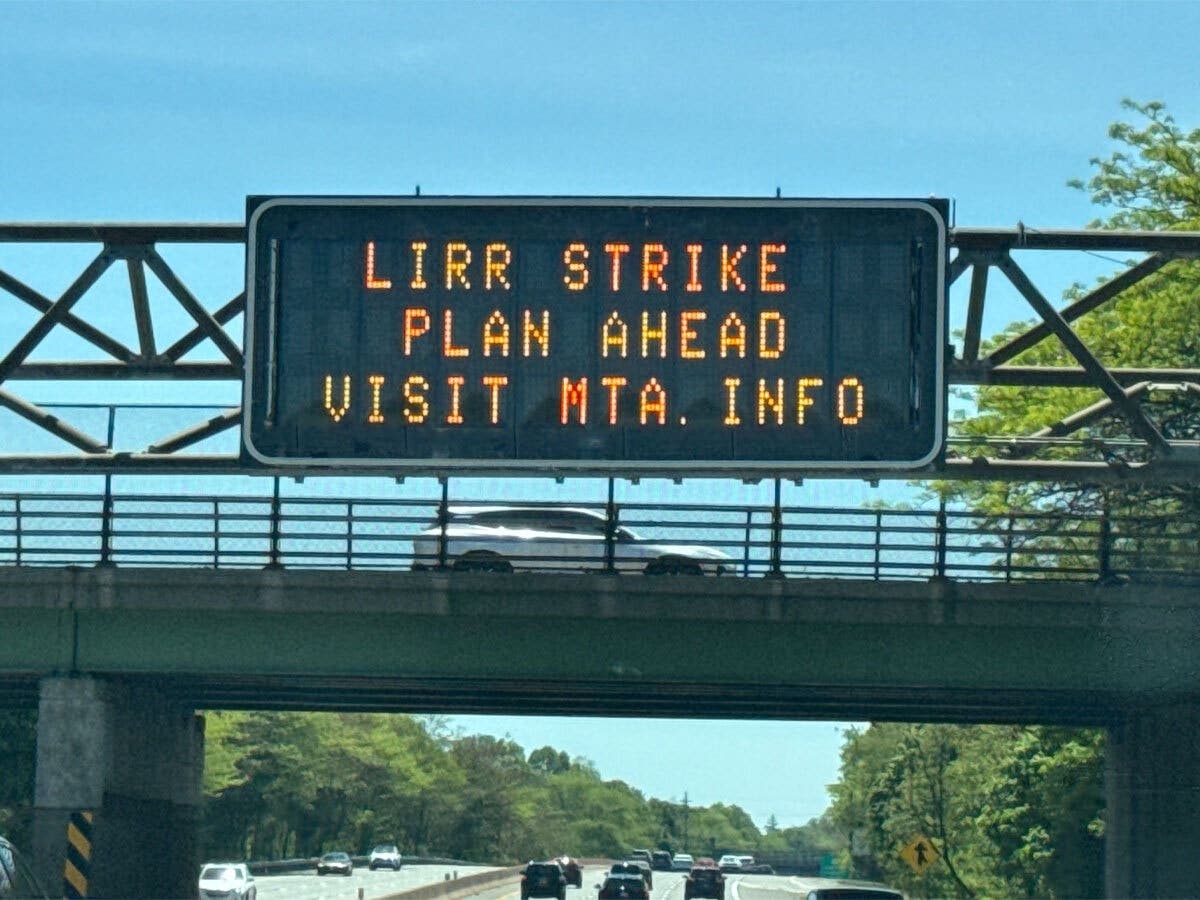
NASSAU COUNTY, NY — Since Saturday, more than 300,000 Long Island commuters have been without the Long Island Rail Road due to a union strike. Now, Nassau County community members are speaking up, and their voices are divided.
The MTA and coalition of five LIRR unions could not reach an agreement, and a strike has been in effect as of 12:01 a.m. on May 16, leaving about 3,500 union employees without work and hundreds of thousands of commuters without transportation — the last LIRR strike was in 1994.
Some Long Islanders have had to spend hundreds on Uber, cancel plans, or extend their commute times with dismay. Others have shared they will endure the extra traffic and take shuttles if it means union workers get a "fair contract."
Find out what's happening in Long Islandfor free with the latest updates from Patch.
Nassau County resident Lucy had finished Saturday's RBC Brooklyn Half Marathon and said her commute home should not have been nearly as difficult as a marathon. Lucy said she thought there were shuttles at the Howard Beach Station, but after getting from Coney Island to the Howard Beach Station, she learned there weren't any until weekdays.
"I already was traveling a while to get to the Howard Beach Station, and my commute took me about 5 hours to get home," she said. "I ultimately took an Uber and paid the high fare because there were no alternatives at that time, and I was pretty tired already from transferring between subways."
Find out what's happening in Long Islandfor free with the latest updates from Patch.
Lucy added that she has used the LIRR to get to all of her New York City races since the alternative is taking multiple city and county buses. With the news of the strike very recently, Lucy said she felt commuters were not told how to prepare.
"There weren't that many resources that were easy to comprehend on how to travel around," she said. "There was no signage at the LIRR platforms. I'm not too sure what other runners did that were coming from Long Island."
Elmont resident Bryanna Copeland said this weekend's LIRR strike really impacted her graduation plans at Barclays Center.
"As a wheelchair user, taking the LIRR is usually the easiest and most accessible option for me," she said. "Instead, we had to take an Uber, which was much more expensive and added stress to an already emotional and important day."
Copeland said the disruption highlighted how heavily many people with disabilities depend on accessible public transportation in their daily lives.
"A lot of people don't realize how much disabled riders rely on accessible public transportation, especially for major life events like this."
Doug Menells of Bellmore tried to drive west on Jericho Turnpike over the weekend and said he was hit with "more traffic than I've ever seen in my life on that main road."
He sat in more than an hour in traffic for what he said should have been an under-10-minute ride.
"I decided to make a U-turn and canceled my plans, and went home," he said, adding that Waze did not have any alternative routes to avoid massive traffic on the main roads. "Even the Service Road for the LIE was jammed."
A Plainview resident has been working in Long Island City for years and said he has dealt with heavy traffic almost all his life. He said every year, the traffic has been increasingly worse.
His commute is usually an hour and 45 minutes home to Plainview, but he said he believed the traffic on Monday would be close to 3 hours or more.
"I was able to leave work at 1 p.m. to avoid it," he said, adding he did not want to get stuck in the traffic more than he usually does.
"The strike doesn't impact me except for my commute," he said. "But with this strike, nobody wants to give. Nobody wants to flinch. Everybody's losing money."
R. Smith from Nassau County said it is difficult for her to support the current strike when this is a complex issue that impacts more than just the workers. There have been fare increases and changes to the LIRR ticket policy that began on Jan. 4 of this year.
There has been a shrinking of the validity window for one-way tickets, which now expire at 4 a.m. the following day, as well as consequences for not activating a mobile ticket before the train moves.
"I understand workers wanting better pay and benefits, but the MTA also has a responsibility to ensure taxpayer and rider dollars are being used appropriately before asking the public to absorb additional costs," she said.
A non-essential worker and Great Neck employee said her job requires her to be in the office, even during the strike. On Monday morning, it took her an hour on the N20G bus.
"It was $3.50 even though the announcement said $3," she said. "There is no express service. It's local to Flushing and took an hour. There was no AC and fully packed like sardines."
West Hempstead resident Carrie Campis said the days leading up to the strike were just as stressful, with an electrical fire halting trains and causing disarray.
"I pay $264 a month to ride the LIRR," she said. "24 years and these last few years are the worst it has ever been. Six shuttle points to subways in Queens is ridiculous."
She wants to be able to commute easily, without LIRR disruptions.
"They had months to figure this out and get it settled. It's unacceptable," Campis said. "The MTA needs to pay their workers and get the rest of us back to our schedules."
On the topic of monthly ticket purchases, Bellmore resident Darlyne Stehly added that there needs to be compensation.
"The Governor needs to give more support to the commuters," she said. "They need to reimburse them for monthly ticket purchases, etc."
A Great Neck resident said the LIRR strike lends itself to a larger issue – the need for better support of the people of Long Island.
"I'm not happy with the state of New York. Everything they do is upside down and backwards, and this strike is just a symptom of what will come."
At a press conference on May 13, MTA Counsel Gary Dellaverson said the main divide is over 2026 pay, and that unions were pushing for a 5 percent raise while the MTA has pushed for 3 percent. In October, a Presidential Emergency Board recommended a 4.5 percent increase, but Dellaverson said on Wednesday that sides were still apart on the wage question.
The LIRR unions said their members need a contract that addresses rising inflation.
Others have a different approach to the strike – siding with the union workers for the 5 percent pay increase. One Long Island mom called to action that MTA needs to look "inward and determine why they are not profitable," rather than not pay their employees a "fair wage."
Rosella Sullivan, a Long Island native, said without the LIRR, Long Island would not be the same. Her late grandfather was a proud LIRR worker for more than 20 years, and her partner is a NYC essential worker who commuted early Monday morning.
"Give the LIRR what they want and deserve," she said. "They are the backbone of New York's economy. If the LIRR isn't safe and runs smoothly, more New Yorkers will leave Long Island."
Long Island mom Jolie commutes daily to Grand Central via LIRR – it takes usuaully 1 hour, but on Monday morning, it took her about 2.5 hours. She said she is hoping the strike will end soon, but for now, she will make do with the added time to her commute to support LIRR workers.
"I support the strike," she said. "My commute was longer and more tiring, but I hope this makes people realize how impactful and important the LIRR employees' work is. Hopefully, there will be an agreement soon, and they can get paid fairly."
Gary Fernandez of Farmingdale agrees, stating the strike "has been a major inconvenience " for him, but he will continue to support it. He has had to drive to and from Manhattan over the weekend with the trains halted.
"It is worth it because these workers have not had a raise in years," he said. "Give them the 5 percent raise that they want. I'll gladly pay 5 percent more for my train ticket. These workers work days, nights, weekends, holidays, snowstorms, etc. They deserve whatever they are asking for."
Jennifer Haugstatter Nizzer, a Long Island mom, said her commute is not egregious in length, and she chose to leave early Monday morning to avoid any added traffic. She said she wholeheartedly supports the strike.
Along with some fellow Long Islanders, Cinthia Montas said she 100 percent supports the strike.
"They deserve decent pay," she said. "My husband has to drive, and so far, it hasn't been as bad."
While many Long Islanders have been frustrated by traffic and added commuting costs during the strike, Bethpage resident Nancie Sciab said she's enjoyed one unexpected benefit: the quiet.
"I live near the Bethpage Rail Road, and this has been the absolute best weekend," she said. "No ridiculously loud and obnoxious horn blaring."
Get more local news delivered straight to your inbox. Sign up for free Patch newsletters and alerts.