Crime & Safety
Grandparent Scammer Caught Going Back For Seconds: Police
Police picked up the alleged courier and the accomplice. They offer important tips for everyone to avoid being a victim or report being one.


WAWAYANDA, NY — Two Queens men accused of carrying out the infamous Grandparent scam are facing charges in Orange County. Their victims got suspicious when the phony lawyer called back to ask for more "bail bond" money for their grandson, police said.
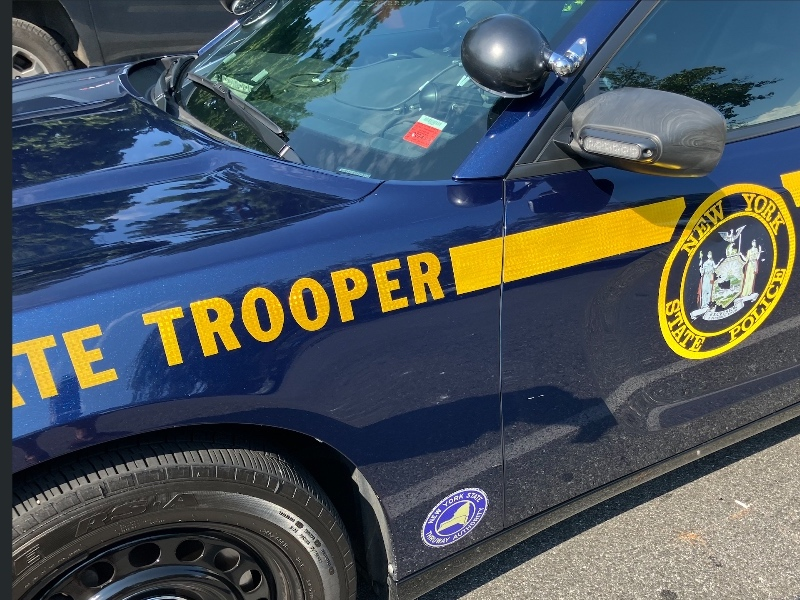
New York State police arrested Hansel E. Barrett, 51 and Clayton L. Barton, 64, on Oct. 22.
The scam went down — and fell apart — in this way:
Find out what's happening in Mid Hudson Valleyfor free with the latest updates from Patch.
A couple received a call from someone alleging to be their grandson, stating that he had been arrested and needed bail money. The couple were then put into contact with an alleged attorney who advised that he needed $8,700 in cash to bail their grandson out of jail. They were told that a courier would come to pick up the funds.
The "courier" arrived at their home a short time later and picked up the cash.
Find out what's happening in Mid Hudson Valleyfor free with the latest updates from Patch.
Shortly after they had handed over the money, the couple received a call from the alleged attorney who advised that the bail had been increased and that they would need to supply an additional $13,500.
That's when the couple became suspicious and contacted their grandson — who advised that he was fine and not under arrest.
They then contacted the state police in Middletown. And state police devised a simple trap.
Troopers and investigators waited for the "courier" to return. Upon his arrival at the couple's residence Tuesday, he and an alleged accomplice were taken into custody.
Barton and Barrett face charges of Grand Larceny 3rd Degree, Attempted Grand Larceny 3rd Degree (felonies) and Conspiracy 5th Degree (misdemeanor). They were arraigned before Judge O'Connor at Town of Wawayanda Court. Both were held on $25,000 cash bail/$75,000 bond at Orange County Jail, with a preliminary hearing set for Oct. 25.
What to do
Police urge anyone victimized in similar incidents to contact the New York State Police and/or New York Office of the Attorney General at 1-800-771-7755 and to file a complaint with the Federal Trade Commission online at ftc.gov/complaint or call 877-382-4357.
Verify an Emergency
If someone calls or sends a message claiming to be a family member or a friend desperate for money:
- Resist the urge to act immediately, no matter how dramatic the story is.
- Check the person’s identity by asking questions that a stranger couldn’t possibly answer such as the name of a pet, the grandchild’s mother’s birthday or the name of the grandchild’s elementary school.
- Call a phone number for your family member or friend that you know to be genuine. Try to get hold of the grandchild or a relative to confirm the status of the child before sending any money.
- Check the story out with someone else in your family or circle of friends, even if you’ve been told to keep it a secret.
- Don’t wire money or send a check or money order by overnight delivery or courier or hand over cash.
- Report possible fraud at ftc.gov/complaint or by calling 1-877-FTC-HELP.
Scammers Use Tricks
- They impersonate your loved one convincingly. It’s surprisingly easy for a scam artist to impersonate someone. Social networking sites make it easier than ever to sleuth out personal and family information. Scammers also could hack into the e-mail account of someone you know. To make their story seem legitimate, they may involve another crook who claims to be an authority figure, like a lawyer or police officer.
- They play on your emotions. Scammers are banking on your love and concern to outweigh your skepticism. In one version of this scam, con artists impersonate grandchildren in distress to trick concerned grandparents into sending money. Sometimes, this is called a “Grandparent Scam.”
- They swear you to secrecy. Con artists may insist that you keep their request for money confidential – to keep you from checking out their story and identifying them as imposters. Victims of this scam often don’t realize they’ve been tricked until days later when they speak to their actual family member or friend who knows nothing about the “emergency.” By then, the money they sent can't be recovered.
- They insist that you wire money right away. Scammers pressure people into wiring money because it’s like sending cash – once it’s gone, you can’t trace it or get it back. Imposters encourage using money transfer services so they can get your money before you realize you’ve been scammed.
Get more local news delivered straight to your inbox. Sign up for free Patch newsletters and alerts.