Community Corner
Hudson Valley Superfund Site Reaches Cleanup Milestone
State officials fought with the owners for more than 10 years about the illegal operation and deteriorating conditions.


ELLENVILLE, NY — The U.S. Environmental Protection Agency has taken one of the biggest Superfund sites in the Hudson Valley off its priority list because cleanup operations are complete. Long-term maintenance and inspection will still be needed.
The Ellenville Scrap Iron and Metal Superfund Site was removed the National Priorities List, the federal list of the most contaminated hazardous waste sites, now that a landfill cap and other remedies have been installed and tested.
It's a 24-acre inactive scrap iron and metal reclamation facility in Ulster County that began operations in the 1950s and operated until the end of the century on Cape Road. The facility was used as a landfill, as well as a dump for tires and batteries.
Find out what's happening in Mid Hudson Valleyfor free with the latest updates from Patch.
“Cleaning up contaminated lands and returning them to safe and productive use is a top priority for EPA and I am pleased that our work at the Ellenville Scrap Iron and Metal site is completed and we are turning the page on its designation as a Superfund site,” EPA Regional Administrator Pete Lopez said in the announcement. “Regular site inspections of the landfill cap at this site and the surrounding areas show that the work we did here is complete and continues to protect people. This is a Superfund success story for this community.”
From 1950 to 1997, the property was owned and operated by Albert and Patricia Koplik, who used it for recycling scrap metal and waste handling, including reclaiming wet cell automobile batteries, old barrels, metal trimmings with oil residue, automotive parts, oil burners and electronic circuit board components.
Find out what's happening in Mid Hudson Valleyfor free with the latest updates from Patch.
During 1987-88, NYSDEC inspected the site several times and directed the operators to remediate deteriorating conditions.
In 1988, Ellenville Scrap acknowledged that it was operating a solid waste management facility without an NYSDEC permit and that it had improperly disposed of industrial waste. As part of a settlement, Ellenville Scrap agreed to pay a fine and to close and to cover the area where construction and demolition debris had been disposed.
From 1990-92, NYSDEC performed numerous inspections and investigations to evaluate the potential for listing the site on the New York State Registry of Inactive Hazardous Waste Disposal Sites. Soil investigations showed that numerous waste oil discharges were observed from drum crushing and hydraulic baling operations.
In January 1995, the Kopliks and Ellenville Scrap entered into a consent order with NYSDEC in which they agreed to prepare and implement a Preliminary Site Assessment. In addition, they were ordered to perform an Interim Remedial Measure on a portion of the site surrounding the baling machine. These activities were never performed, EPA officials said.
In late 1997, the facility was leased by John C. Bruno and was used for landfill purposes and as a tire dump. Neither the Kopliks nor Bruno received a NYSDEC permit to operate as a solid waste management facility or to store tires on the site, according to the EPA.
From 1987 to 1998, NYSDEC conducted numerous inspections and sampled soils both on-site and at adjacent residential properties. Once again, NYSDEC directed the owners to remediate conditions.
Over 1998-99, the site was abandoned. It was placed on the Superfund list in 2002.
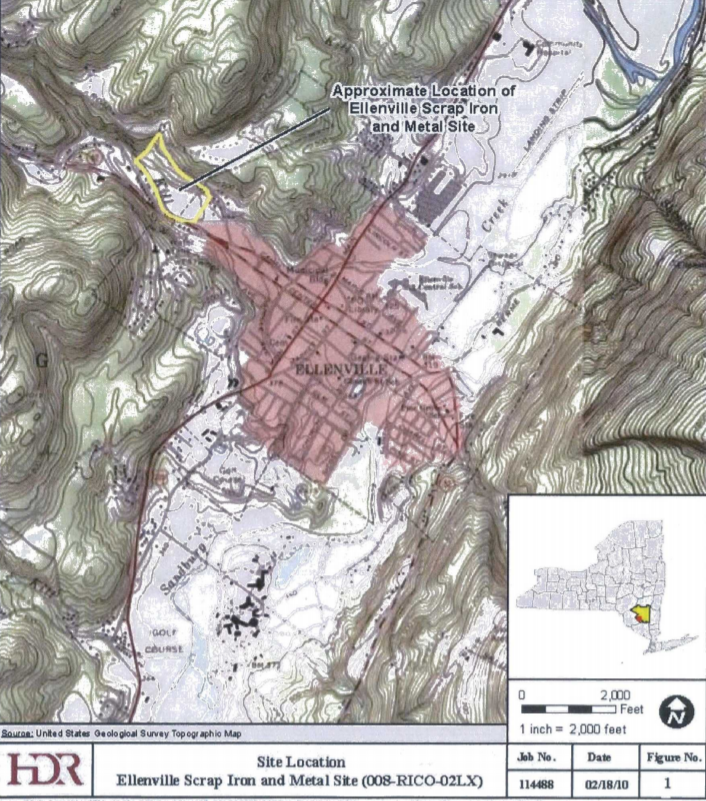
Following site investigations and short-term cleanups called removal actions, the site’s long-term remedy was put in place, mainly the installation of a landfill cap.
Long-term activities at the site will continue, including operating and maintaining the landfill cap system that vents gas from the inactive landfill and continued monitoring of the groundwater. EPA will conduct reviews every five years to ensure the effectiveness and the protectiveness of the cleanup.
The close-out report for the Ellenville Scrap Iron and Metal Peter Cooper Superfund site is online.
Congress created the Superfund program in 1980 to protect human health and the environment by responding to releases or threatened releases of hazardous substances, pollutants and contaminants.
Get more local news delivered straight to your inbox. Sign up for free Patch newsletters and alerts.