Traffic & Transit
NTSB Releases Preliminary Report On Hudson River Plane Crash
The instructor took control of the aircraft from the student after the plane lost power, according to investigators.


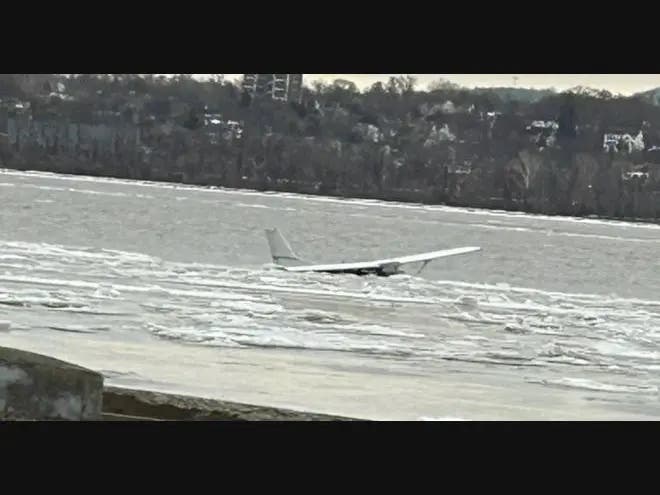
ORANGE COUNTY, NY — Federal investigators have shed some light on the emergency landing of a single-engine aircraft into the Hudson River, earlier this month.
The National Transportation Safety Board (NTSB) has released its preliminary report on the crash that took place moments after the plane lost power en route to Stewart International Airport in Orange County.
SEE ALSO:
Find out what's happening in Mid Hudson Valleyfor free with the latest updates from Patch.
- New Details Emerge In 'Another Miracle On The Hudson' Plane Crash
- Plane From Long Island Crashes Into Hudson River In Orange County: Authorities
- 2 In 'Stable Condition' After Plane Out Of MacArthur Crashes Into Hudson River: Officials
- 'Air Traffic Controllers Were Unbelievable' In 2nd 'Miracle' Hudson River Crash: Commissioner
- 10 Years After Miracle on The Hudson, LI Survivor Thanks Sully
Investigators said the Cessna 172N, N1560E, was "substantially" damaged when it crashed near Newburgh on March 2. The flight instructor and student pilot reported minor injuries.
The airplane was operated as an instructional flight at the time of the crash.
Find out what's happening in Mid Hudson Valleyfor free with the latest updates from Patch.
The flight instructor reported that after performing a touch-and-go landing at New York Stewart International Airport (SWF), the engine was not producing the normal rpm. When he leaned across the cockpit to view the engine gauges, he saw the oil pressure was indicating zero. He then declared an emergency with air traffic control and asked to return directly to the airport. The engine then began to run extremely rough before it lost total power.

He took over the controls from the student pilot and determined that the airplane would not be able to reach the airport. He then chose to land in the Hudson River, close to the western shore, at the area with the most lighting.
The flight instructor ditched the airplane among broken patches of ice and struck some submerged structures, which resulted in substantial damage to the airplane's fuselage.
The pilots extricated themselves from the airplane and were able to reach the shore. The airplane sank until the wings were awash, but remained largely afloat, and was recovered the following day.
The wreckage was retained for further examination, according to the NTSB. The NTSB did not travel to the scene of the accident, according to the report.
Get more local news delivered straight to your inbox. Sign up for free Patch newsletters and alerts.