Arts & Entertainment
Exhibit Explains Misconceptions of Misunderstood Painter
Emilia Baer explains the subtle greatness of the works of Auguste Renoir.


The hosted an exhibit and lecture on French painter Pierre-Auguste Renoir in its community room Thursday. Presented by Emilia Baer, an avid art and culture enthusiast, the exhibit featured works spanning Renoir's career. The exhibition showcased Renoir's art, as it began in the classical Europeans and even as it began to transform as the painter began to explore the makings of what later came to be called Impressionism.
The purpose of the evening was to display Renoir's works to both art novices and weathered students alike, the complexity of what may seem to some to be very simple pieces.
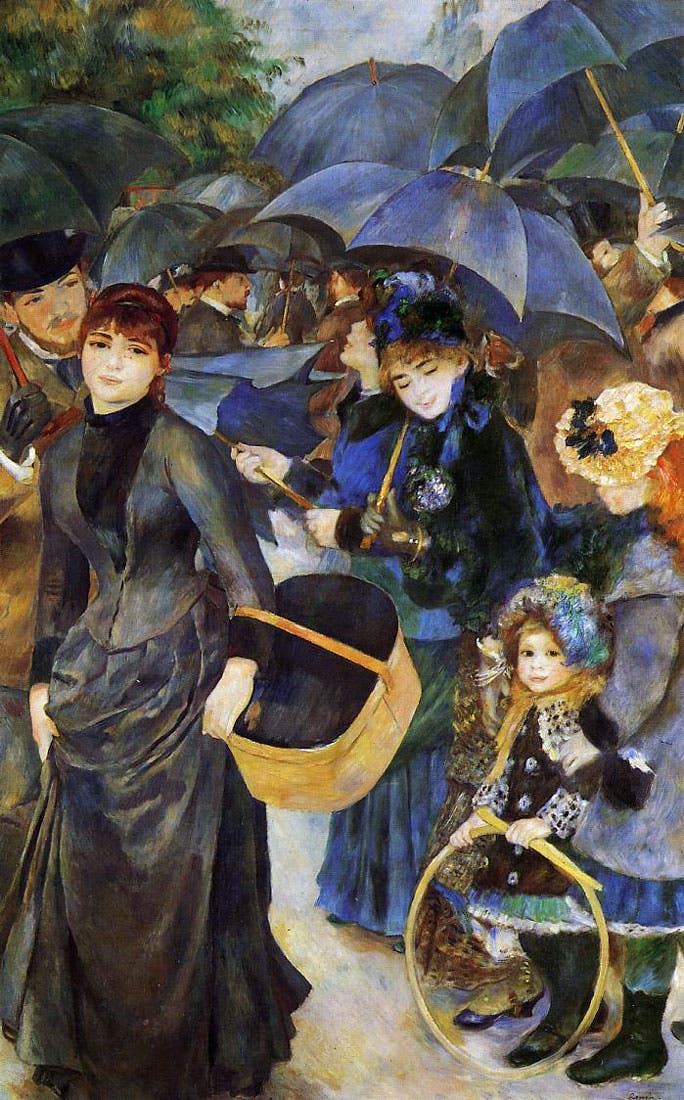
Baer brought out Renoir's defiance – and desire for individuality as he began to use hated techniques – such as using the color black in his works. As an example, audiences viewed "The Umbrella," a painting which showcases a typical 1880s French crowd. Donned largely in black and other colors, images of middle aged and young women (as well as few French men) dominate the foreground of the piece. As one woman smiles softly, holding what appears to be a basket, the young women following her smile gently as they wonder the streets.
Find out what's happening in Mineolafor free with the latest updates from Patch.
Though it may seem very minor to modern viewers, showcasing what was then the modern woman in everyday garments and colors (which for that time tended largely to be black), doing every day actions was a novel idea. In times past, subjects were posed, poised and set in their best outfits. However, Impressionists relied heavily on the color black as they wanted to convey the harsh realism of life and wanted to do so in a way where viewers could pick up the smells, sounds and textures of the world.
Creating images of everyday people, specifically women, was a feature of Renoir's art for which he came to be both renowned and reviled. "Impressionist painters were the first group of organized painters who allowed women to join them in creating art," Baer said. "Most other groups of painters made sure to keep painting a boys-only club." From images of a young ballerina, entitled "The Dancer" (completed in 1874) to world-renowned paintings "Dance in the City" (completed in 1873) and "Dance in the Country," the works showcase, the focus on the elegance and importance of everyday women.
Find out what's happening in Mineolafor free with the latest updates from Patch.
Though becoming very popular for his works during the early 20th century, Baer explained that Renoir began to be scoffed for his work shortly after his death, as painters like Claude Monet (perhaps the world's most prominent Impressionist painter) and Edouard Manet began to be defined as the standards for Impressionism. Baer explained that despite growing criticism of his works, painters such as Pablo Picasso and Henri Matisse were avid collectors of Renoir art, with Picasso purchasing an estimated 10 pieces.
As is true of many great pioneers, the feature which helped create them ends up destroying them. "During the end of his lifetime Renoir developed, of all things arthritis in his hands and was no longer able to create great works of art," Baer said, explaining Renoir died of a heart attack in response to an audience question if he went blind. Monet and Edgar Degas both lost their eyesight late in life.
One audience member was puzzled as to how Renoir's memory was kept alive. "Though none of Renoir's children followed in his footsteps, Renoir's work speaks for itself," Baer said, concluding with the affirmation that "art lasts forever."
One of the largest collections of Renoir's artwork can be seen in the Philadelphia Museum of Art. Renoir pieces can also be seen in the Metropolitan Museum of Art, based in New York City.