Politics & Government
VIDEO: New Bomb Squad Dogs at Rockland Sheriff's Dept
Annie replaced Lollie, 11, who served as an explosive detection officer for the past nine years. Lollie, a black Labrador retriever, was Rockland's first bomb squad K-9.


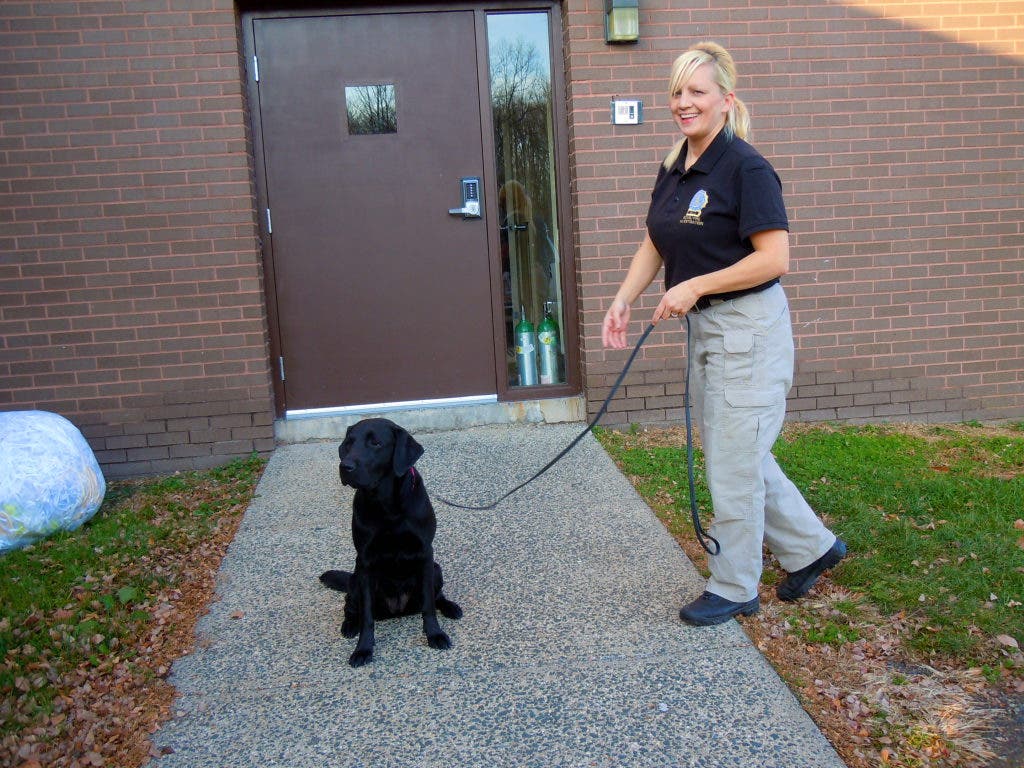


Last Friday, Cable and Annie graduated from the Connecticut Police Canine Facility and started their first day Monday on Rockland’s k-9 bomb squad.
Both black labs are 2-years-old and replaced two retiring bomb squad K-9 officers. Annie replaced Lollie, 11, who served as an explosive detection officer for the past nine years. Lollie, a black Labrador retriever, was Rockland's first bomb squad K-9. Lollie’s number, 454, retired with her back in April. Annie's badge number is 598 and Cable’s number is 534.
Find out what's happening in Nanuetfor free with the latest updates from Patch.
“Both officers are bomb techs and both dogs are explosive detection dogs,” said Rockland County Sheriff Louis Falco. He added the explosive detection unit trains, but also does sweeps, such as schools before all the mid-terms and finals, sweep the schools and during the Maccabi games, the unit swepted all facilities twice a day every day.
“It saves the school district and police departments money,” said Falco. “We’re averaging 15-18 a year in terms of suspicious package (that require the bomb squad.”
Find out what's happening in Nanuetfor free with the latest updates from Patch.
Cable replaced Gunner, who retired in August. There are currently three dogs on the K-9 bomb squad. Cable and Annie are joining Gibson.
Annie turned 2 years old on July 4. They work to at least 7 years old and will work until about they’re about 9 years old. Training took two months.
“There were six of us in the class. It was everyday training,” said Annie’s handler Det. Melissa Johnston. “It started with basic training with them sniffing cinder blocks and then it progressively gets more difficult. Longer searches, rooms, tons of lockers, tons of outside searching, vehicles, everything we could be called to to search.”
The handlers have a food pouch with Iams dry kibble. Johnston has been with the sheriff’s department for 14 years.
“She has to work to eat, even on her days off,” said Johnston. “I only feed her by hand. She never eats out of a bowl until she retires.” She has only a water bowl at home.
When Johnston is not around, another handler will feed Annie or Annie will go with Johnston when she goes on vacation. Annie weighs 54 pounds and is weighed often. The dogs need to be at a certain weight and in shape to stay healthy in their roles as explosive detection dogs.
Both Cable and Annie were covered by grant money. The grant covers the cost of the dogs, which is $6-7,000 and their training, which is $4-5,000.
“We’re bringing in two additional dogs that are of no cost to the taxpayer,” said Falco. “The officers are here anyway. They’ve gone through extensive training at Redstone for bomb detection.”
They don’t get fed unless they’re training. He added that the dogs and handlers train every day and the department gets actual explosives for the training, everything from firecrackers to bomb-making materials.
When the dogs sniff for explosives, there are several factors that can affect their sense of smell, such as wind, weather, how long an explosive’s been sitting. They’re given the command to seek and if there is nothing, they passively sit. Their rewards are food and praise.
“These dogs are exclusive ... These dogs strictly do explosive detection,” said Falco, adding that the specialization is necessary because “we don’t want any (scents) to cross over. They’re specific and specialized in their field.” They are not trained for other tactics, such as biting, attacking, sniffing for drugs, etc … just explosives. Also, this is done so that officers will know exactly what they’re dealing with once a certain dog detects something.
Johnston said that the dogs need to be kind and sweet because during certain sweeps, such as train stations, the dogs need to search people. Also, the type of dog, black labs, are preferred because they are friendly looking dogs.
“We want people to accept them searching them,” she said. “All of our dogs are very friendly. They’re already socialized (when they were puppies)”
Cable and Annie were both dogs that didn’t make it through seeing-eye dog school.
“They did not pass the seeing eye dog test so they became police dogs. Anything they failed, is what we look for in police dogs. They’re curious, they look around, they’re sniffing.
Johnston bought Lollie from the county for $1 and both Lollie and Annie live with her at home.
“She brings out some of the puppy in Lollie. Lollie wasn’t always so playful, but now she’s a little more playful with Annie around.”
Get more local news delivered straight to your inbox. Sign up for free Patch newsletters and alerts.