Community Corner
The Chef at the Heart of Verde NYC
A rising chef's journey from the CIA to NYC's toughest kitchens now shaping the seafood program at Verde NYC in Meatpacking District.
This is a paid post contributed by a Patch Community Partner. The views expressed in this post are the author's own, and the information presented has not been verified by Patch.
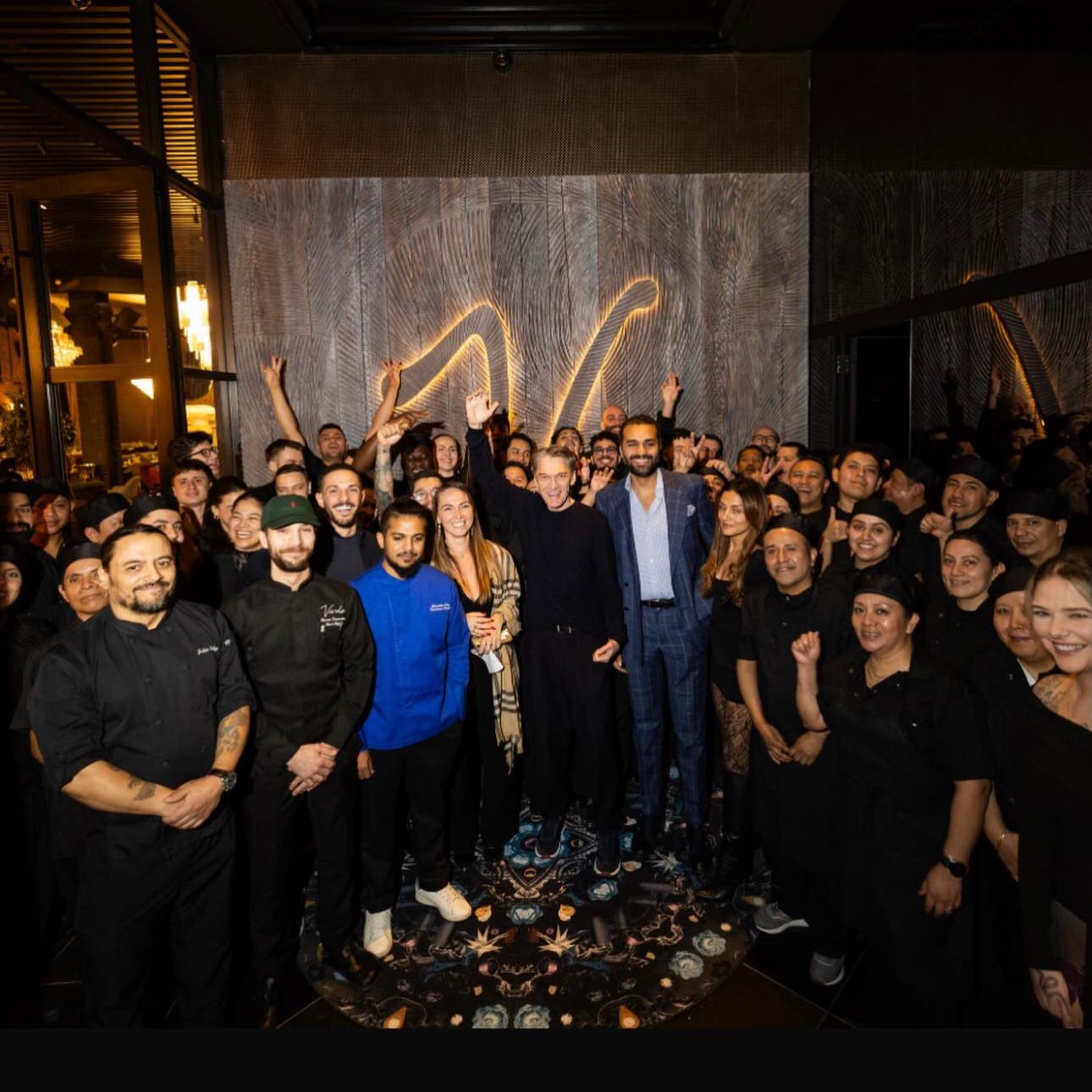
NEW YORK CITY, NY — When Verde NYC opened its doors in February 2026 at 85 10th Avenue in Manhattan's Meatpacking District, the culinary world took notice. The restaurant arrived not as a debut but as a homecoming of sorts, the New York chapter of a story that had already been told, and told well, across Paris, Saint-Tropez, Dubai, and Sardinia. The Yeeels Group, the international hospitality collective behind the brand, had spent two decades perfecting a particular kind of evening: one where Parisian gastronomy and theatrical ambiance converge into something that feels less like dinner and more like an event. Condé Nast Traveller had written about it. Time Out had celebrated it. What's On had called its Dubai iteration one of the city's unmissable experiences. By the time Verde planted its flag in the Meatpacking District, the question was not whether New York would embrace it, but whether Verde could find the kitchen talent capable of carrying that legacy into America's most unforgiving dining city.
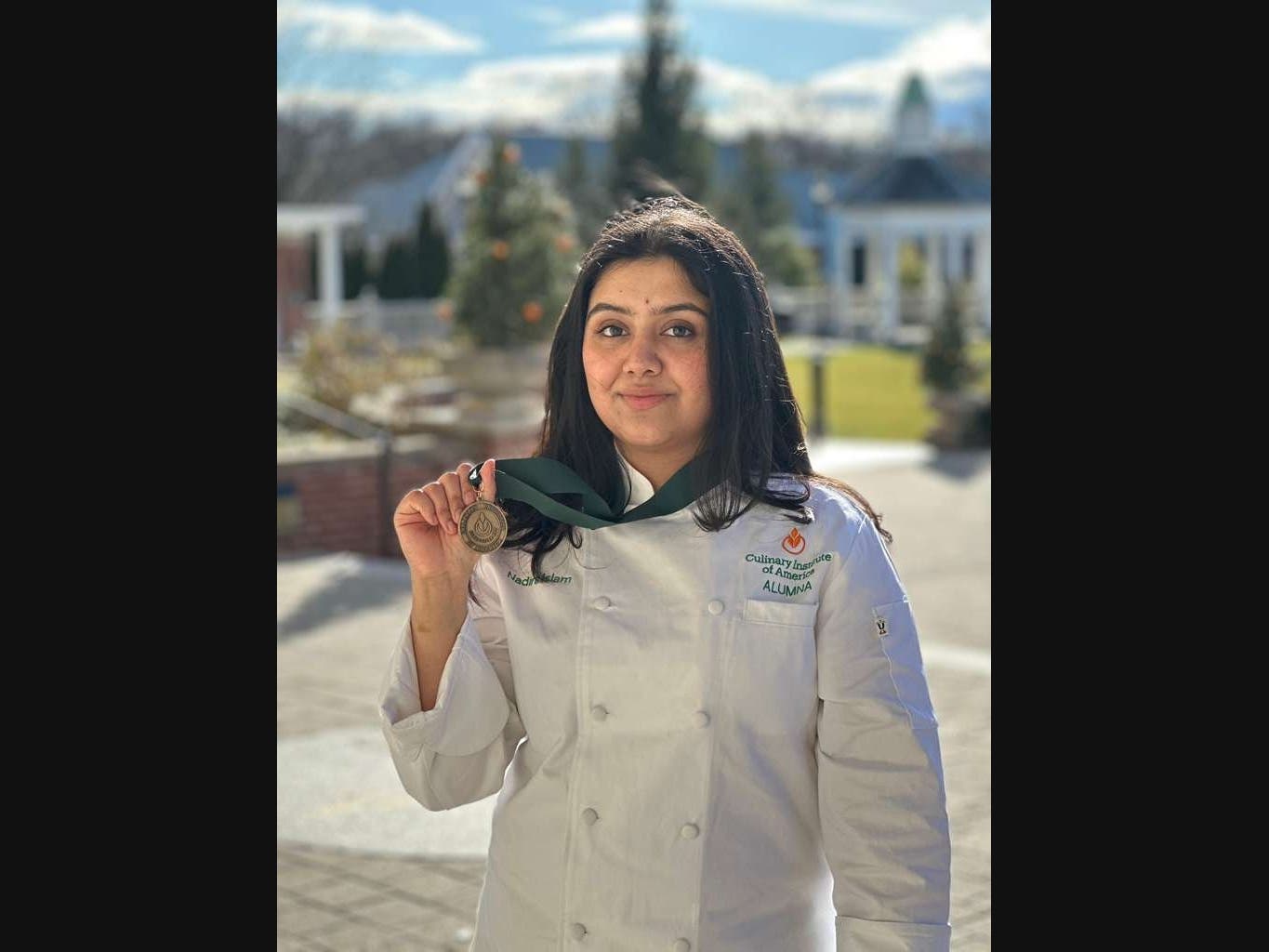
The answer, in part, came in the form of a young chef from Jaipur, India, who had spent the better part of three years quietly becoming one of the most technically accomplished culinary professionals of her generation. Nadira Islam enrolled at The Culinary Institute of America in Hyde Park, New York, the institution that has trained more celebrated chefs than perhaps any other in the world, and she distinguished herself almost immediately. She arrived without professional kitchen experience, but she moved through the classical fundamentals with a composure and precision that her instructors found unusual. Knife work, mother sauces, stock production, portion control: she executed each accurately after a single demonstration, instinctively assumed leadership in team evaluations, and arrived early to set up stations and guide classmates before service had even begun. As she progressed into Restaurant Call at Bocuse, the CIA's fully operational French restaurant, that composure deepened into something more recognizable as professional authority. She managed the garde manger, sauté, and expo stations, coordinated live services of up to eighty-five covers, and on one occasion absorbed full station responsibility mid-service when her partner was injured, maintaining quality and timing without disruption. The steadiness she demonstrated was the kind typically seen only in chefs with years of professional kitchen experience behind them, and it did not go unnoticed. It was not long before the CIA's faculty began entrusting her with something beyond coursework.
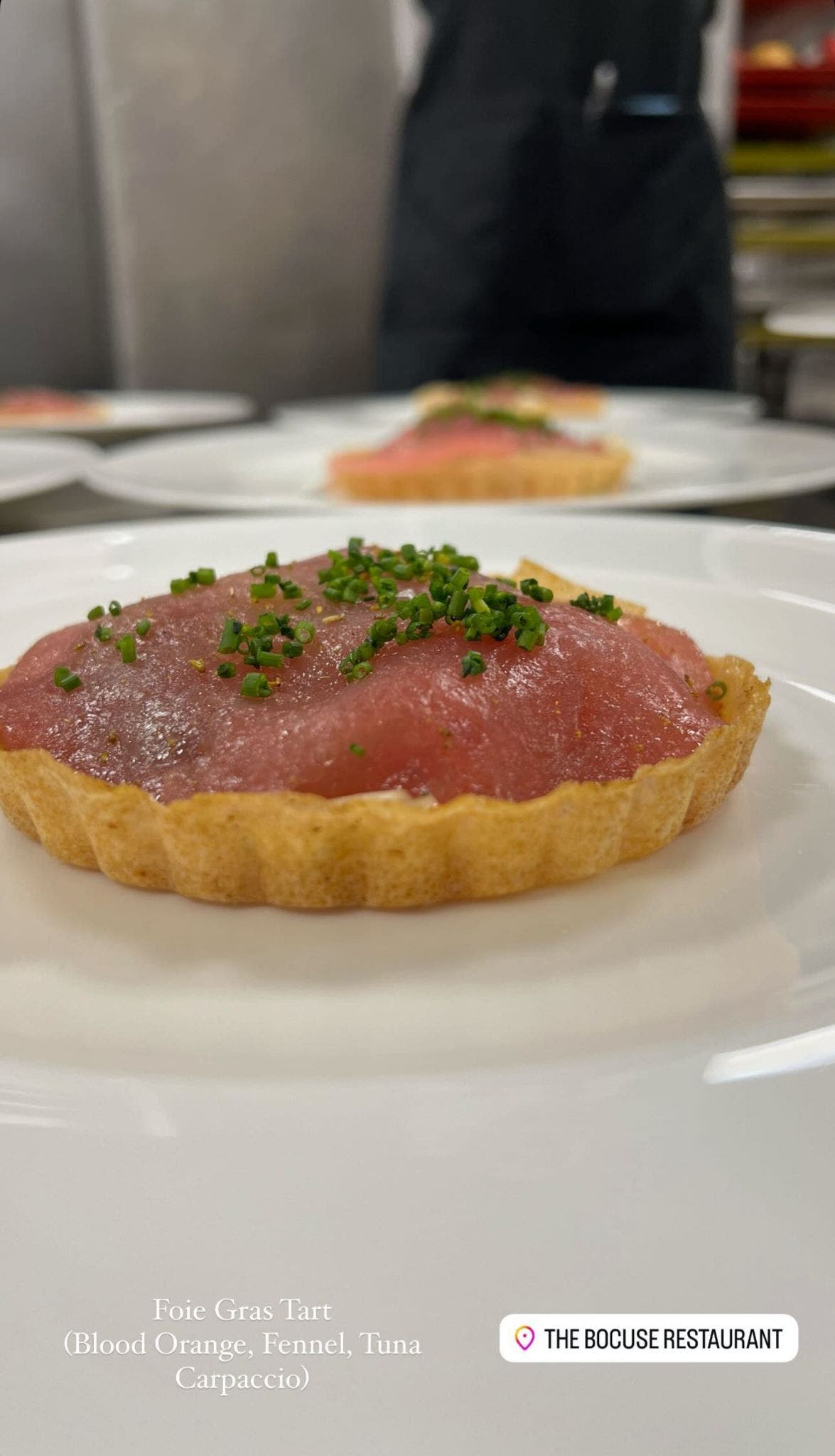
The CIA's annual Board of Trustees dinner is not a student exercise. It is a formal gathering of the institution's most prominent supporters and industry figures, and in 2024 its guest list included Chef Thomas Keller, whose restaurants The French Laundry and Per Se represent the apex of American fine dining and whose three-Michelin-star ratings on both coasts remain unmatched by any other American-born chef. Islam was selected to plate the garde manger course for the evening: a bluefin tuna tartare with blood orange dressing and fennel salad. The preparation demanded exact knife work to achieve a clean, uniform dice without disturbing the fish's delicate texture, careful calibration of the blood orange's acidity, and fennel shaved to a transparency that provided contrast without dominating the plate. She assembled each one with the quiet precision of someone who understood exactly what the moment required.
A few months later, on October 17, 2024, the CIA held a ceremony that had no precedent in its seventy-eight-year history. Michiel Bakker, the institution's incoming sixth president, was inaugurated at the
Marriott Pavilion in Hyde Park in the first formal presidential inauguration the college had ever staged. Among the guests were Chef Thomas Keller, Chef Eric Ripert, whose Le Bernardin has held three Michelin stars for decades and is considered by many the finest seafood restaurant in the country, and Chef Angie Mar, the owner and executive chef of Le B and one of the most distinctive culinary voices in New York City. The CIA's Bocuse restaurant handled the entrée service. Islam was assigned to the VIP table. She plated directly for Keller, Ripert, and Mar, three chefs whose collective influence on the direction of modern French cuisine is difficult to overstate. The service ran without incident.
The third defining moment came not at the CIA but in a dining room on the Upper East Side. Islam had been selected for a three-week stage at Le B under Chef Angie Mar, working the garde manger station in a kitchen known for its intensity and its uncompromising standards. One evening during that period, Chef Jacques Pépin came to dinner. Pépin is not simply a celebrated chef. He is, for the generation of culinary professionals who learned their craft from his books and his television programs, something closer to a foundational figure, someone whose understanding of classical French technique shaped what an entire industry believes cooking should look like. Islam was at the station. She prepared and served the dishes from her position that night, plating for a guest who has spent a lifetime thinking about exactly what food should be.
In the years surrounding those three moments, Islam built an education in the professional kitchens of New York that few chefs accumulate at any career stage, let alone so early. She staged at Restaurant Yuu, at Saga, at The Modern, at Le Café Louis Vuitton, at Café Boulud, at Estela, and at Café Carmellini, absorbing the rhythms and standards of kitchens that collectively represent the upper tier of the city's dining culture. She completed an externship at Amangiri, the Aman Group's celebrated resort in the Utah desert, where she worked under Executive Chef Young Choi on high-profile private events for some of the most prominent figures in global business and technology, learning what luxury hospitality looks like when the margin for error approaches zero.
She then spent time at Jean-Georges, the two-Michelin-starred flagship of Jean-Georges Vongerichten in Columbus Circle, and it was here that she became a poissoner in the truest sense of the word. She advanced from the garde manger station to the fish station, and in doing so entered the most unforgiving discipline a professional kitchen has to offer. There is no concealing an overcooked fillet behind a heavy sauce, no recovering a broken emulsion once it has broken, no second chance at the moment when a piece of fish crosses from perfect to lost. The fish station demands a kind of attentiveness that is almost meditative: an awareness of heat, of time, of the way a protein shifts under the hand and the eye and the sound of the pan. Islam learned it here, holding Dover Sole, Black Sea Bass, and Faroe Island Salmon simultaneously on a station where seconds determine texture and temperature determines everything. Each species speaks differently and must be listened to differently. Dover Sole is delicate and unforgiving of heat; Black Sea Bass demands discipline in the steam; Faroe Island Salmon requires a balance of contemporary flavor and classical restraint. During Restaurant Week, when the kitchen pushed toward two hundred covers a service, she held her station with the focus and consistency of a professional who had long since learned not to let the volume of a service dictate the quality of a plate. By the time she left Jean-Georges, fish cookery was not a skill she possessed. It was a language she spoke.
When Verde NYC began building its kitchen team in advance of its opening, Head Chef Vincent Fernandes was looking for something specific. The Verde menu is grounded in classical French technique applied to
.jpeg)
Mediterranean ingredients, and its most demanding section is its seafood program. Whole Seabass wrapped in vine leaves and cooked over flame. Turbot, 2.6 pounds, baked whole in a salt crust. Langoustines pan-seared with chili and garlic. Seabream finished with lemon-infused oil. These are preparations that reward years of technical development and expose their executioner immediately when that development is absent. They are also, in their own way, a continuation of the conversation Islam had been having with fish since the moment she first stepped onto the hot line.
She joined as Chef de Partie and took ownership of these stations from the beginning. The Seabream demands a crisped skin and a supple interior achieved simultaneously, the kind of result that requires a cook who knows exactly when to press and when to leave alone. The Langoustines must be seared with enough heat to caramelize the exterior and enough restraint to preserve the sweetness within, a balance that cannot be taught from a recipe and cannot be faked under pressure. The Whole Seabass, wrapped in its vine leaves and placed over flame, requires the cook to trust the fire and the timing and her own accumulated judgment, to know through intuition and experience what the leaves are doing to the flesh inside. And the salt-crust Turbot is perhaps the ultimate expression of everything she learned at Jean-Georges and carried to Verde. The fish is invisible during cooking, sealed inside its crust, and the cook must know without seeing, must calibrate crust thickness and oven temperature and timing to achieve an interior that is simultaneously cooked through, perfectly moist, and delicately seasoned. There is no checking. There is only knowing. She does.
Verde NYC came to New York carrying the weight of a global reputation and the knowledge that New York is the one city in the world that will test it most honestly. The Meatpacking District is not a neighborhood that rewards mediocrity or forgives inconsistency. What Verde found in Nadira Islam was a chef whose entire trajectory, from the kitchens of Hyde Park to the fish station at Jean-Georges to the most celebrated dining rooms in the city, had been a preparation for exactly the kind of cooking the restaurant demands. Whether she was plating for Thomas Keller at the CIA, serving Jacques Pépin at Le B, or executing a salt-crust Turbot for a full house in Manhattan, the standard she brought to each moment was the same. That consistency, more than any single achievement, is what defines her.
This post is an advertorial piece contributed by a Patch Community Partner, a local brand partner. To learn more, click here.