Neighbor News
Kelly Ehlers Challenges the Meaning of “Nice” in Nice Girls Win
Exploring the Invisible Expectations That Shape Women's Lives

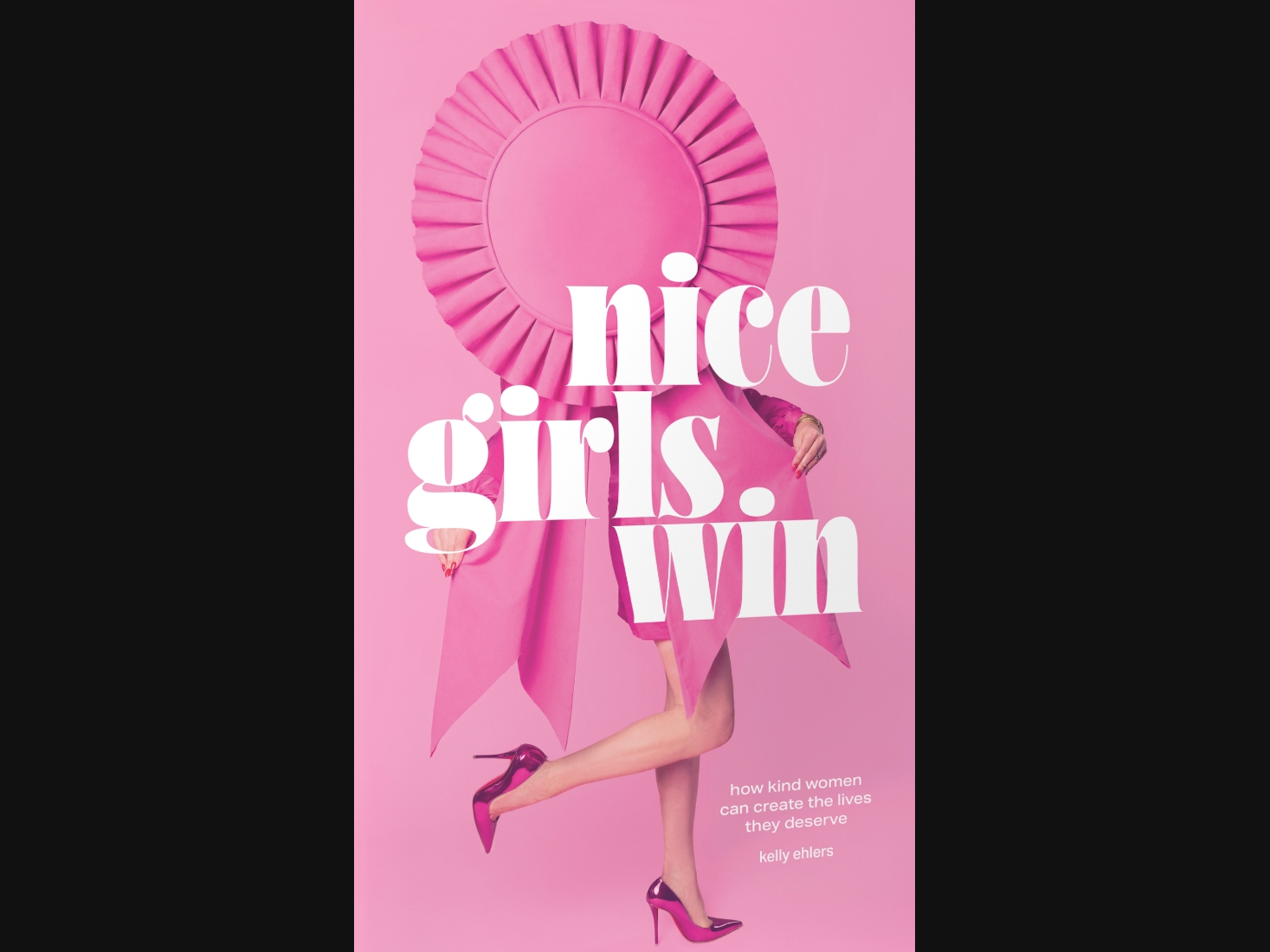
Kelly Ehlers' Nice Girls Win: How Kind Women Can Create the Lives They Deserve begins with an idea that is deceptively simple: kindness is not the problem.
What complicates women's lives, Ehlers argues, is what has been attached to kindness. Over time, being a “nice” woman has come to mean much more than being considerate or compassionate. It can mean being agreeable when you disagree, available when you are exhausted, accommodating when you are uncomfortable and selfless when your own needs are competing for attention. The expectations are rarely announced as rules, which is precisely why they can be so difficult to recognize.
Ehlers gives that collection of expectations a name: the Invisible Contract.
Find out what's happening in New York Cityfor free with the latest updates from Patch.
It is one of the book's most useful organizing ideas because it moves the conversation away from individual shortcomings and toward the social conditioning surrounding women's behavior. The woman who has difficulty saying no may not simply lack confidence. She may have learned that disappointing people carries consequences. The woman who constantly takes on more work may not merely be ambitious. She may have learned that her value is connected to how useful she can make herself. The woman who hesitates to ask for more money, recognition or responsibility may have absorbed the idea that wanting more requires justification.
Nice Girls Win spends considerable time examining these patterns, and Ehlers is at her strongest when she refuses to reduce them to simple instructions about confidence.
Find out what's happening in New York Cityfor free with the latest updates from Patch.
Her argument becomes particularly compelling because of the tension between external achievement and internal cost. Ehlers has built two multimillion-dollar companies, founded The Evoke Agency and Tease Media, and spent more than two decades working in business, branding and marketing. Yet her professional accomplishments are not presented as evidence that she has discovered a foolproof formula for success. Instead, they provide the context for a more complicated question: What is the value of achievement if the process of achieving it requires a person to continually override herself?
That question gives the book considerably more depth than its title might initially suggest.
Ehlers' own experience of being fired while pregnant, followed by years of fighting back and ultimately building companies without investors or a safety net, adds another dimension to her examination of women's professional lives. She understands both the exhilaration of building something substantial and the realities of operating within systems where women can encounter expectations and obstacles that have little to do with their actual abilities.
From there, the book expands beyond corporate leadership.
The patterns Ehlers examines are recognizable in ordinary relationships and everyday responsibilities. A woman may be the person who organizes everything in her household, absorbs emotional tension within her family, agrees to help colleagues, remembers everyone's obligations and continues functioning long after she has reached her limit. None of those behaviors necessarily look problematic individually. In fact, many of them are praised.
The difficulty emerges when being dependable becomes an identity rather than a choice.
Ehlers is particularly interested in what happens when women begin to question that identity. Setting a boundary can feel selfish. Asking for more can feel presumptuous. Saying no can trigger guilt. Pursuing ambition can create anxiety about how others will perceive it. The book recognizes that these reactions do not disappear simply because someone intellectually understands the importance of boundaries.
That is an important distinction.
Nice Girls Win does not pretend that changing these patterns is as simple as deciding to stop people-pleasing. It acknowledges the emotional habits underneath them and encourages readers to become more conscious of the relationship between their choices and their underlying beliefs about worth, acceptance and success.
The book is equally thoughtful about ambition. Ehlers does not frame ambition as a competition in which one woman's success necessarily diminishes another woman's opportunities. Instead, she encourages women to consider ambition in terms of creation: What are you capable of building? What kind of work matters to you? What would you pursue if you were not constantly calibrating your goals according to how they might appear to someone else?
That perspective is one of the book's most appealing qualities.
Ehlers is not advocating for women to abandon kindness in favor of power. She is questioning why those qualities were ever treated as opposites.
The distinction matters because it allows Nice Girls Win to avoid a familiar trap in empowerment literature: replacing one restrictive identity with another. The answer is not for every woman to become louder, more aggressive or relentlessly career-focused. It is for women to have greater freedom to determine which qualities they want to cultivate and which expectations they no longer wish to carry.
The book's definition of winning consequently becomes much broader than professional status. Career accomplishments can matter enormously, and Ehlers does not minimize them. But achievement alone cannot determine whether a life is working. Time, relationships, personal integrity, autonomy and the ability to recognize yourself within the life you have created matter as well.
That is ultimately where Nice Girls Win finds its greatest strength.
It takes a conversation usually framed around confidence and turns it into a conversation about authorship. Who gets to determine the terms of a woman's life? Who decides how much she should give? Who determines when she has done enough? And what happens when she begins answering those questions for herself?
Ehlers does not offer a single definition of success for every reader. Instead, she provides a framework for examining the assumptions that may have been shaping that definition all along.
For a book about winning, that is an unusually generous proposition: success does not require women to become less compassionate, less generous or less themselves. It requires them to become more deliberate about what they give, what they pursue and what they are willing to accept.
Nice Girls Win is ultimately a thoughtful examination of ambition without self-erasure, leadership without performance and kindness without surrender. It is a book that asks women not simply to achieve more, but to take a closer look at whose definition of achievement they have been trying to fulfill in the first place.