Community Corner
Little Old New York: Sugar House Prison
A sugar house was not always sweet. Just ask a patriot solider in New York during the American Revolution.

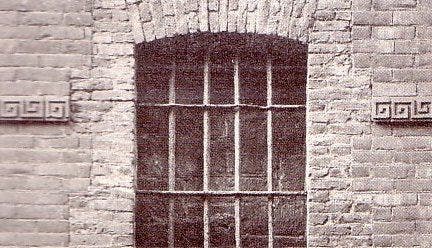
When the British occupied Manhattan during the American Revolution, they used a number of buildings as prisons for those who supported the patriot side. One such building was the Livingston Sugar House that stood on Liberty Street.
The structure was “a dark stone building, grey and rusty with age and of dungeon-like aspect.” Its use to imprison Americans did more to arouse the hatred of citizens than just about any other act by the British government. About 800 Americans were crammed within its walls at one time. They were abused and left to starve or freeze. Many inmates carved their last messages on the beams and walls.
One citizen recorded seeing the “death cart” come every morning to remove six or more of the dead. Another resident tells of the daring efforts to smuggle food to the prisoners.
Find out what's happening in New York Cityfor free with the latest updates from Patch.
Among those who died in the prison was Judge John Thomas of Westchester County. He died during 1777 and his body was thrown into a ditch it Trinity Churchyard. Commodore Silas Talbot, one of the first American naval commanders, also was held in the Sugar House.
Prisoner Court
Find out what's happening in New York Cityfor free with the latest updates from Patch.
Though conditions were squalid and food scarce, prisoners did attempt to maintain a sense of humor. Two of them, a Captain Lord and a Lieutenant Drumgoogle, started a mock court and took turns as judge and prosecuting attorney for crimes of excessive eating and drinking. A group of English officers were touched by the sight of starving men acting this way and they invited the two prisoners to dine with them. Soon after, the Americans escaped with the assistance of a slave.
The Livingston Sugar House was demolished during 1840. One remnant of the city's Revolutionary War prisons that included several sugar houses, a window with its brick frame, can be found today near the historic Van Cortlandt Manor House in Van Cortlandt Park in The Bronx. Another window with its brick frame was incorporated into another brick building that still stands in lower Manhattan.