Neighbor News
Love Match: How A Man's Wanderlust Ended On An UWS Tennis Court
Mark McIntyre came to the UWS 35 years ago on his way to London. He ended up staying and building a flourishing tennis community instead.


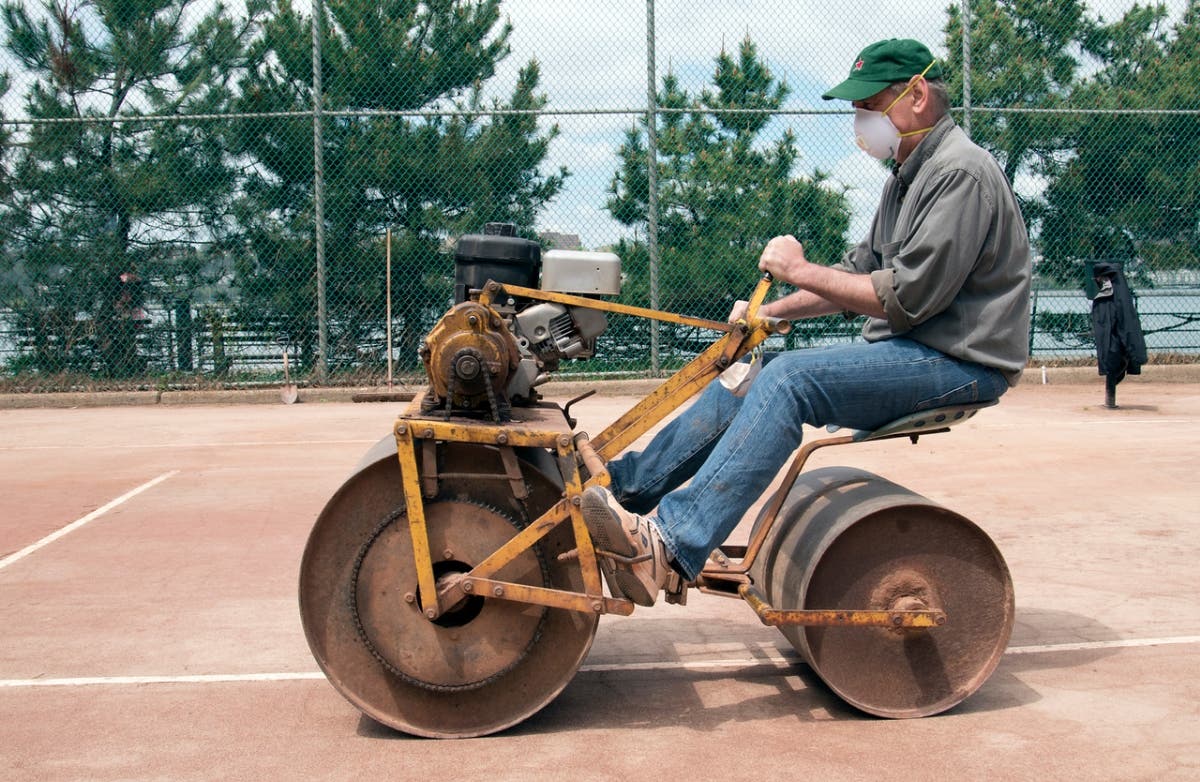
UPPER WEST SIDE, NY — Mark McIntyre set out 35 years ago to trek from California to London where he planned meet his friend and start a theater company. But fate had a very different stage in mind – one made of red clay.
McIntyre is the Executive Director of the Riverside Clay Tennis Association, a nonprofit charged with the maintenance and operation of the public red clay tennis courts in Riverside Park near 96th Street.
But it was a twisted path that brought him to the idyllic courts at the edge of the majestic Hudson River. It began with a failed hitchhiking attempt from San Francisco to New York where he planned to board a plane to London. Instead, it morphed into a bus ride to Oregon, a flight across the country and an unexpected life in NYC.
Find out what's happening in New York Cityfor free with the latest updates from Patch.
He arrived in the Big Apple in 1984 with a single dollar to his name – enough for a 90-cent subway token and 10-cent phone call. The well-used dollar got McIntyre to his friend's apartment on W. 122nd Street between Broadway and Amsterdam.
The next day he got a job as a freelance typesetter for Backstage Magazine, which he figured would quickly earn him enough money to continue his journey to London.
Find out what's happening in New York Cityfor free with the latest updates from Patch.
He still hasn't left.
McIntyre now presides over the only outdoor public clay courts in New York City. The RCTA has over 900 members and raises more than $600,000 each year to fulfill its mission, according to its website.
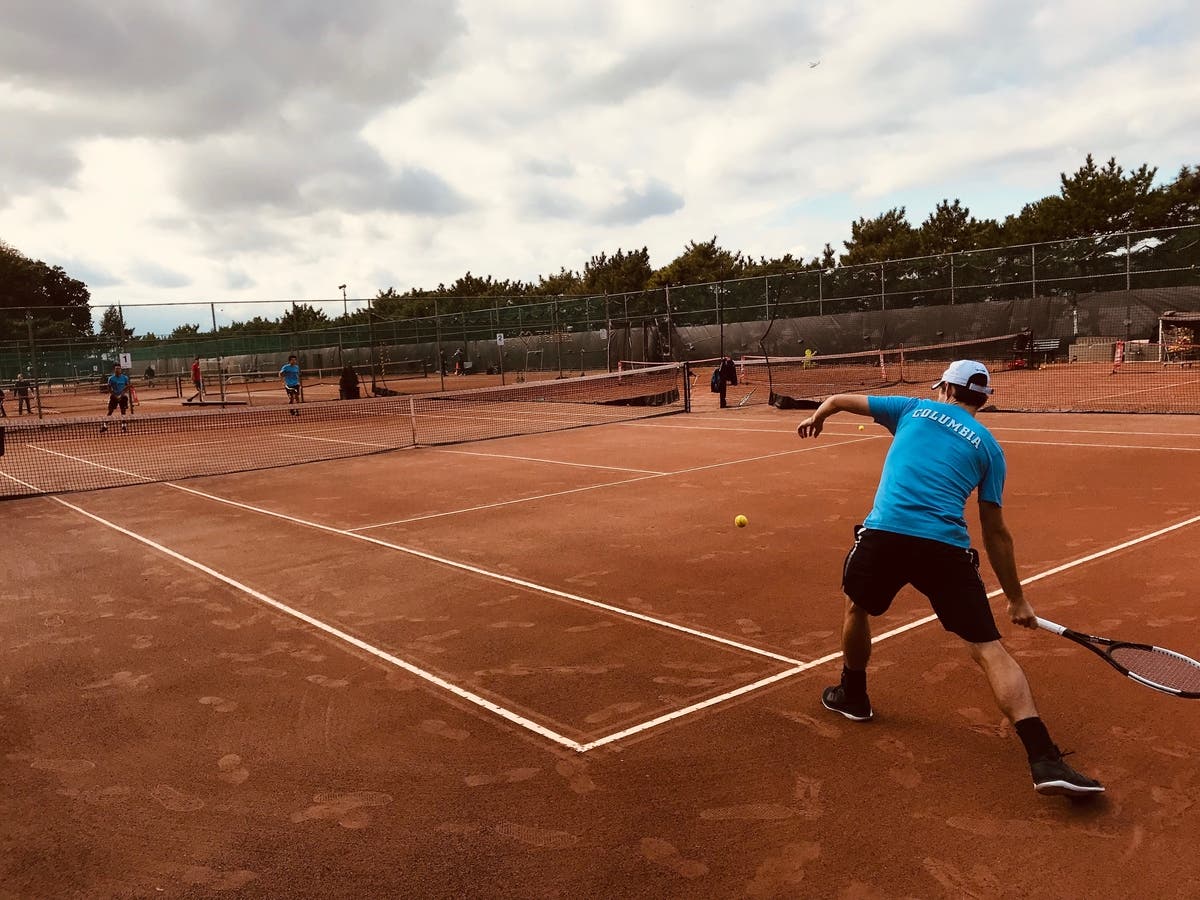
So how did McIntyre – a three-time college dropout with a hitchhiking resume spanning the globe but little tennis experience – end up building one of the largest tennis communities in the state of New York?
McIntyre, now 61, is as surprised as the rest of us.
"I had always wanted to move to New York and I had passed through a lot, but I really wasn't planning on staying," he said. "And it wasn't for another year, it would have been 1985, that I realized: I don't think I'm going to London. I want to stay here."
"I spent my time writing and, in order to dodge that difficulty, a lot of writer's block, stress, all that stuff, I used to hang out at the tennis courts in the afternoon. They were neglected, nobody worked on them, full of sand, weeds, and I started volunteering down there. It must have been around 1991.
"I was invited to join the board, which I did. We decided to raise some money, improve some courts and hire Patrick Weisel (groundskeeper), he had a plan to improve the courts. And after the first year he came back and said he wasn't comfortable dealing with the public, and maybe we should split the job into two and hire a manager to be the public face. And the board hired me to do that.

"I never envisioned it to be a longterm project of job. Certainly not a career. But every year it grew a little bit and we improved it. It became more of a community enterprise. We decided we need to bring more kids to play and start programming for that."
As a testament to McIntyre's vision 20 years ago, youth tennis is now a fundamental part of the 96th Street tennis community.
"The adaptive program and young kids in general is what I like the best," he said.
"I really get a boost out of that. I enjoy that. I like the general sense of community that surrounds the courts. I enjoy working outside."
The Adaptive Program is among his proudest achievements. It began when physical therapist Susan Scheer asked to bring some of her patients to the courts as part of their therapy. Her patients, mostly children, included players with cerebral palsy, Down syndrome, multiple sclerosis, muscular dystrophy and autism.

Today more than 20 adaptive athletes participate in the free program. Including Joanna Nieh who, after learning the game at the RCTA courts, went on to become the number one ranked wheelchair tennis player in the world for her age group.
Get more local news delivered straight to your inbox. Sign up for free Patch newsletters and alerts.