Politics & Government
New York City Hasn't Built Artist Housing In A Decade. Should It?
The number of artists living in the city has dropped 4% in the past seven years, a new report found.

Jan. 29, 2026, 5:00 a.m.
A decade ago, artist Glendalys Medina got a lucky break.
Find out what's happening in New York Cityfor free with the latest updates from Patch.
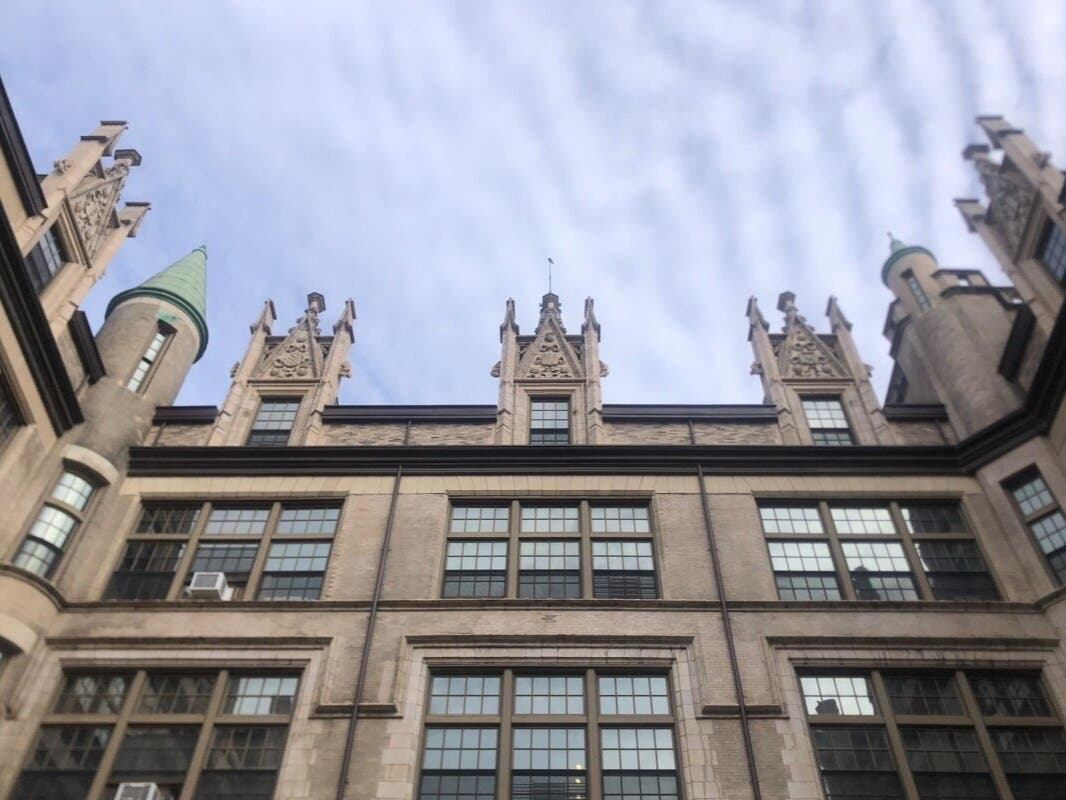
She was one of the winners of a lottery — to which over 53,000 people applied — that allowed her to live in one of the 89 affordable apartments in a stately former public school in East Harlem. At the time, she was living in Staten Island, paying for a space that was smaller, more expensive and more difficult for people who wanted to see her art to visit.
Now, the 46-year-old multidisciplinary visual artist said living among makers of all stripes — musicians, actors, directors, dancers, painters — has enhanced her art, given her a measure of stability and made her part of a supportive community.
Find out what's happening in New York Cityfor free with the latest updates from Patch.
“This is one of the best places I’ve ever lived,” said Medina, who grew up in The Bronx. “There’s always an event. There’s always an opportunity to engage not only with the people that live in the building, but the external community.”

Glendalys Medina lives in Harlem in the last affordable housing for artists built in the city, Jan. 23, 2026. Credit: Samantha Maldonado/THE CITY
The housing development, known as El Barrio’s Artspace PS 109, is the last of its kind. That’s because its creation was the last time new affordable housing for artists in New York City was built. The first residents moved in in 2015.
No new affordable housing for artists has been built in the five boroughs since then, according to a recent report from the Center for an Urban Future.
That reflects a larger trend: Over the past 25 years, New York City built 329 affordable apartments for artists. That’s about 5% of the more than 5,610 that opened around the country in the same time period, the report said.
And though the amount of New York City artists grew by about 35% between 2004 and 2019, the city lost more than 4% of its artists since then, according to the Center for an Urban Future That’s a warning bell for the health and wellbeing of the creative economy, said Eli Dvorkin,the Center’s policy directorand a co-author of the report.
“Something fundamentally broke in 2020 that has not been repaired,” Dvorkin said. “The consequence of that is that we’re losing not only our artists, but our identity as a city, and I would say with it, not only a key engine of our economy, but one of the key factors that makes New York a place where people from all over the world want to visit and want to live.”
Dvorkin advocates for building 5,000 new affordable apartments for artists by 2030 — ideally, as part of a large investment in subsidized housing, which is badly needed across the boroughs. Affordable housing is subsidized so that rents do not exceed a third of a tenant’s income.
But building affordable housing for artists is not straightforward, nor is it a universally supported idea. For one, the city’s human rights law prohibits housing discrimination on the basis of occupation — a provision that has been in place since the eighties and was updated in 2016. A bill proposed in the City Council would specify that housing that gives preference to artists does not violate that law. (The state Division of Housing and Community Renewal has more permissible guidance.)
And whether the government should prioritize developing affordable housing with set-asides for artists in a city with a persistent housing crisis — and hefty competition for even moderately affordable housing — remains a point of tension.
“As a guiding principle, when you have a limited resource, you’d start with the people who are most in need,” said David Giffen, executive director of the Coalition for the Homeless. He pointed out that more than 100,000 people are in city shelters, thousands of people are unsheltered on the street and a quarter of a million people live doubled and tripled up in other family’s homes.
“That indicates that we need to start with the people who don’t have homes, whether they’re artists or work in the food service industry or as home health aides, whatever their occupation,” Giffen said. “Who is most in need of that resource?”
Ripple Effects
Still, there is much interest in housing specifically for artists, and those who live in it and run it underscore the myriad benefits.
Medina, the artist who lives in PS109, said artists don’t necessarily know how much they will make from year to year, which creates issues when trying to secure an apartment.
“Everybody needs housing in New York, but it’s not so easy for artists to get housing in New York because of unstable incomes,” she said.
To get approved for her one-bedroom at PS109, Medina’s income had to fall between specific income limitations — no more than $35,280 for an individual. She was interviewed by a committee about her creative work. Years later, she’s been spending time in her apartment, which doubles as her studio, creating art for upcoming exhibitions at The Bronx Museum and Wave Hill.
Westbeth Artists Housing in the West Village, which was created in 1970 and comprises 384 affordable apartments, draws “huge” demand from interested tenants, according to WestBeth’s executive director, Peter Madden.
Westbeth opened its waitlist in 2019 and will start pulling from it later this year as some of the 40 apartments undergoing renovations become available.
“So many people are artists, and they’ve lived here together for such a long time that there’s really a pretty remarkable community at Westbeth, in the sense that the tenants here end up working together, creating art together,” he said. “We have a lot of residents who are in their 80s and 90s, who really rely on each other and the community they built to really maintain their quality of life.”
Like PS109, Westbeth boasts a gallery and community space and programs for the public, which cultivates artistic engagement beyond the residents themselves, Madden said. One challenge: the availability of studio space so artists have a place to work.
One artist-friendly solution to that problem came as part of the rezoning of Gowanus, Brooklyn, which allowed for housing to be built in a previously industrial neighborhood. Community groups negotiated an agreement for developers to build over 100 affordable art studios. Artists could apply to a lottery to secure a space.
Johnny Thornton, executive director of Arts Gowanus, touted that win as one that helped many artists overcome a key barrier to continuing to make art in New York City — but would’ve liked to go further.
“Though we’re extremely proud of our work advocating for artists’ workspaces, we would have loved to be able to secure affordable housing for artists as well,” Thornton said. “Allowing artists to live in the neighborhoods where they work creates an even more tight-knit, flourishing community.”
This press release was produced by The City. The views expressed here are the author’s own.