Health & Fitness
NYC’s 550-Case Coronavirus Warning Light Keeps Flashing
The city eclipsed a troubling COVID-19 threshold at least nine times in two weeks — a potential sign of a coronavirus resurgence.


NEW YORK CITY — New York City’s voyage from coronavirus epicenter to oasis is threatened by a rising tide of cases — and they’ve recently started to flood over a crucial metric.
The city’s seven-day average of new COVID-19 cases has ticked above 550 at least nine times since late October, according to data.
The 550-case mark is a threshold health officials set as a warning light for a potential coronavirus resurgence. For months, the city stayed well below it, along with other daily indicators measuring infection rates and hospitalizations.
Find out what's happening in New York Cityfor free with the latest updates from Patch.
But the number of cases ticked up as localizaed hotspots caught flame in Brooklyn and Queens during late September. It finally reached the 550 mark on Oct. 23 and ticked steadily higher until it reached a new peak on Friday.
“The new reported cases is not good: 702,” Mayor Bill de Blasio said on WNYC’s “Brian Lehrer Show.” “Overall testing 1.81 percent today and the seven-day average 1.96 percent.
Find out what's happening in New York Cityfor free with the latest updates from Patch.
“That’s a problem, that’s a problem. That says that we are now really threatened with a second wave in New York City if we don’t quickly get a handle on this.”
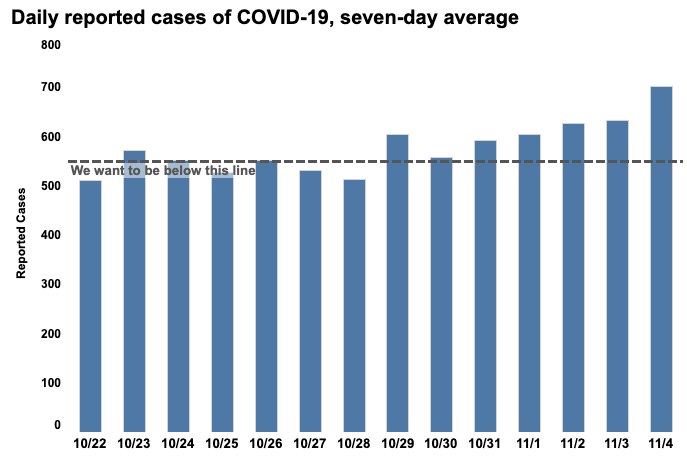
The city releases four indicators — number of hospitalizations, new cases over a seven-day average, daily positivity rate and positivity over seven days — to give New Yorkers a sense of where the virus stands.
All steadily decreased from May and through the summer, reaching lows in August. The two positivity rate measures generally receive the most attention — indeed, they are what de Blasio cited as he raised concerns in September about coronavirus hotspots in Brooklyn and Queens.
Initially, a significant increase in cases didn’t follow those percentage spikes. That changed as city officials expanded testing efforts in those areas.
“The good news of all of this is that, you know, we detected those resurgences in local parts of the city earlier than this indicator tracked,” said Jay Varma, the city’s senior health adviser, last week. “And so, we were able to start taking action. Of course, the bad news is that we're hovering at a level that we don't really want to be at.“
Get more local news delivered straight to your inbox. Sign up for free Patch newsletters and alerts.